


DPZ Summer Newsletter 2025
The historic Biltmore Ballroom in downtown Providence was a key venue at CNU33.
This summer DPZ has been reminded of something that we often tell our downtown clients: drafting a code or implementing a master plan has to be viewed through the lens of time. Our very first downtown master plan, for Stuart, FL, just celebrated its 37th anniversary. We also welcomed the adoption of two recent urban code projects that were years in the making, in Michigan and Florida respectively. Meanwhile, at CNU33 in Providence last month, conference attendees saw first hand how successful urban revitalizations can take decades. Our Downcity Providence project’s development team was honored with two prizes that recognized their nearly 40 years of perseverance.
So here’s to all those clients, as well as their supporters and collaborators, who stay the course in seeing long-range urban visions come to life.
We would like to share more about these and other highlights from the past few months.

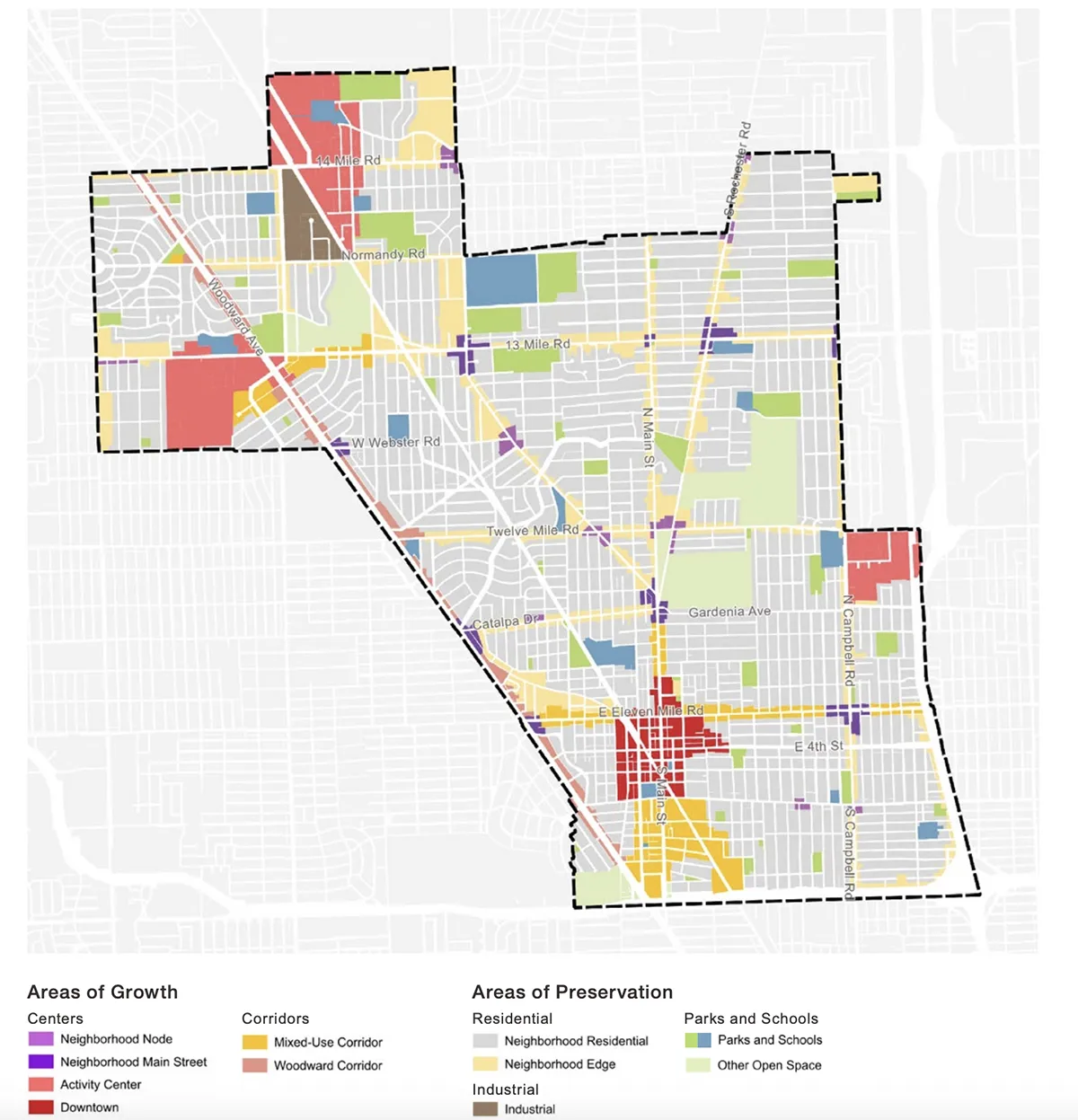
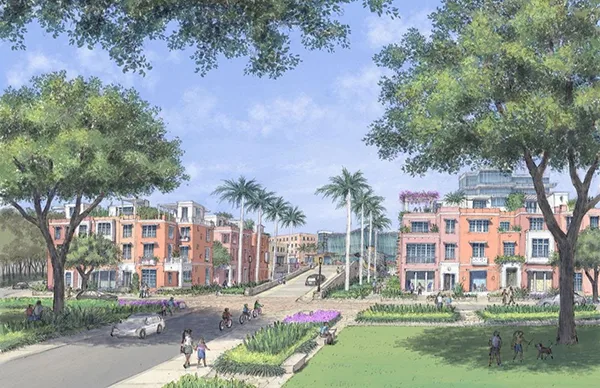
Royal Oak, MI, Adopts Master Plan 2050
On May 19th, DPZ’s Master Plan 2050 was unanimously approved at the City Commission meeting in Royal Oak, MI.
Royal Oak is an inner ring suburb of Detroit that abuts Birmingham, a city to the north where DPZ produced a 1994 Downtown Plan and a 2022 Master Plan. Together both plans aim to reinforce traditional urban patterns and neighborhoods and revitalize commercial districts, linked by parks and walkable streets.
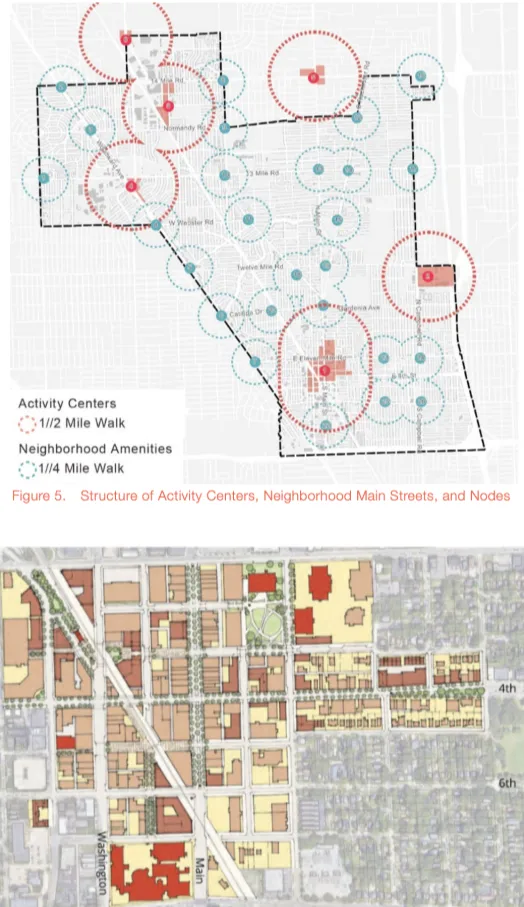
Royal Oak expands upon this structure with new downtown-like districts and a strong focus on pedestrian and bicycle connections.
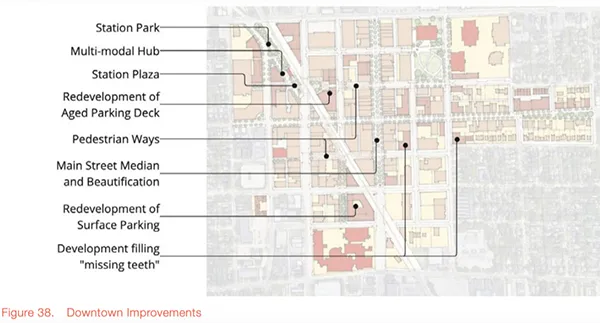
A walkable and bikeable Royal Oak, supported by more neighborhood main streets and urban districts, advances the City’s Climate Action Plan through increased mode share and its Aging In Place Plan with more diverse housing opportunities.
Read more about the plan here.
A walkable and bikeable Royal Oak, supported by more neighborhood main streets and urban districts, advances the City’s Climate Action Plan through increased mode share and its Aging In Place Plan with more diverse housing opportunities.
Read more about the plan here.
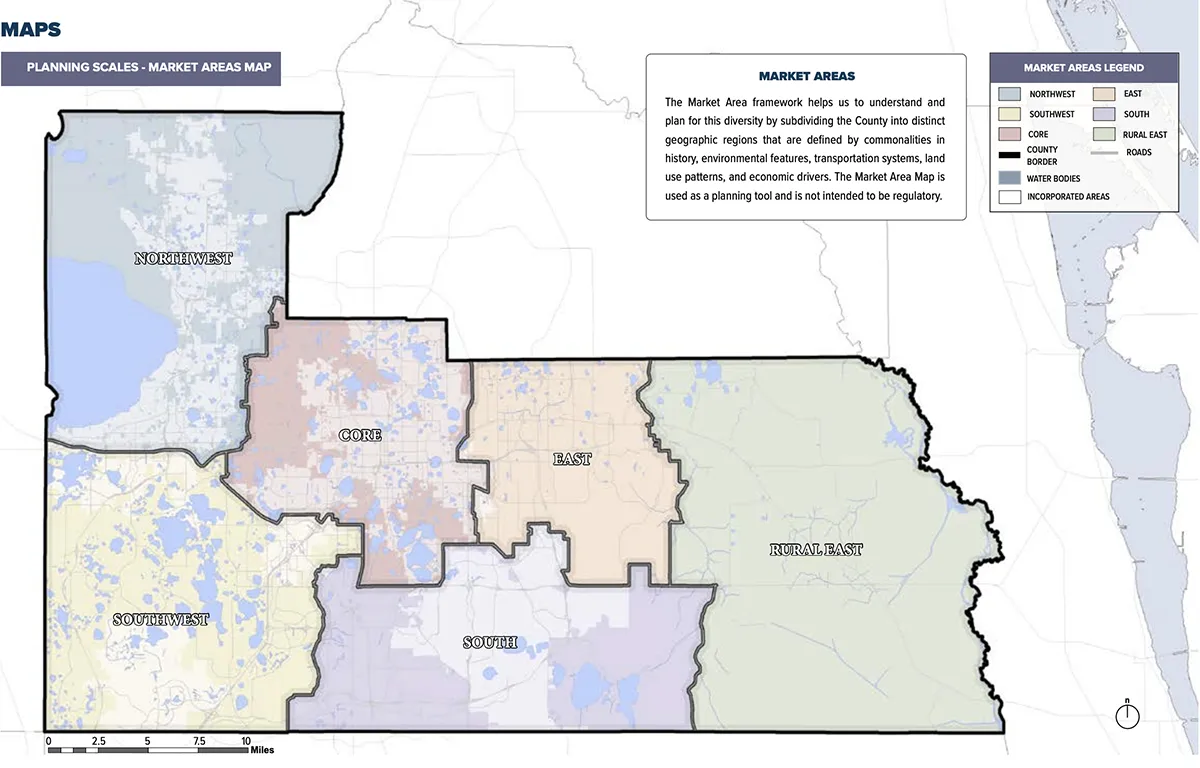
Orange County Adopts New Form-Based Code
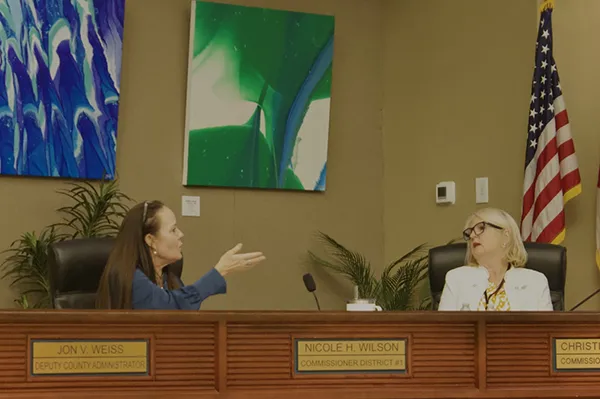
On June 3rd, Florida’s Orange County Commission officially adopted Vision 2050, a forward-looking growth management plan, alongside the Orange Code—the County’s first major zoning overhaul since 1957.
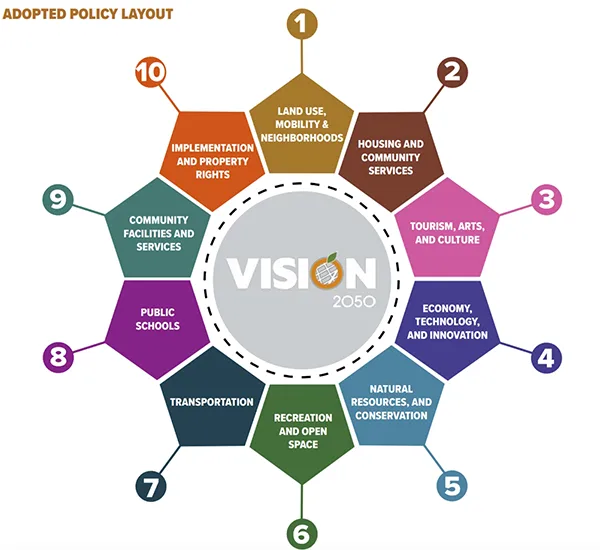
What began as a focused effort to develop new form-based zoning regulations evolved into an eight-year, county-wide initiative co-led by DPZ in collaboration with Kimley-Horn, and the Orange County Planning Department. As the work progressed, additional county departments were brought into the process.
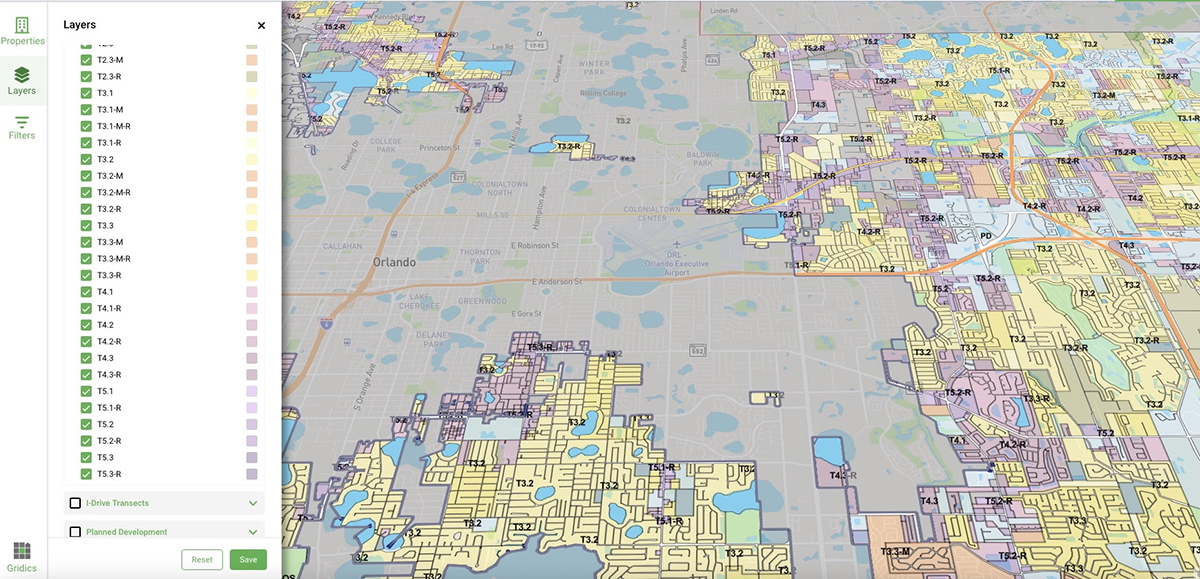
The Orange Code features an online transect map managed by Gridics.
Reconciling competing priorities and visions involved extensive dialogue, negotiation, and refinement. The successful adoption of both Vision 2050 and the Orange Code marks a significant step forward in shaping a more sustainable, resilient, and community-centered future for Orange County.
Read more about the adoption here.
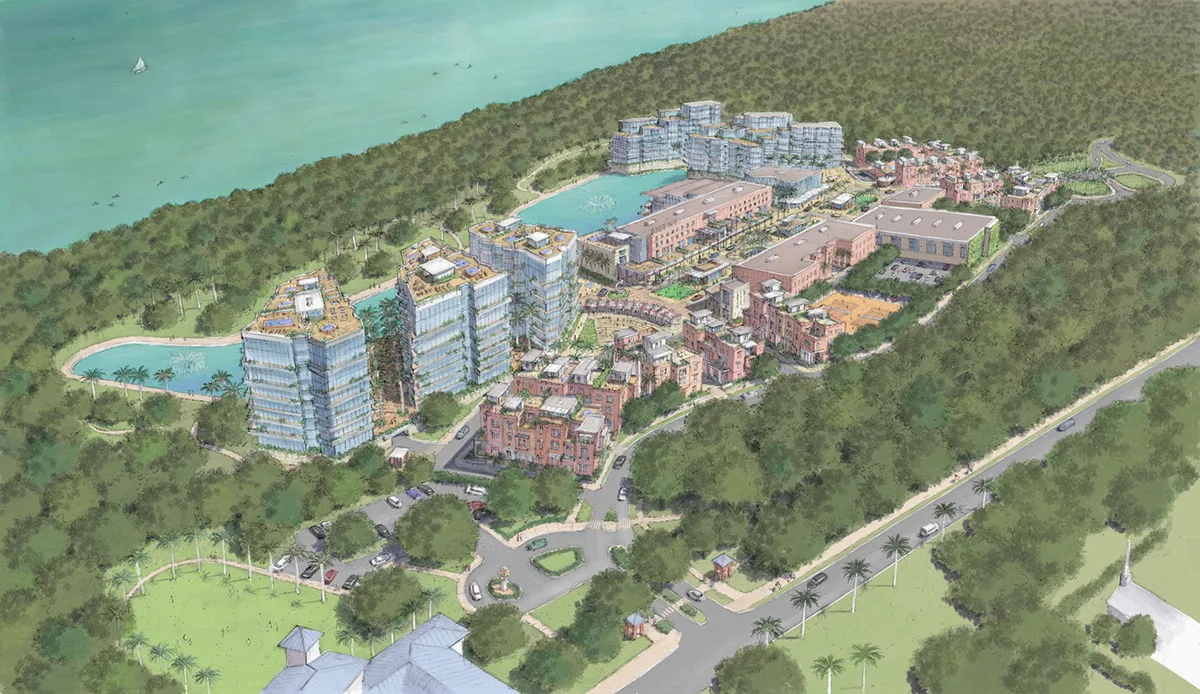
The redeveloped office park features a green buffer to minimize its visibility from Old Cutler Road.
Laguna Vista Redevelopment Moves Ahead in Palmetto Bay, FL
On June 25th, the Palmetto Bay Village Council approved the agreement that will enable the redevelopment of the former Burger King World Headquarters at 17777 Old Cutler Road in this southern suburb of Miami.
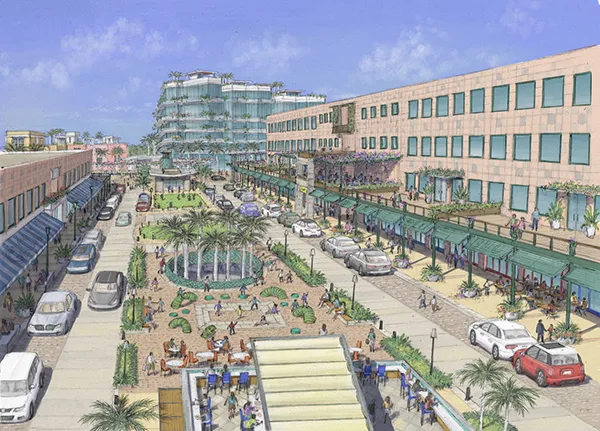
In collaboration with Goddard Investment Group and Phillips Partnership architects, DPZ helped develop a master plan integrating residential, retail, and entertainment uses into the existing 1980s office park. Despite neighborhood resistance and legal disputes with
the municipality over the anticipated traffic and intensity, the Council ultimately voted to green light this project, now named Laguna Vista.
The master plan aims to minimize the redevelopment’s visibility from Biscayne Bay and the frontage road. To address concerns about the natural environment, the owner committed to donating 22 acres along Old Cutler Road as a nature preserve and buffer. The project introduces a supermarket, fitness club, shops and restaurants within walking or biking distance of homes on the east side of the Village, providing a balance for the distant US-1 commercial zone on its western edge. A raised main street provides the focus for adjacent townhouses and apartment buildings. This combination of live, work, and play options should maximize the number of residents likely to remain near home on any given day and reduce vehicle circulation on Palmetto Bay streets.
the municipality over the anticipated traffic and intensity, the Council ultimately voted to green light this project, now named Laguna Vista.
The master plan aims to minimize the redevelopment’s visibility from Biscayne Bay and the frontage road. To address concerns about the natural environment, the owner committed to donating 22 acres along Old Cutler Road as a nature preserve and buffer. The project introduces a supermarket, fitness club, shops and restaurants within walking or biking distance of homes on the east side of the Village, providing a balance for the distant US-1 commercial zone on its western edge. A raised main street provides the focus for adjacent townhouses and apartment buildings. This combination of live, work, and play options should maximize the number of residents likely to remain near home on any given day and reduce vehicle circulation on Palmetto Bay streets.
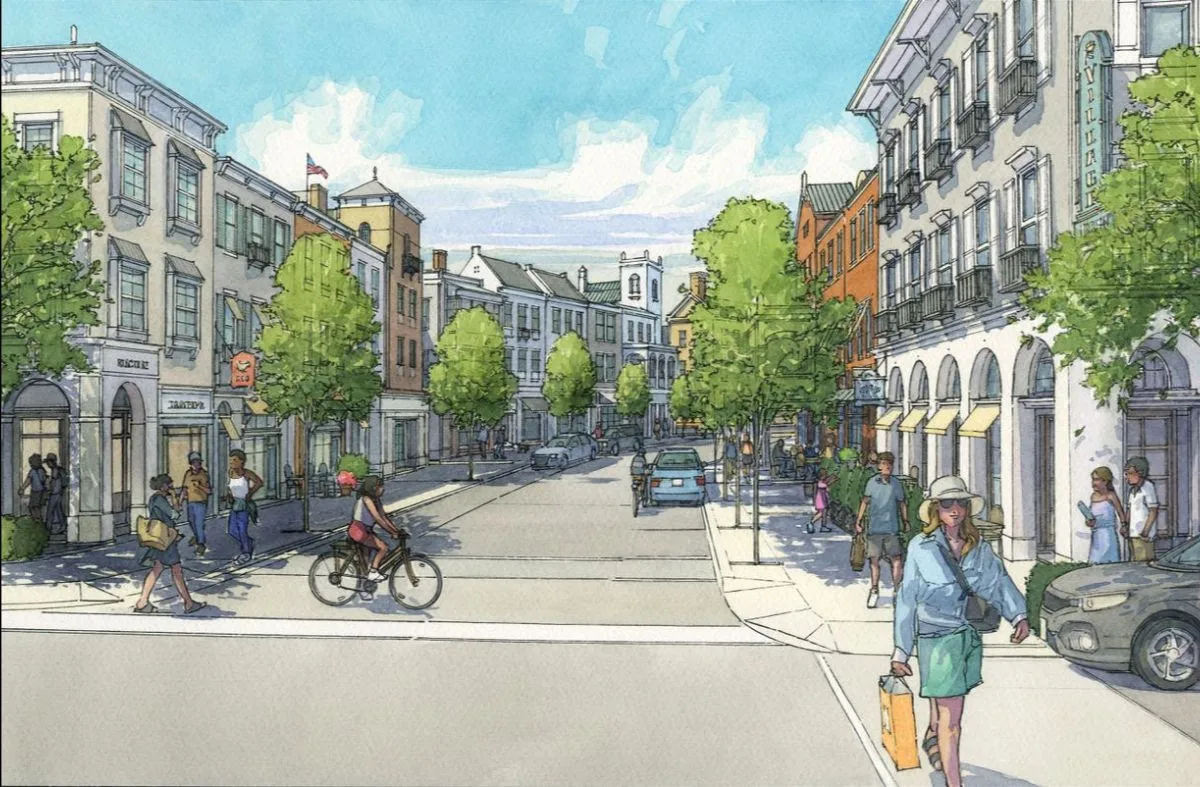
Ivanhoe Village: A new mixed-use, employment center for Mundelein, IL
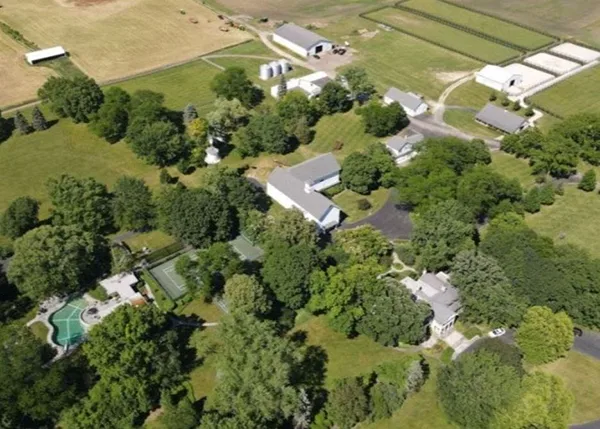
Master planned in 2022, Ivanhoe Village is envisioned as an 800-acre new urban center approximately 50 miles northwest of Chicago. Recently featured in the Chicago Tribune, this village will serve as the heart of a suburban community undergoing expansion.
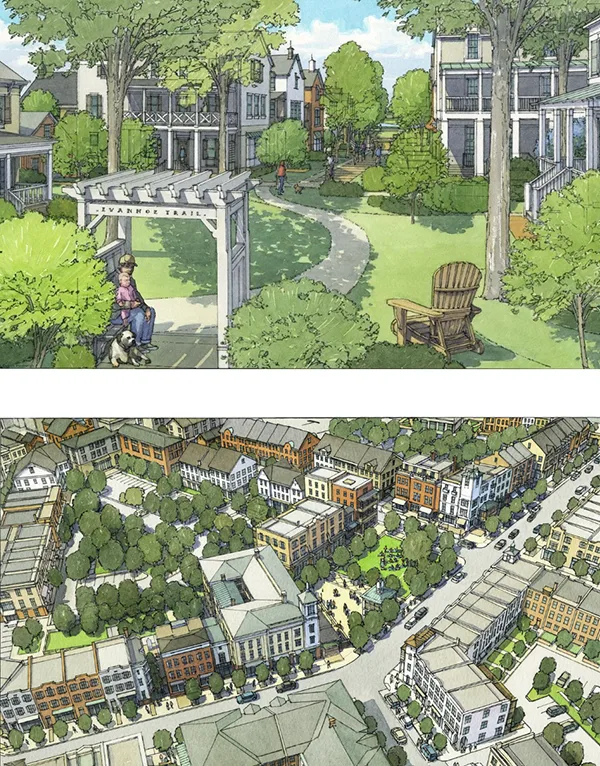
The pedestrian-friendly plan shall encompass 2.2 million square feet of commercial and industrial space, recreational amenities, retail and services.
Uniquely, it is being developed on the oldest continuously held farmstead in the United States—owned by the same family for generations, who are committed to creating a legacy project that will serve their community for generations to come.
According to Don Vitek, Sr. VP of landowner Wirtz Realty, the project will preserve 11 acres of the existing Ivanhoe Farms dedicated to locally grown produce. Furthermore, over 40% of Ivanhoe Village’s land will be designated as open space, featuring a network of paths and amenities connected by12 miles of trails.
The project is also committed to diversity in housing types and sizes, offering a broad range of price points. Of the new village’s 3,100 residential units, notably less than a third of these units will be single-family homes, while 25% will be specifically designed for seniors. To ensure sustainable growth, the development will be phased gradually, with residential construction limited to 155 units per year.
Not surprisingly, the town of Mundelein has enthusiastically embraced Ivanhoe Village’s new urban plan, and its dedication to green space, walkability, and job creation.

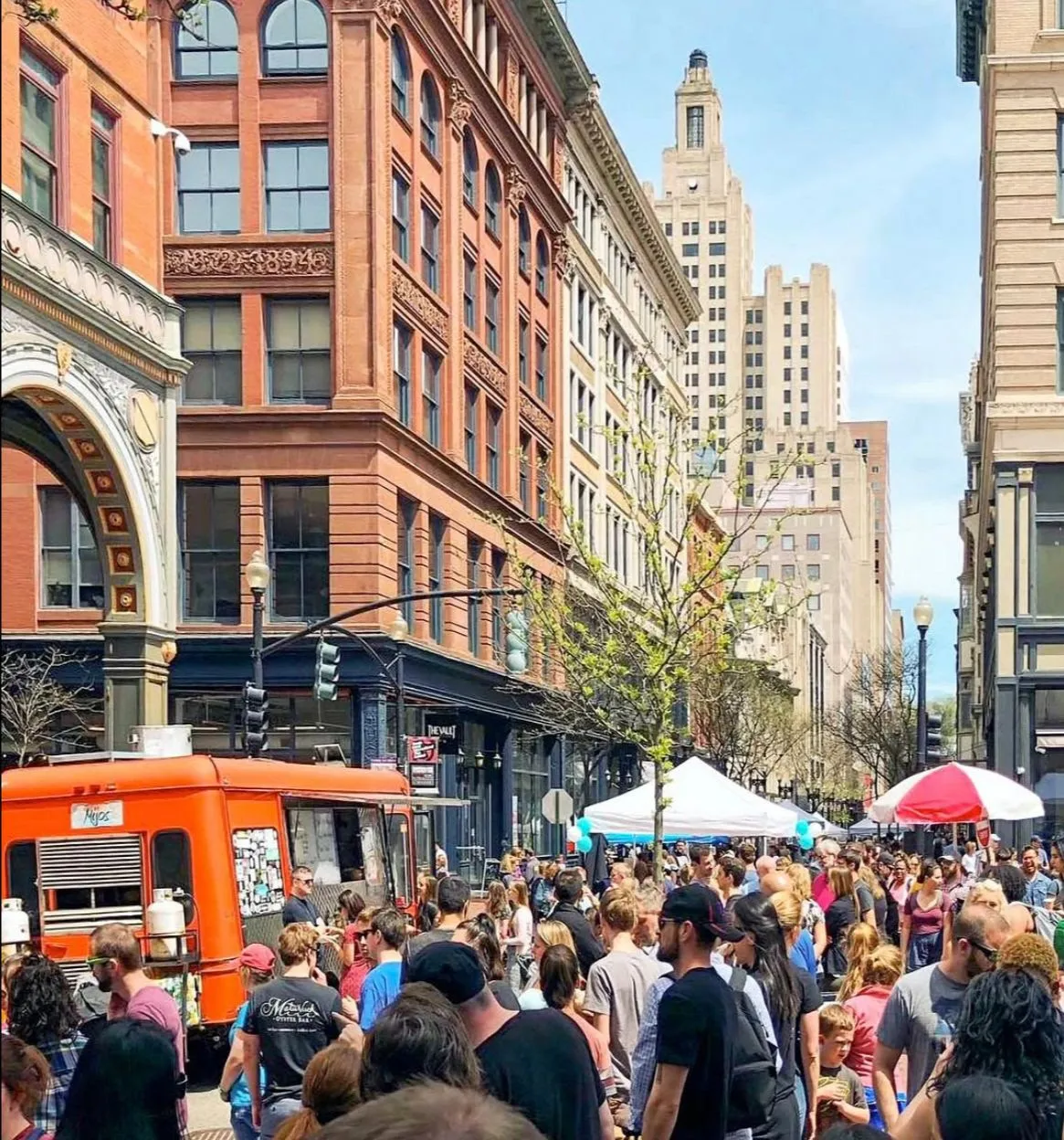
Busy street life in a reanimated downtown with the iconic Art Deco “Superman” building in the background. Photo Courtesy of @indowncitypvd
DPZ at CNU33 – Providence, RI
This year’s CNU marked a rewarding homecoming of sorts for DPZ. For the second time, the City of Providence,RI, hosted the annual new urbanist conference. The promise of DPZ’s Downcity Providence 1991 and 2003 master plans were starting to yield tangible results back in 2006 at CNU14. By 2025, these seeds had born fruit.
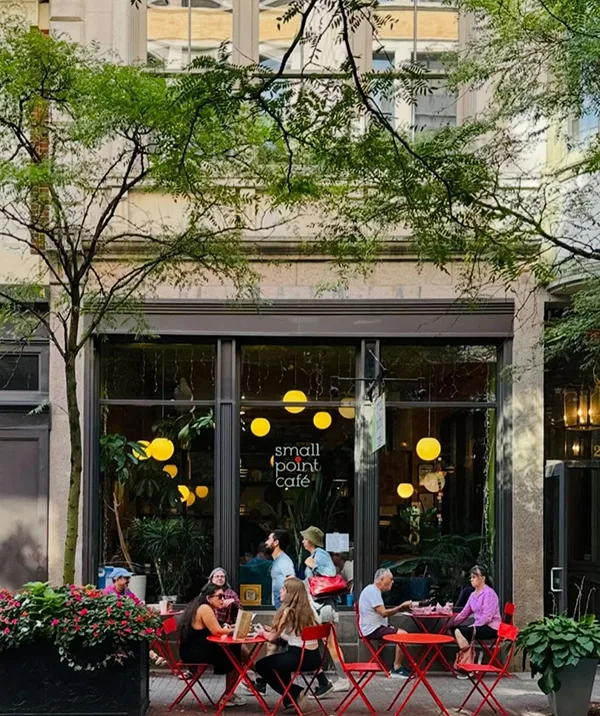
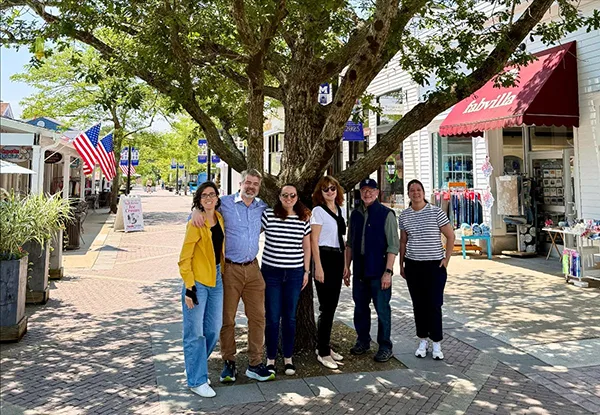
In between the thought-provoking sessions and informative tours around the New England region, congress attendees were able to enjoy a lively downtown thriving with locally-owned restaurants, theaters, shops, public art, green spaces, and newly-converted housing units populated by college students, families, and relocated retirees.
To learn more about DPZ at CNU 33 check out our Pulse Post here.
In between the thought-provoking sessions and informative tours around the New England region, congress attendees were able to enjoy a lively downtown thriving with locally-owned restaurants, theaters, shops, public art, green spaces, and newly-converted housing units populated by college students, families, and relocated retirees.
To learn more about DPZ at CNU 33 check out our Pulse Post here.
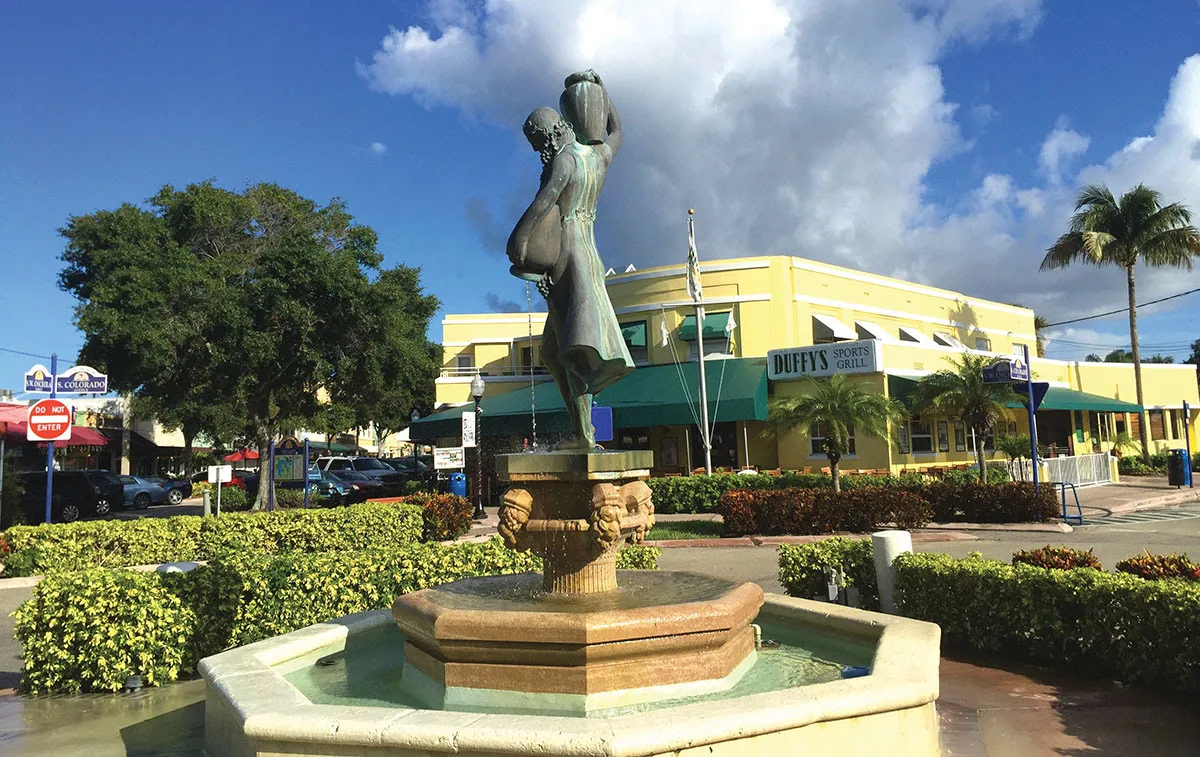
The bronze statue of Lady Abundance, a gift from the Women’s Club of Stuart, stands in the middle of Haney Circle on Osceola Street.
Photo Credit: Donna Crary
Saving Stuart: Then & Now
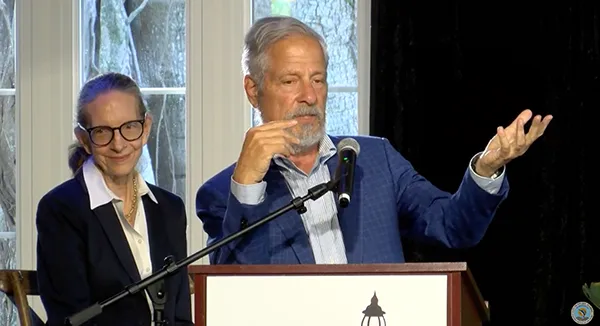
In late May, Andrés and Lizz were honored guests in Stuart, FL. for the Saving Stuart: Then & Now. This Stuart Main Street event was part of the yearlong Martin County 100th Anniversary celebration.
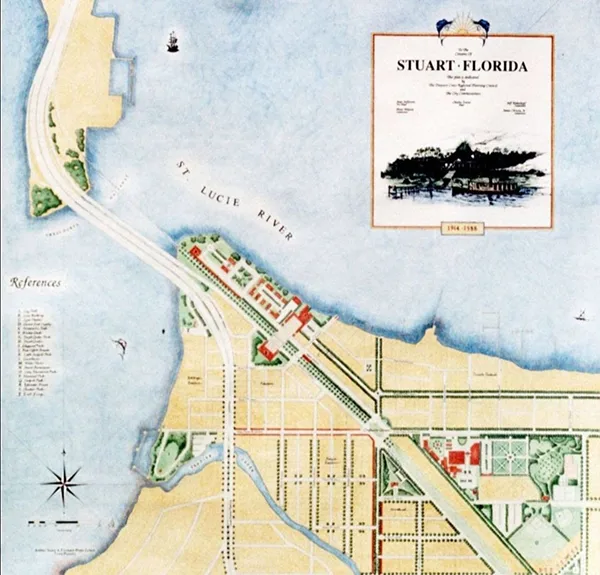
The city holds a special place in DPZ history, as it was DPZ’s first downtown master plan client. Andrés was invited as the keynote speaker with several other locals in a series of panels and presentations. With 150+ attendees, many stories were shared by individuals whose passion for the town both predated and followed DPZ’s 1988 intervention.
Stuart was the subject of DPZ’s first illustrative master plan for an existing downtown.
This article is by Blake Fontenay, a veteran Florida journalist who has written a book on Stuart. It describes
the collaborative spirit and faith that Stuart residents have in their personal agency to make a place better – the reason we continue to work on municipal projects!
the collaborative spirit and faith that Stuart residents have in their personal agency to make a place better – the reason we continue to work on municipal projects!
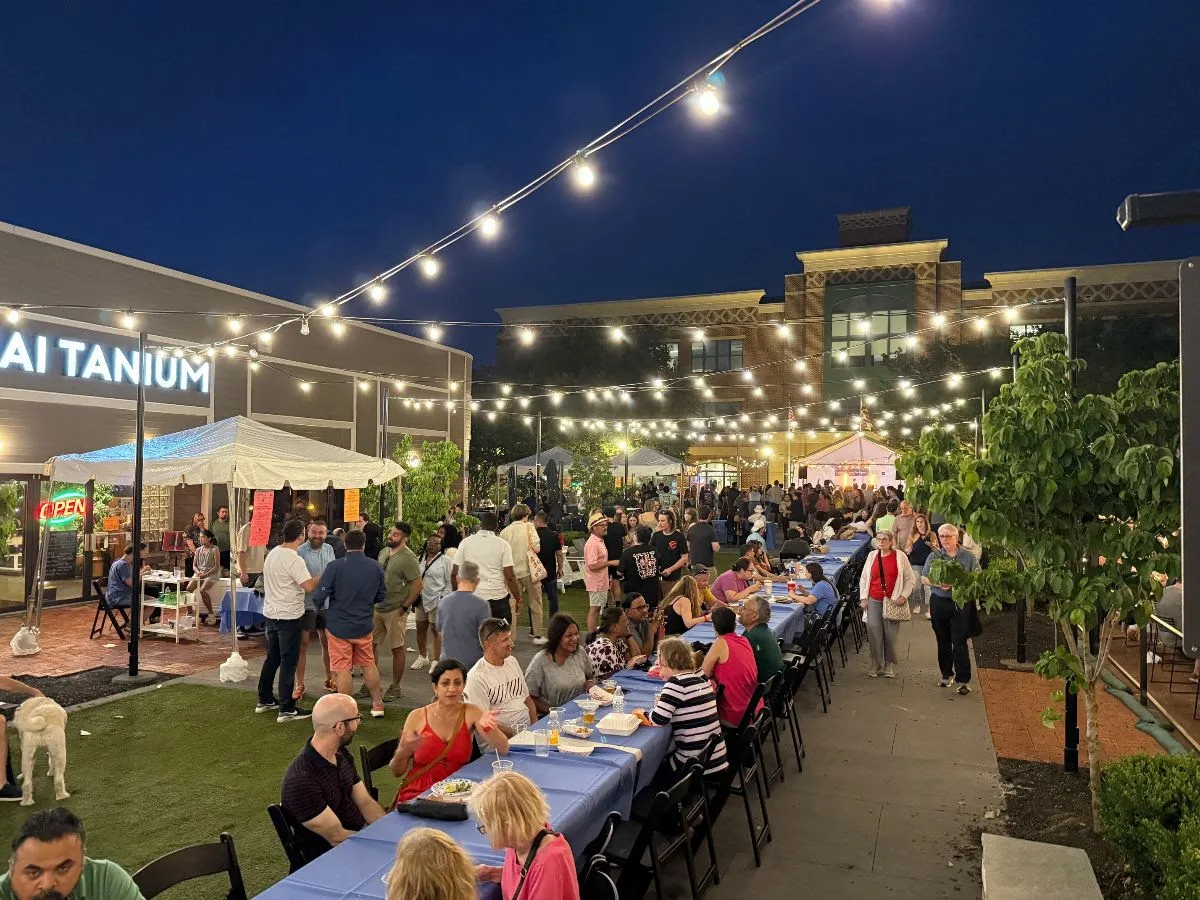
Kentlands Market Square during the annual Kentlands Under the Lights Event.
Kentlands Under the Lights
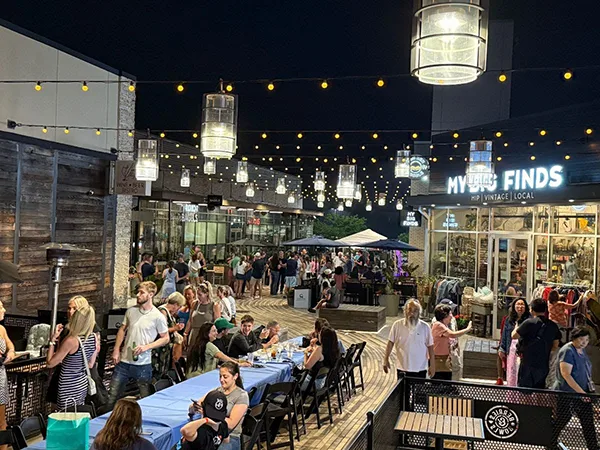
The annual “Kentlands Under the Lights” sponsored by the Kentlands Community foundation on June 14th welcomed residents and visitors to gather and share a communal dinner. Based on a small town Italian tradition, this event has become a neighborhood favorite.
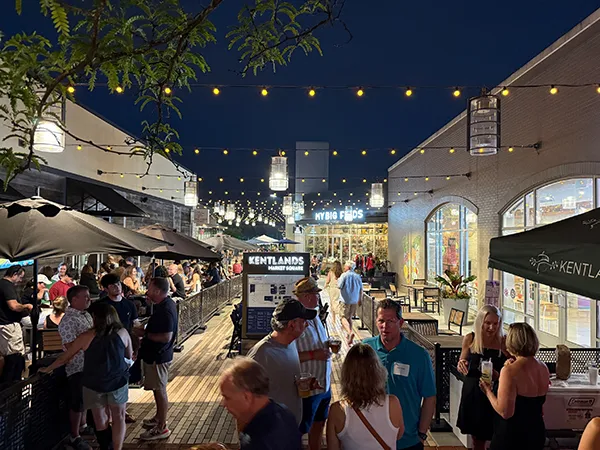
Hundreds of people were there, and the pictures do not do the event justice, as it’s impossible to show the crowds without a drone! But these images give you a flavor.
Read more about the treasured annual tradition here.
Hundreds of people were there, and the pictures do not do the event justice, as it’s impossible to show the crowds without a drone! But these images give you a flavor.
Read more about the treasured annual tradition here.
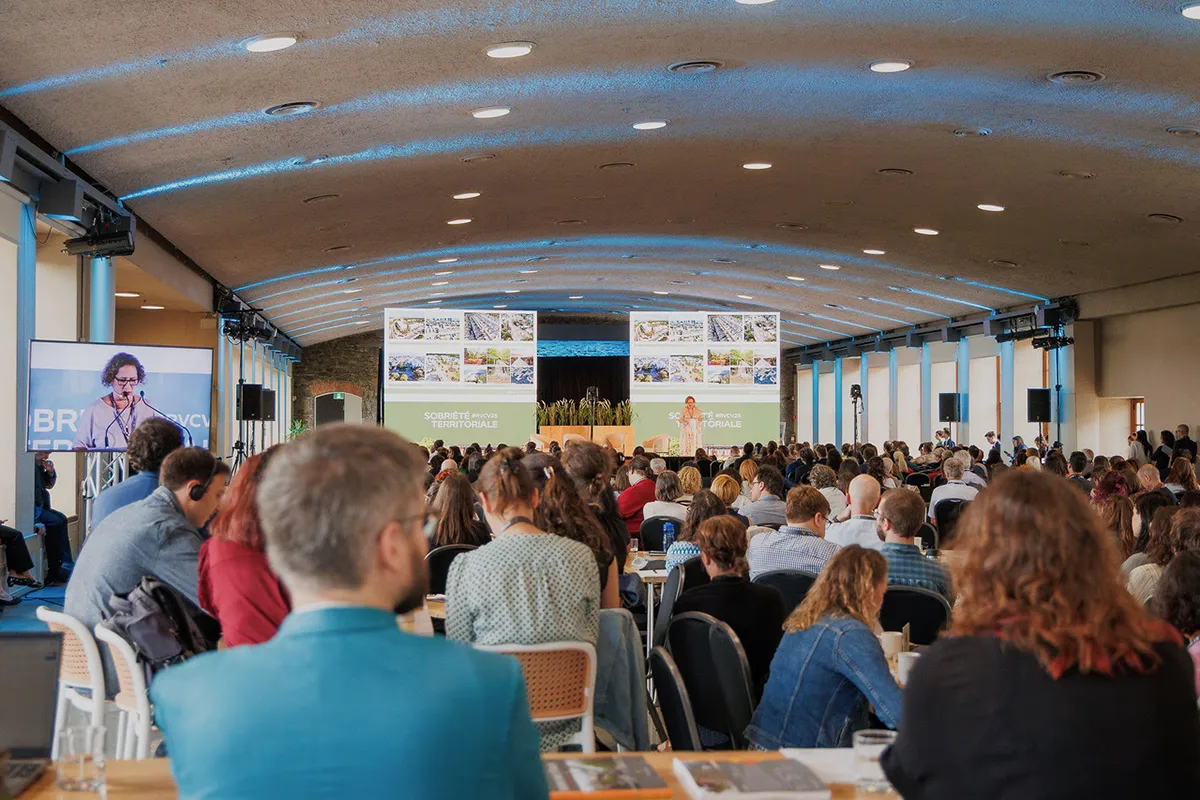
Marina Khoury discussed sprawl repair tools at the Vivre-en-Ville conference in Montreal.
“Sprawl Makeover: Big Ideas for Small Sites and Small Ideas with Big Impacts”

On June 10th, 2025, Marina Khoury was in Montreal for the Vivre-en-Ville annual conference. The theme was “Territorial Sobriety” in light of the housing shortages, urban sprawl, “not in my backyard,” climate change, and other crises confronting Québec.
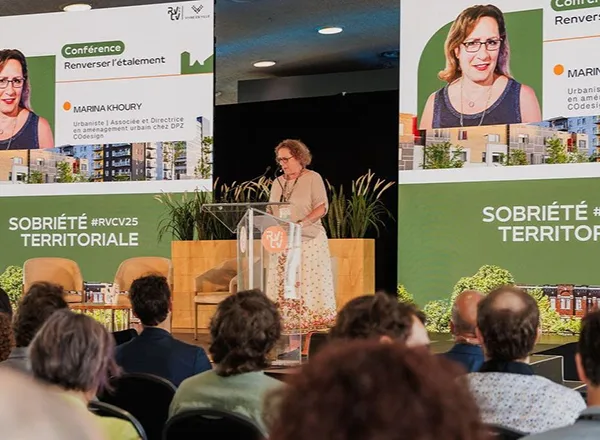
Speakers shared a myriad of positive and inclusive approaches to building stronger, more resilient communities. Marina showcased sprawl repair as an incremental, walkable, design-driven suburban transformation tool.
Read more about the event here.
Speakers shared a myriad of positive and inclusive approaches to building stronger, more resilient communities. Marina showcased sprawl repair as an incremental, walkable, design-driven suburban transformation tool.
Read more about the event here.
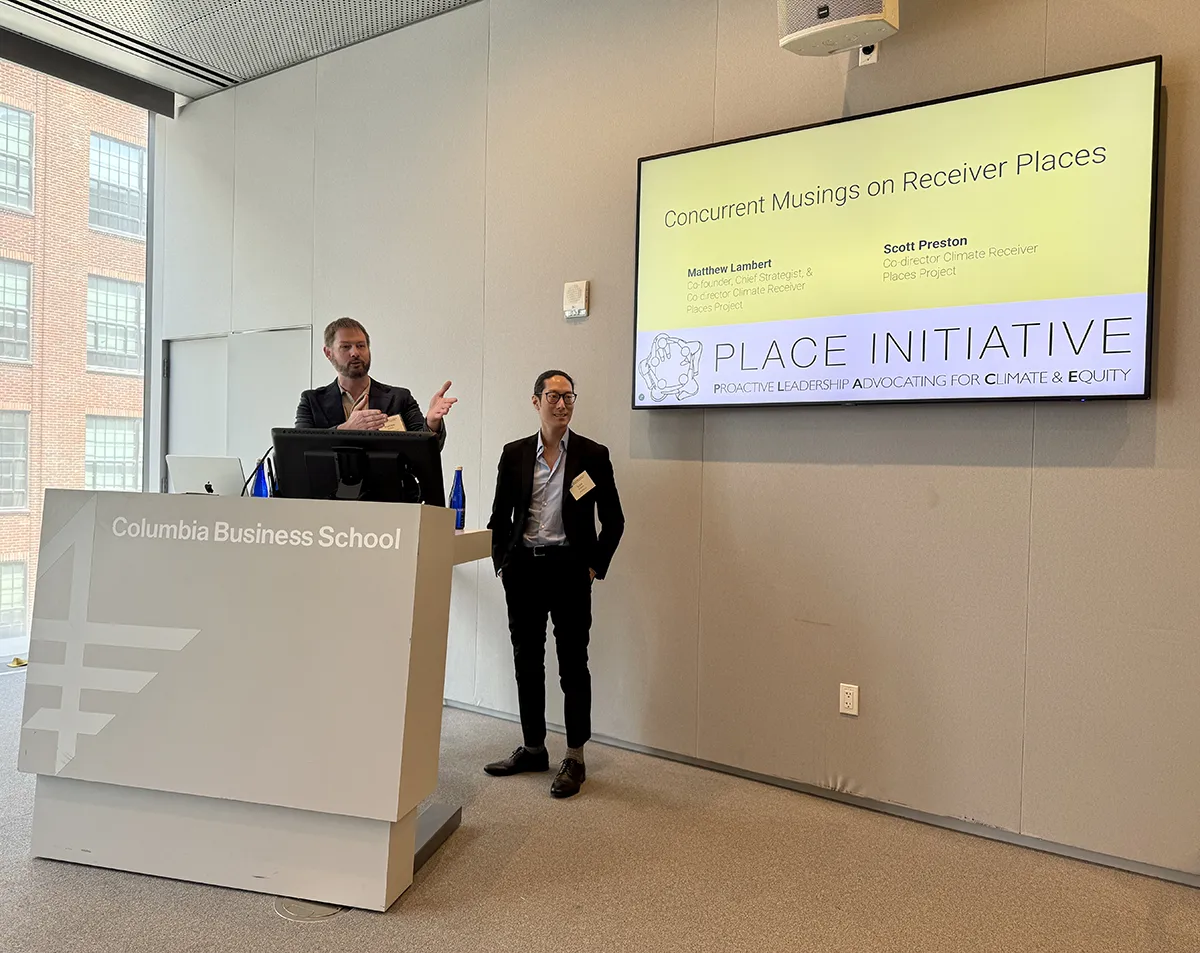
Matt Lambert presented PLACE Initiative’s research on climate migration.
MR2025: Mobility, Adaptation, and Wellbeing in a Changing Climate
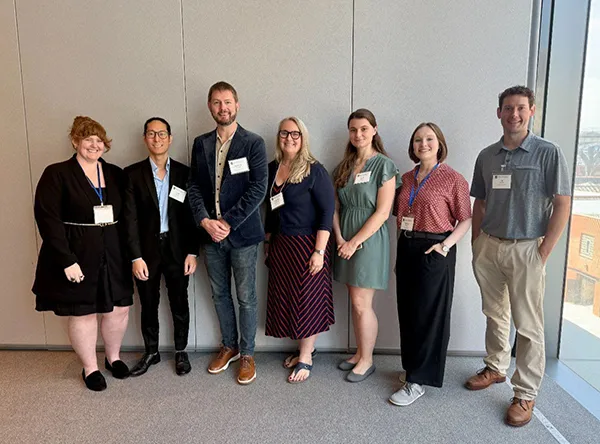
Following CNU33, Matt Lambert and Camille Annette Cortes participated in the biennial Managed Retreat conference, MR25, at Columbia University in NYC alongside Meghan Sullivan, Scott Preston, Mary Ann Grena Manley, Kayla Walsh, Sydney Fishman, and Kenneth “Kip” Santos.
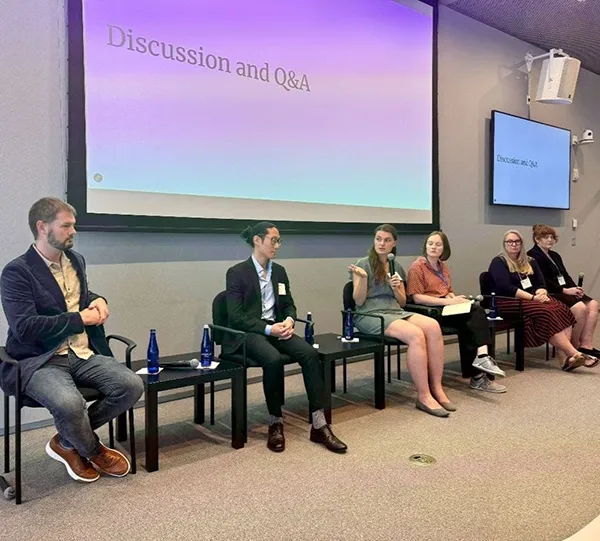
Their climate-focused non-profit, PLACE Initiative, was featured during the event’s keynote, by Jesse Keenan, for its forward-thinking focus on the long-term implications of climate migration. PLACE joined Adaptation Leader and Washington Seagram’s University in a session focused on the state of research into reviving places.
In this session, Matt connected the dots between migration and growth planning, and shared insights into urban form, incremental change, and considerations around fiscal, social, and political capital constraints. Their work will be featured in Jesse Keenan’s forthcoming book North, and was recently featured in Hillary Brown’s book, Revitalize | Resettle: How Main Street USA Can Offer New Beginnings For America’s Climate-Displaced, and her interview in Common Edge.
Learn more about the event here.
In this session, Matt connected the dots between migration and growth planning, and shared insights into urban form, incremental change, and considerations around fiscal, social, and political capital constraints. Their work will be featured in Jesse Keenan’s forthcoming book North, and was recently featured in Hillary Brown’s book, Revitalize | Resettle: How Main Street USA Can Offer New Beginnings For America’s Climate-Displaced, and her interview in Common Edge.
Learn more about the event here.
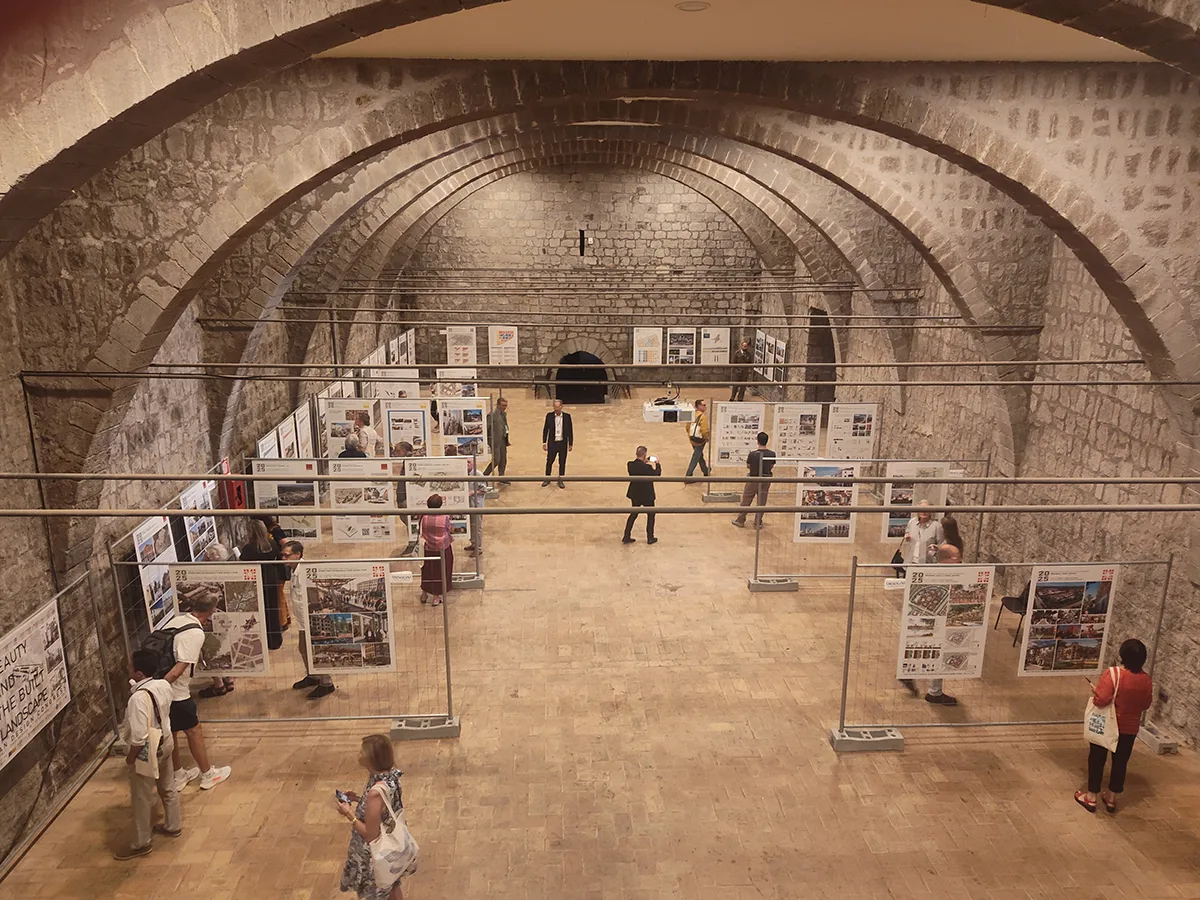
“Beauty and the Built Landscape” Exhibition in Viterbo, Italy
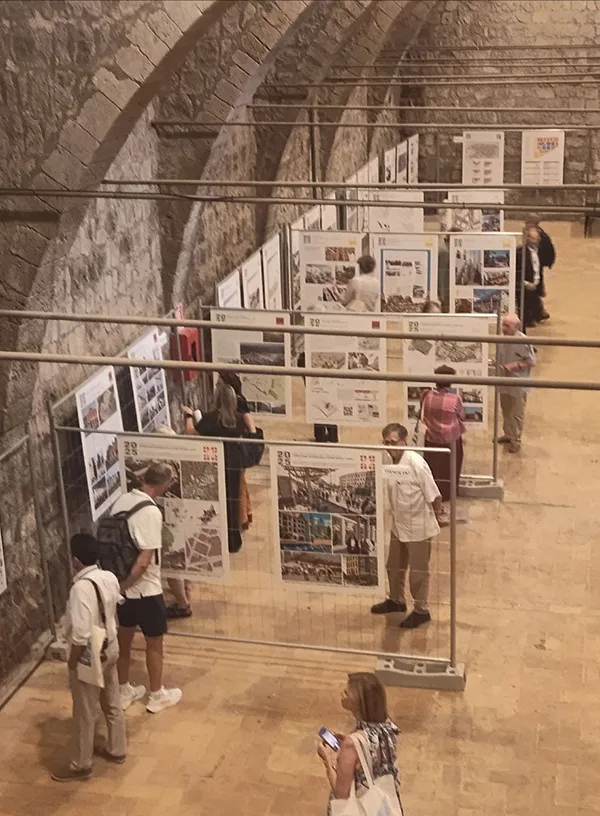
DPZ was pleased to participate in the exhibition accompanying the “Beauty and the Built Landscape” international congress this summer in Viterbo, Italy. The venue was the medieval hall of the Palazzo dei Papi. Over 20 architecture and urban design firms from around the world were invited to show projects. The focus of the submissions was the concept of beauty being pursued via design, but also with planning tools like form-based codes, guidelines, pattern books, and other regulations and innovative techniques.
DPZ chose to send 4 projects. They ranged from the Blue Water affordable housing pocket in the Florida Keys and the Heulebrug social housing village in Belgium, to two examples of form-based codes: Seaside, FL, and Miami 21. DPZ thanks the organizers of the event and University of Notre Dame School of Architecture professor, Steve Semes, for the invitation.
You can view the projects from DPZ’s submission here.

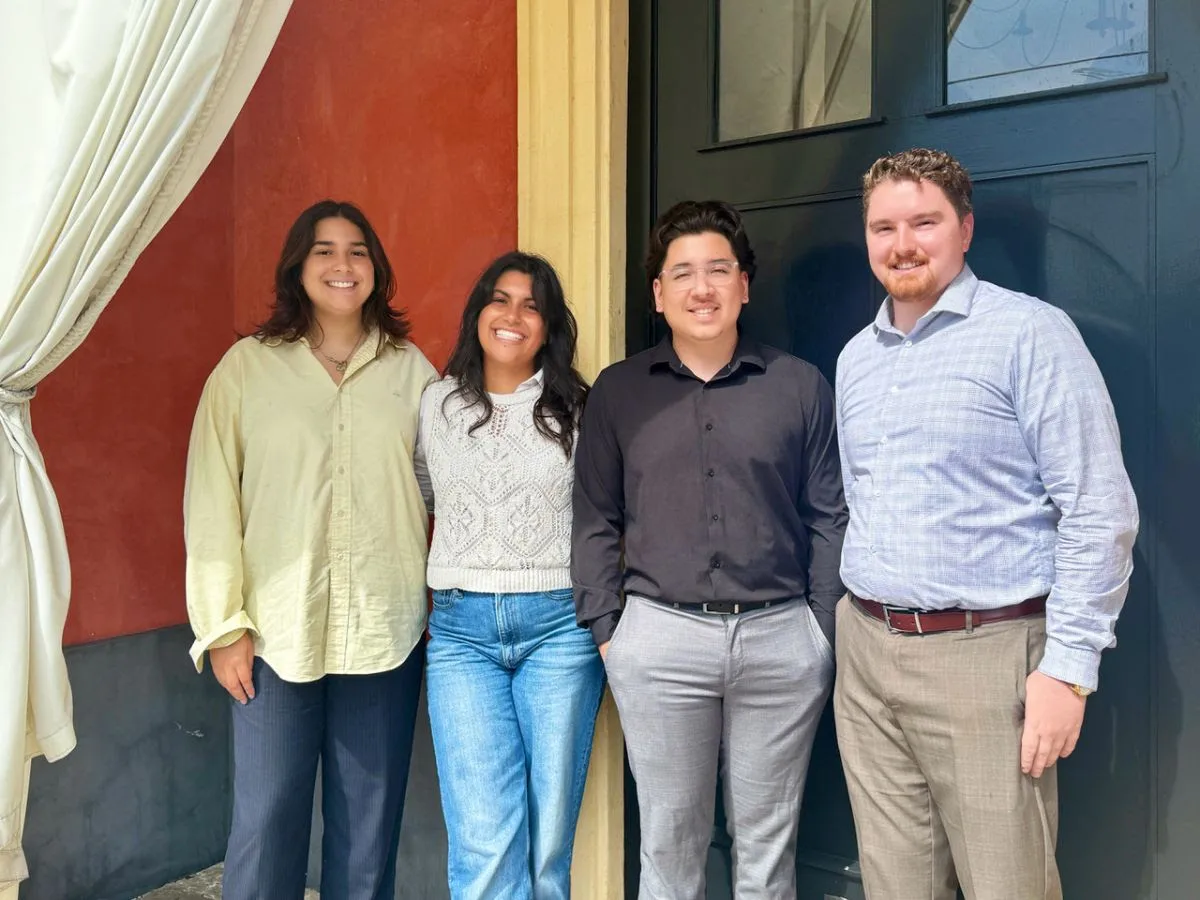
Left to Right: Mariana Fleites, Andrea Lira, Jayson Moron, and Joe Eiden
In the past 12 months, DPZ has welcomed a few new faces to our offices, and we wanted to take this opportunity to present them.
Andrea Lira, B.Arch, joined DPZ’s team as a designer in October of last year. She is a recent graduate from the University of Miami with a minor in music theory. Mariana Fleites, B.Arch, is another recent graduate of the University of Miami School of Architecture. A rising fifth-year architecture student at the University of Miami, Jayson Moron expects to obtain his Bachelor of Architecture next May. Joe Eiden, B.Arch, is a recent graduate of the University of Notre Dame where he minored in Sustainability.
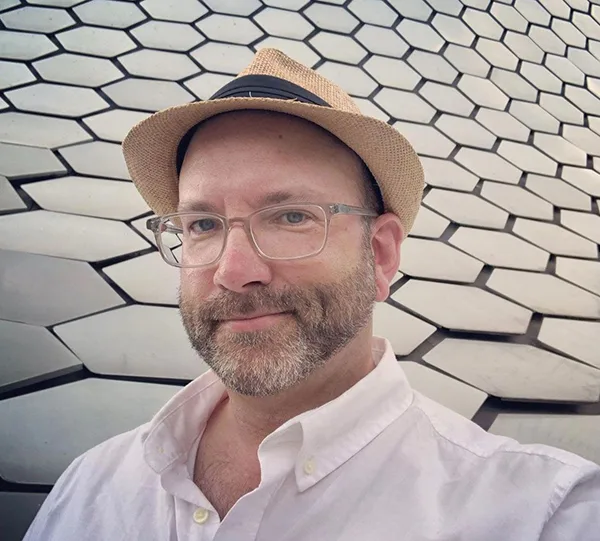
Working in our Portland office, Jonathan Konkol, AICP, is an urban designer with over 20 years of experience in planning, architecture, and real estate economics. He actively participates in local planning advocacy and chairs the Built Environment Committee at the City Club of Portland where he sits on the board of governors.
This summer DPZ also welcomed some short-term volunteers in Miami: Erela Yashiv, a rising high school senior at Ransom Everglades School in Miami, was at DPZ in mid-July; Fabio Vallejos, who will be starting his freshman year in FIU’s Architecture program this fall joined us for part of the summer; and Isabella McGrath, who was with us for a week in August, expects to graduate next May with a Bachelor of Architecture degree from Notre Dame. Meanwhile, in our Portland office, returning for a second summer was Gardner Berry who will be a high school senior starting this fall.


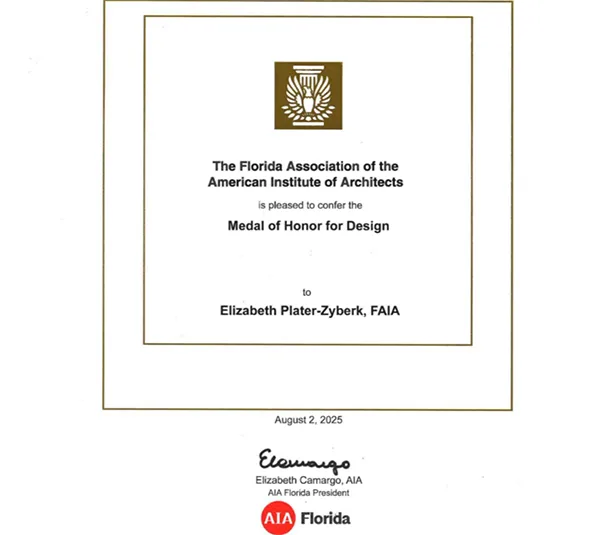
Florida AIA Medal of Honor for Design
In recognition for their career-long commitment to the design of Florida communities, the Florida Chapter of the American Institute of Architects has conferred on Andres and Lizz their Medal of Honor for Design.
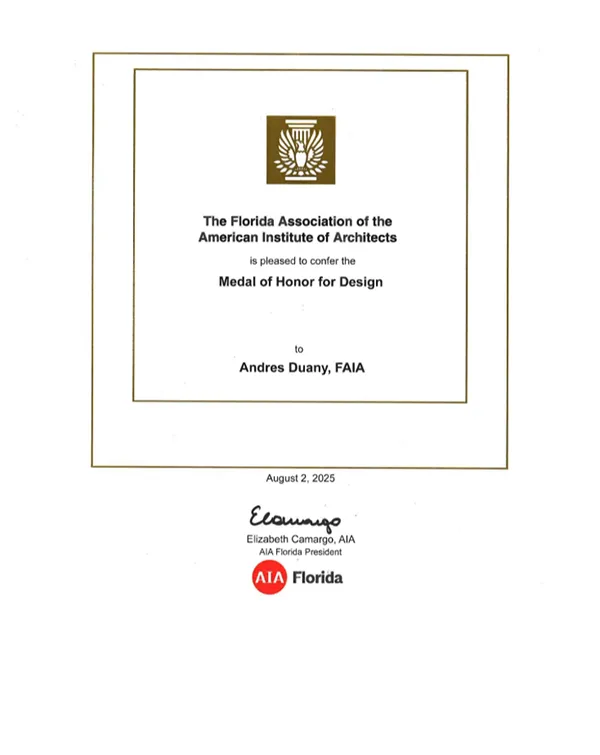
The medal recognizes Florida architects who have “distinguished themselves, by the high quality and originality of one’s work, advancing the value and public awareness of good architecture over an extended period of time, and by one’s leadership, provided inspiration to colleagues and others.” This is the highest award for design that AIA Florida can bestow on one of its members.
Watch the official video here.
The medal recognizes Florida architects who have “distinguished themselves, by the high quality and originality of one’s work, advancing the value and public awareness of good architecture over an extended period of time, and by one’s leadership, provided inspiration to colleagues and others.” This is the highest award for design that AIA Florida can bestow on one of its members.
Watch the official video here.
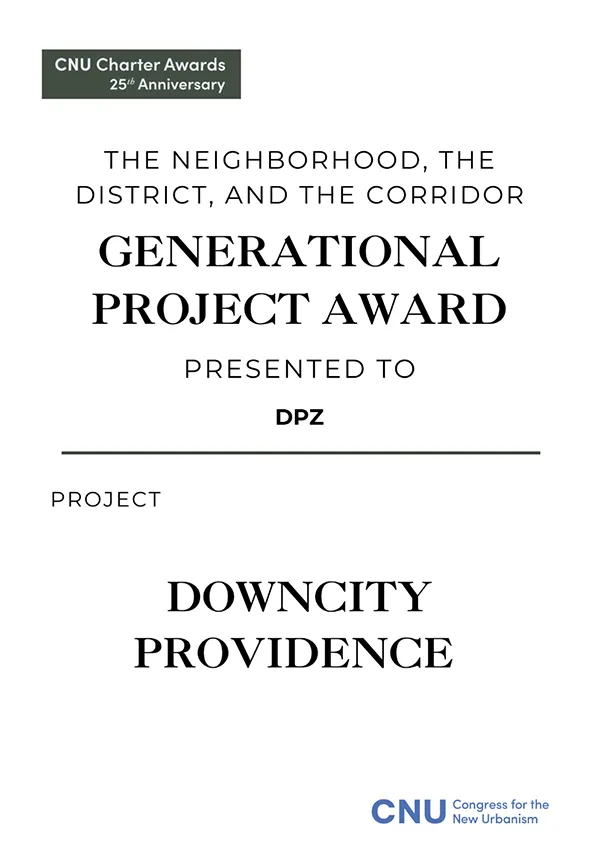
CNU33 Charter Awards
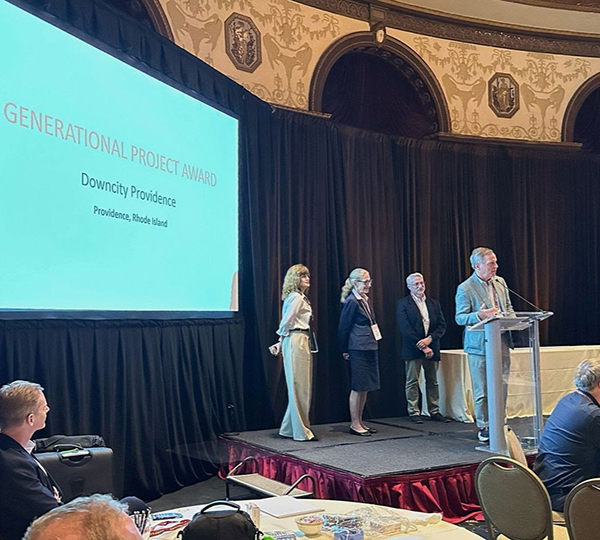
As mentioned earlier in this newsletter, a highlight of CNU33 for DPZ was the Charter Awards. The Downcity Providence project was honored with the inaugural Generational Project Award.
It was presented in concert with the inaugural Sisyphus Implementation Medal to Buff Chace to honor his persistence in championing the revitalization of Downcity.
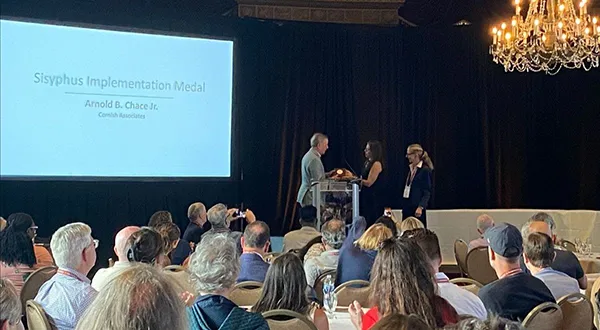
The two awards recognized the village of individuals whose constant commitment to reviving this downtown has been steadfast for nearly 40 years, and is still going strong.
The two awards recognized the village of individuals whose constant commitment to reviving this downtown has been steadfast for nearly 40 years, and is still going strong.
Seafront Residences
Our Seafront Residences project has been honored with another prize: the prestigious Silver Award for Best Environmental Conservation at the Federation Internationale des Administrateurs de Bien-Conseils Immobiliers (FIABCI).The award reflects Aboitiz Land’s unwavering commitment to master planned communities dedicated to sustainability.
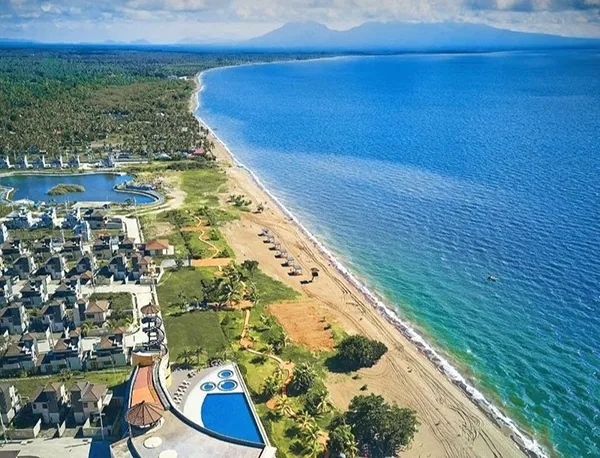
The achievement acknowledges the SEALANDER Project, which champions initiatives such as the conservation hatchery for the endangered pawikan sea turtles. The hatchery and conservation strategies were integrated in the overall master plan from the outset.

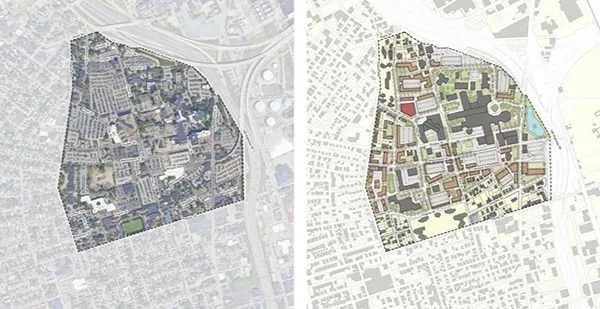
CNU Legacy Project: The Providence Community Health District
Before each annual Congress, the CNU connects local municipalities and neighborhood groups in the host region with pro bono expertise from prominent urban design firms to plan improvements for local communities.
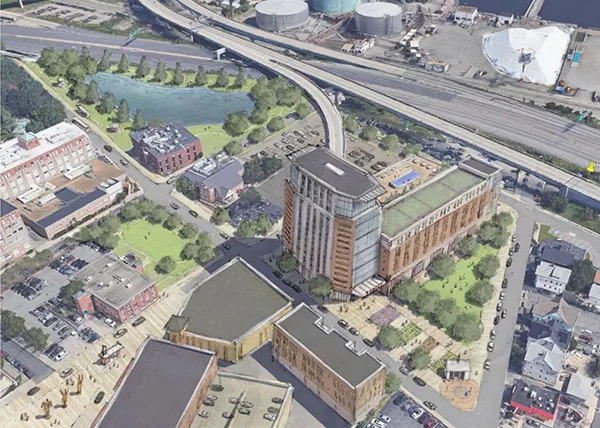
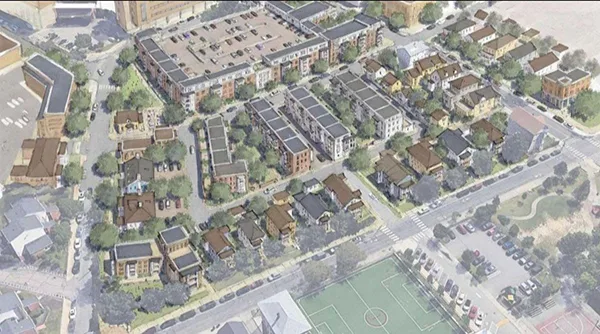
This year, DPZ organized a team with extensive experience in urban revitalizations, to propose a Legacy Project redevelopment for 40 acres of surface parking in Providence’s Hospital District. Collaborating with Cornish Associates, Urban3, Zimmerman/Volk & Associates, and
University of Miami Professor Joanna Lombard, a DPZ team led by Matt Lambert and Lizz Plater-Zyberk conducted a charrette with the City of Providence, Brown University Health / Rhode Island Hospital, other area stakeholders, and leaders, developers, and non-profit organizations.
The proposed plan for the “Providence Community Health District” aims to restore the neighborhood interface and catalyze economic development by leveraging the potential of a mixed-use health district and providing needed housing in proximity to jobs and the downtown. The plan preserves existing assets and operations while also expanding employment, retail, and education, in transforming the district from a car-dominated to a pedestrian-oriented anchor for surrounding neighborhoods and institutions.
Read more at CNU’s Public Square here.
University of Miami Professor Joanna Lombard, a DPZ team led by Matt Lambert and Lizz Plater-Zyberk conducted a charrette with the City of Providence, Brown University Health / Rhode Island Hospital, other area stakeholders, and leaders, developers, and non-profit organizations.
The proposed plan for the “Providence Community Health District” aims to restore the neighborhood interface and catalyze economic development by leveraging the potential of a mixed-use health district and providing needed housing in proximity to jobs and the downtown. The plan preserves existing assets and operations while also expanding employment, retail, and education, in transforming the district from a car-dominated to a pedestrian-oriented anchor for surrounding neighborhoods and institutions.
Read more at CNU’s Public Square here.
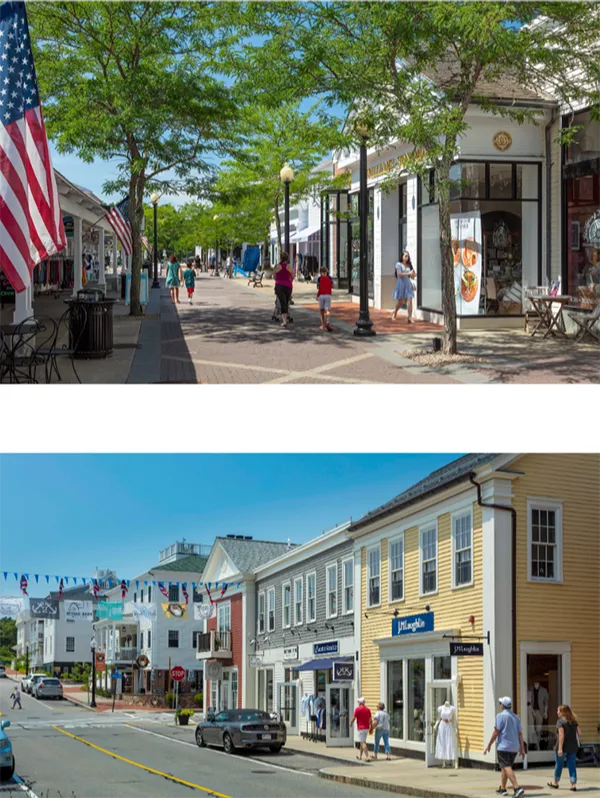
Mashpee Commons: A Model for Sprawl Repair
Rob Steuteville, editor of the CNU Public Square blog, reveals in a recent post that he was a Cape Cod resident in the early 1980s and frequented the New Seabury Shopping Center that is today Mashpee Commons. He notes that Mashpee is the lone community on the Cape without a historic, mixed-use core.
In 1986, developers Buff Chace and Doug Storrs set out to create that core by retrofitting the strip shopping mall into a recognizably New England village center. With the help of a DPZ master plan and a team of local architects, they had crafted just enough walkable urban fabric out of the shopping center parking lots to merit inclusion in Peter Katz’s 1994 book “The New Urbanism.” Today “it is …comprising approximately 10 blocks, a diverse mix of buildings and public spaces, and a network of streets.”
Rob notes that “Mashpee Commons is generally credited as the pioneering suburban retrofit example in America, but [it has not] been recognized enough for its innovations and quality. It should be studied because the US has thousands of dead and dying shopping malls that now—or soon will—require reuse or teardown, and the developers of Mashpee Commons have been doing this the longest.”
Read the Public Square article here.
In 1986, developers Buff Chace and Doug Storrs set out to create that core by retrofitting the strip shopping mall into a recognizably New England village center. With the help of a DPZ master plan and a team of local architects, they had crafted just enough walkable urban fabric out of the shopping center parking lots to merit inclusion in Peter Katz’s 1994 book “The New Urbanism.” Today “it is …comprising approximately 10 blocks, a diverse mix of buildings and public spaces, and a network of streets.”
Rob notes that “Mashpee Commons is generally credited as the pioneering suburban retrofit example in America, but it has not been recognized enough for its innovations and quality. It should be studied because the US has thousands of dead and dying shopping malls that now—or soon will—require reuse or teardown, and the developers of Mashpee Commons have been doing this the longest.”
Read the Public Square article here.
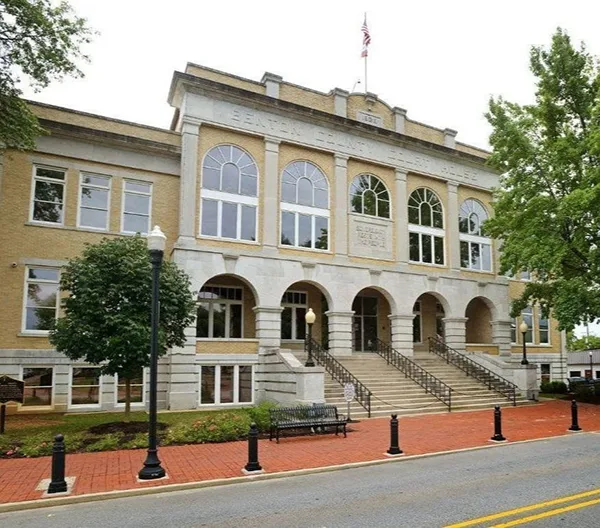
DPZ & NW Arkansas
The two leading counties in Northwest Arkansas, Washington and Benton, continue their collaboration on the regional planning initiative that has engaged DPZ as its guide. The client is the NWA Council, a coalition of community and business leaders.
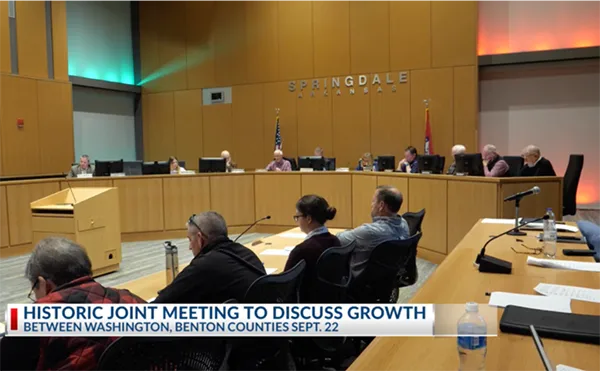
In partnership with PlaceMakers, Crafton Tull, Urban3, and ZVA, DPZ will develop a Regional Growth Strategy that will comprehensively evaluate the multifaceted implications of growth, assess the current state of NWA communities,
and identify strategies to foster more favorable outcomes for a region projected to expand by 400,000 inhabitants by 2050.
Starting on September 17th, DPZ will be facilitating an eight-day roadshow that is essentially one long charrette, but with meetings in multiple locations. The meetings will be less focused on design, as on creating and discussing growth strategies with the residents and stakeholders who will be most impacted by the outcomes.
A final report is expected to be ready by April 2026, in time for the Council’s annual Spring Meeting. Read the full article here.
and identify strategies to foster more favorable outcomes for a region projected to expand by 400,000 inhabitants by 2050.
Starting on September 17th, DPZ will be facilitating an eight-day roadshow that is essentially one long charrette, but with meetings in multiple locations. The meetings will be less focused on design, as on creating and discussing growth strategies with the residents and stakeholders who will be most impacted by the outcomes.
A final report is expected to be ready by April 2026, in time for the Council’s annual Spring Meeting. Read the full article here.
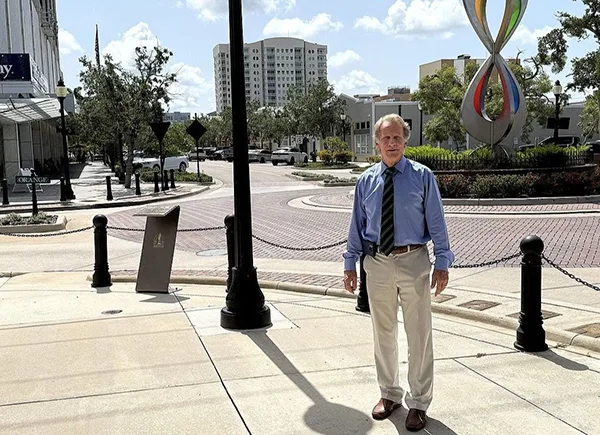
Downtown Sarasota
A commercial real estate broker credits the 2000 DPZ master plan for the renaissance of Downtown Sarasota, and points to the lucky timing that helped get the area through the great recession.
The key was to bring residents back to the downtown. As usual it was the tripod of urban design that helped support the effort: a master plan to inspire the vision and guide physical improvements (design); a form-based code to help implement the vision (policy); and strategic, pragmatic procedural tweaks to expedite the process (management).
Regarding the latter, the writer cites early objections to DPZ’s advice that code-compliant proposals receive swift administrative approval, and not be subjected to a long public review, unless a developer needs variances.
Read the full article here.
The key was to bring residents back to the downtown. As usual it was the tripod of urban design that helped support the effort: a master plan to inspire the vision and guide physical improvements (design); a form-based code to help implement the vision (policy); and strategic, pragmatic procedural tweaks to expedite the process (management).
Regarding the latter, the writer cites early objections to DPZ’s advice that code-compliant proposals receive swift administrative approval, and not be subjected to a long public review, unless a developer needs variances.
Read the full article here.
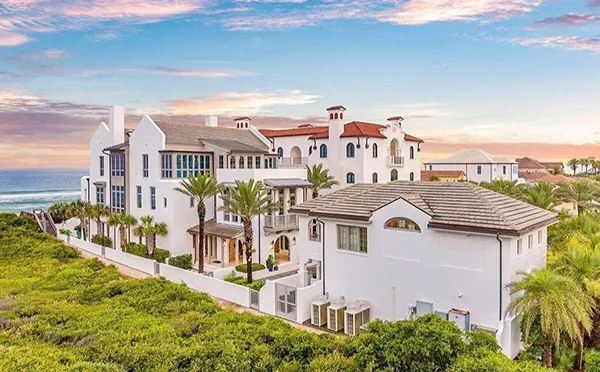
30-A in Atlanta Homes
As the summer season draws many to coastal vacations, an Atlanta real estate and lifestyle publication corroborates what many Atlantans have long recognized.
The Florida panhandle’s Emerald Coast is more of a draw for both tourists and property investors than ever, particularly the once-sleepy stretch of 30-A. With many of the DPZ and neighboring villages nearing completion, existing properties have become increasingly desirable and expensive.
In some areas, such as Sea Grove, tear-downs of single-story cottages has become more common, replaced by large multi-story homes. Despite all the construction and summer traffic, the diverse amenities and visual offerings along this county road still continue to delight and attract visitors of all ages.
Read the full article here.
The Florida panhandle’s Emerald Coast is more of a draw for both tourists and property investors than ever, particularly the once-sleepy stretch of 30-A. With many of the DPZ and neighboring villages nearing completion, existing properties have become increasingly desirable and expensive.
In some areas, such as Sea Grove, tear-downs of single-story cottages has become more common, replaced by large multi-story homes. Despite all the construction and summer traffic, the diverse amenities and visual offerings along this county road still continue to delight and attract visitors of all ages.
Read the full article here.
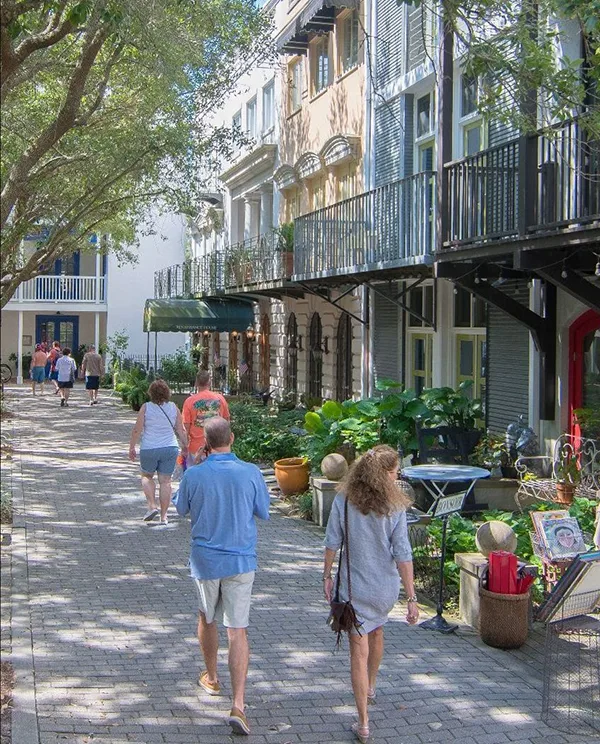
“Lot Lines: Where placemaking meets paradise”
In another observational piece on Seaside, J. David Chapman, a professor of real estate at The University of Central Oklahoma, writes about the urban design lessons that he wishes more vacationers internalized and took home with them from their time spent along 30-A.
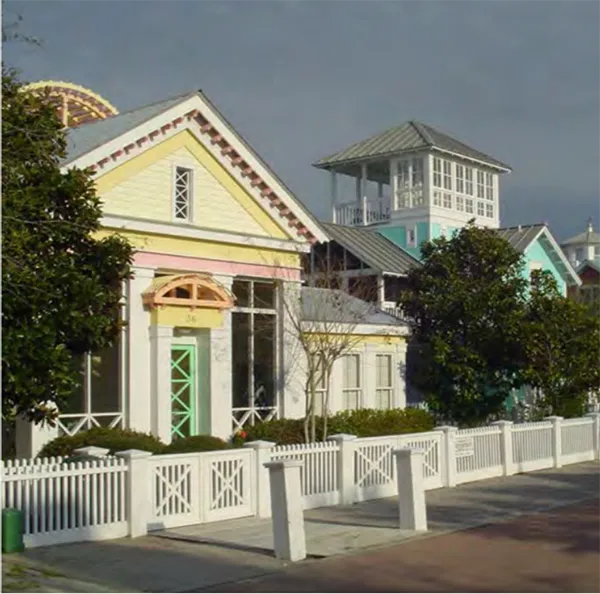
“Seaside is a reminder that these ideas aren’t just theoretical or nostalgic. They’re real. They’re doable. And they work.”, he points out. It is about wanting to make those suburban places we inhabit more focused on “walkability, mixed-use development, and human-scaled design.”
Read the full piece here.

Lessons from Latin America: Sustainable Urbanism Rooted in Tradition
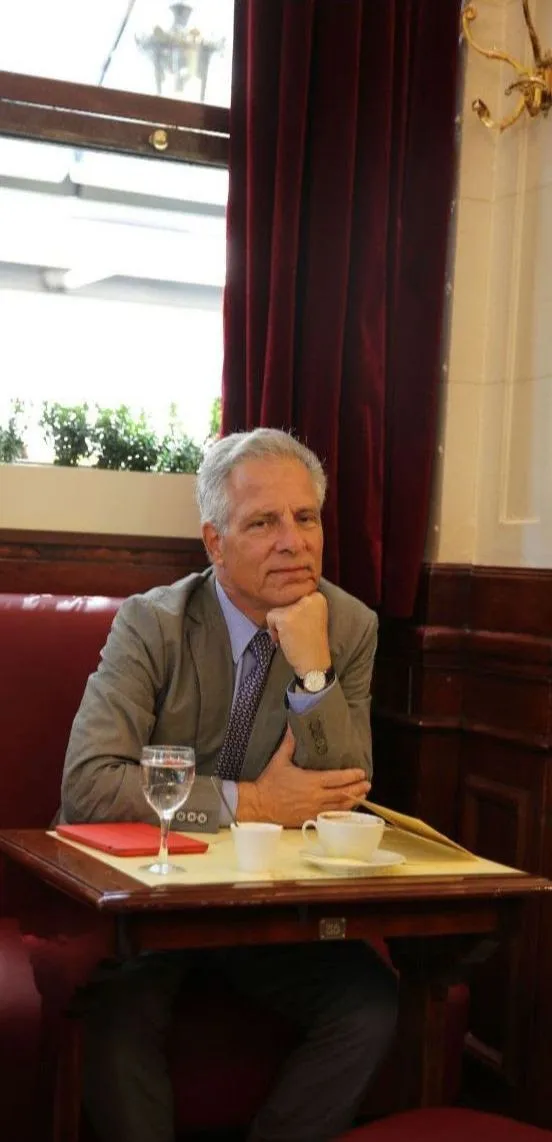
Part of the CNU Latino CNU 33 session included this video of Andrés sharing his thoughts on the Lessons from Latin America. As he sees it, Latin America must be viewed broadly as a region that includes not only Central and South America but also the entire Caribbean and Gulf Basin, and even the southwest US.
The great cities of this large area embody the legacy of the civilizations of the Mediterranean and North Africa that colonized them. They are an extension of the built legacies of the Roman and Middle Eastern Empires.
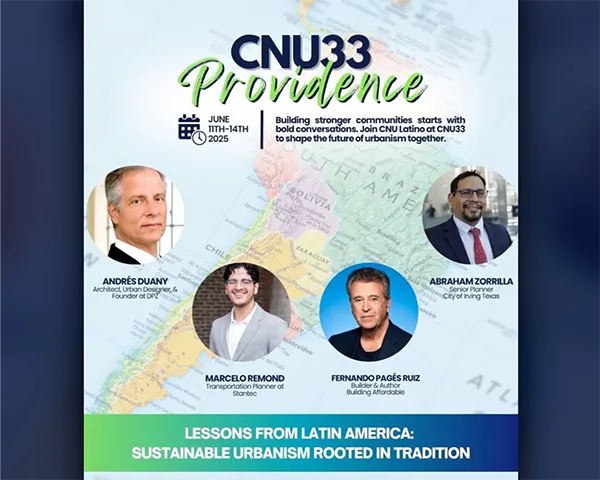
Among the imports brought to the Americas were the courtyard house typology and masonry construction, two traditions that have much to teach modern communities aspiring to build sustainable and secure density.
Watch the video here.
Among the imports brought to the Americas were the courtyard house typology and masonry construction, two traditions that have much to teach modern communities aspiring to build sustainable and secure density.
Watch the video here.
10 Lessons from the Villages
In a recent “On the Park Bench” talk moderated by Rob Steuteville, Andrés and Fernando Pages engaged in a thoughtful exchange on the lessons new urbanists can glean from The Villages, a master-planned, age-restricted community in Florida.
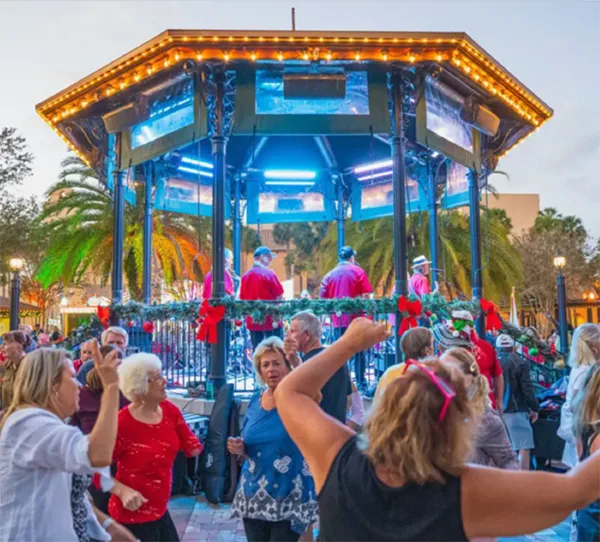
Together, they highlighted the programmatic innovations that have made this the top-selling community in the US. While acknowledging the many design shortcomings of the Villages, they urge CNUers to look past the aesthetics and appreciate what it does well.
Watch the full interview here.


Leon Krier
7 April 1946 – 17 June 2025
Our civilization has lost both a pillar and a buttress—one a brave, brilliant, uncompromising architect — Krier; the other a warm, funny, generous, friend and mentor — Leo.
– Andres Duany

Read the Common Edge piece on his legacy and view Andrés and Leon in The Art of Building Cities.
Read the Common Edge piece on his legacy and view Andrés and Leon in The Art of Building Cities.
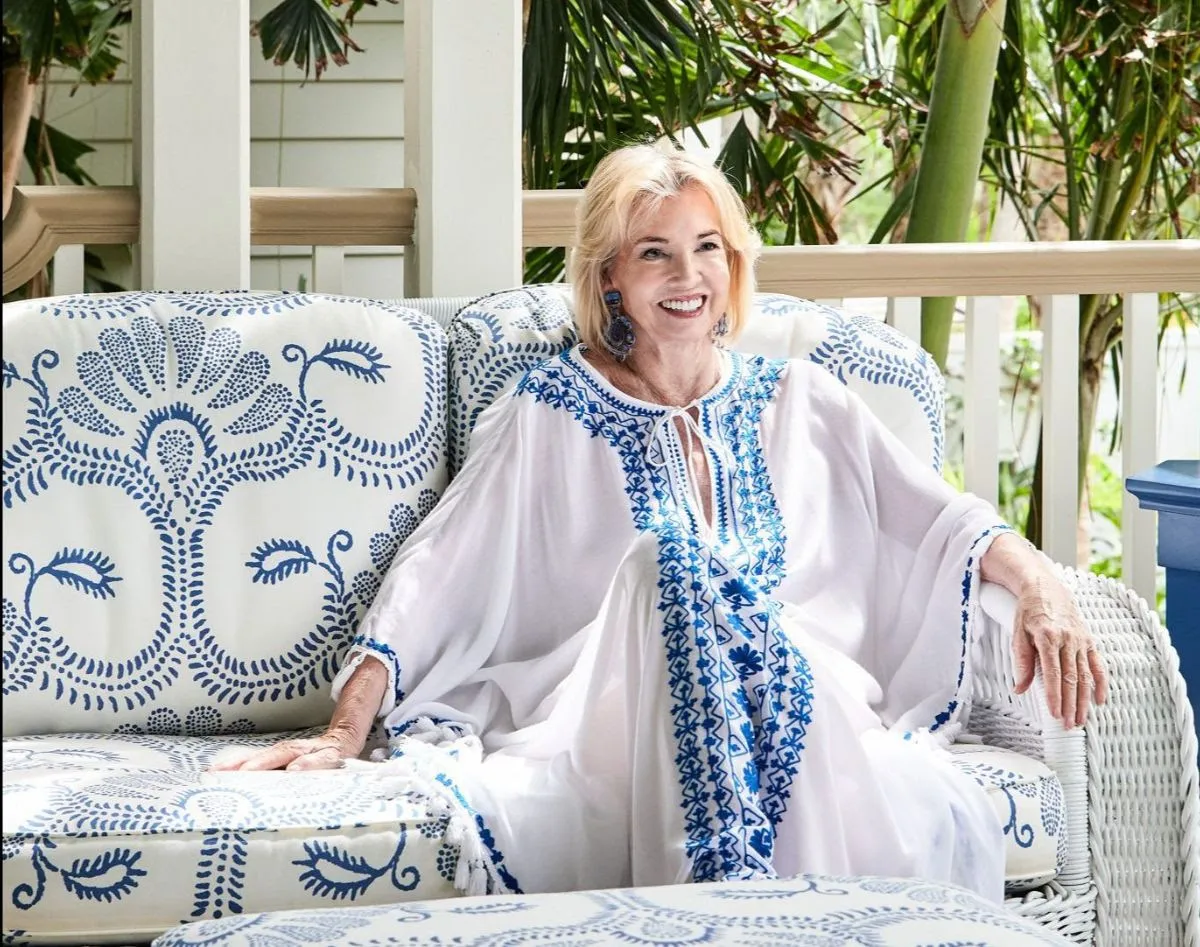
The Hon. Hilary Mary Weston
12 January 1942 – 2 August 2025
Earlier this month, Windsor village founder Hilary Weston passed away. Along with her husband, Galen Weston, they commissioned DPZ in 1989 to master plan and code the oceanfront village located in Vero Beach, FL. From the beginning she was instrumental in guiding the elegant simplicity of the community’s Anglo Caribbean style, an intentional response to the Neo-Mediterranean excesses of 1980s Florida development.
More recently, she had been working with DPZ and her daughter, Alannah Weston, on the design of Windsor’s final phase, the North Village, where she championed the creation of nature trails and the relationship to the adjacent wildlife refuge and the Indian River Lagoon.
Read her tribute on the official Windsor website.
DPZ at CNU33 – Providence, RI
This past June, the Congress for the New Urbanism’s annual conference marked a rewarding homecoming of sorts for DPZ. The City of Providence, RI, hosted the event for a second time. Back in 2006 at CNU14, the promise of DPZ’s Downcity Providence 1991 and 2003 master plans were starting to yield tangible results. By 2025 those ideas had matured and expanded with the tireless efforts of Buff Chace and his Cornish Associates team, and the enlightened contributions of local leaders, entrepreneurs, and civic organizations.
The CNU33 attendees encountered the fruits of their collective labor: a lively downtown that had flourished into a hub of locally owned restaurants, theaters, shops, public art, and new green spaces. These amenities are now home to a diverse population of college students, young professionals, families, and relocated retirees. Westminster Street and other downtown corridors, once abandoned and characterized by vacant storefronts, have undergone a remarkable transformation. Most notably, an impressive collection of 20th-century architectural landmarks has been restored to their former glory, complemented by the invigorating arrival of busy establishments lining the sidewalks and newly converted housing units above.
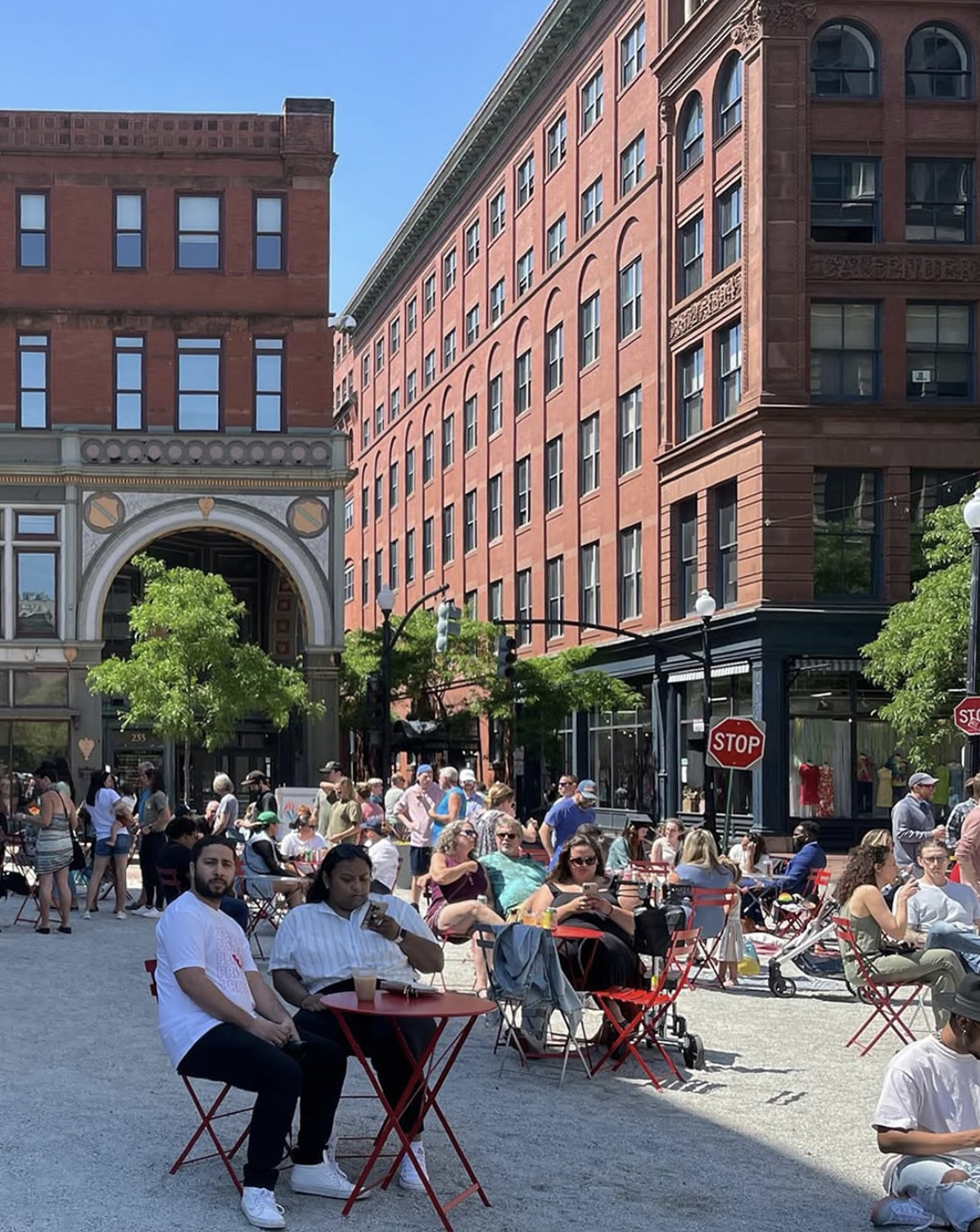
Grant’s Block Plaza is a pocket park and popular lunch spot at the corner of Westminster and Union Streets. (Photo: @indowncitypvd)
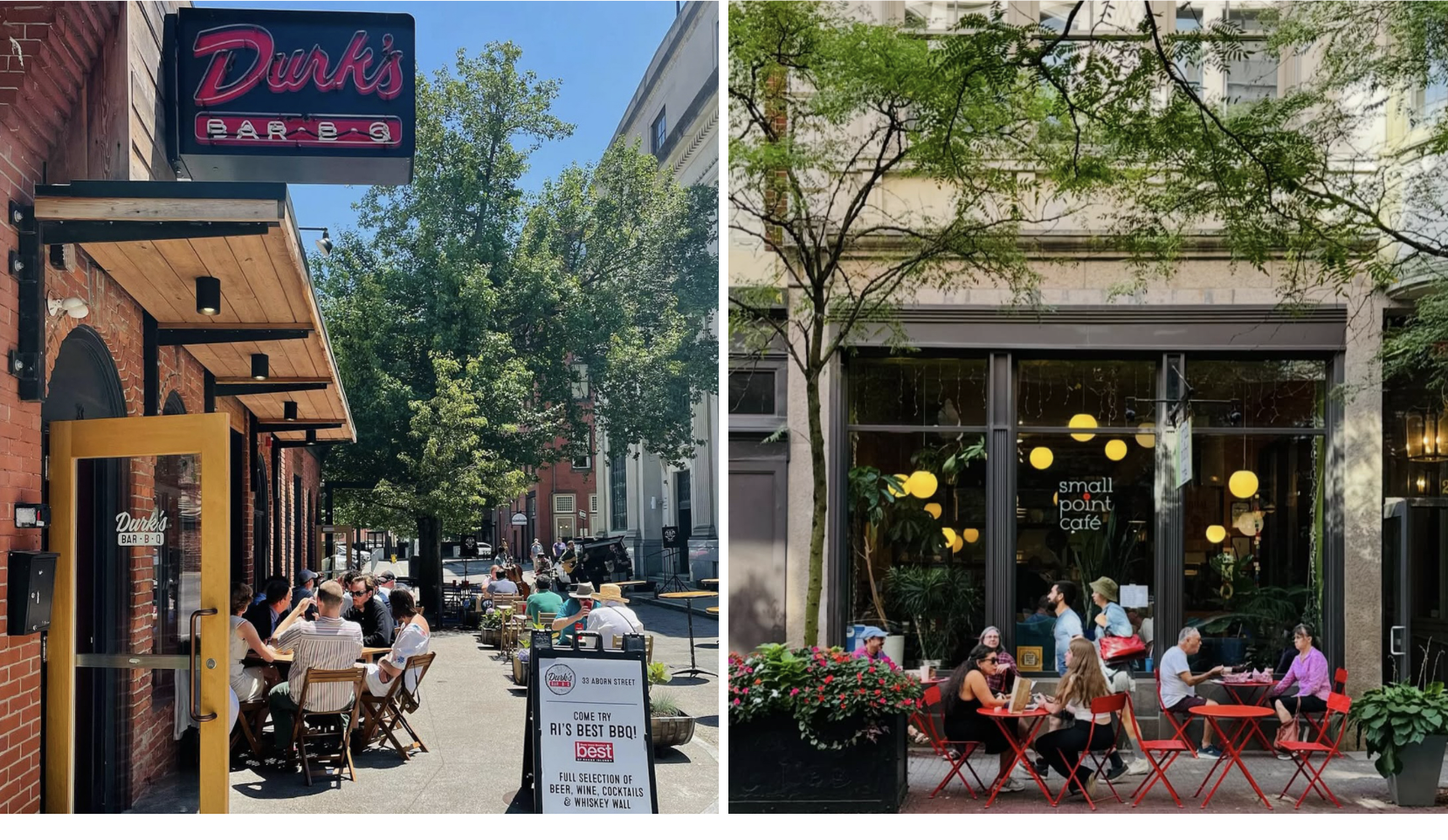
Outdoor dining has become a fixture throughout the Downcity. (Photo: @indowncitypvd)
The theme of the congress was a regional one, and thus New England was showcased with a number of sessions and special topic tours. Mashpee Commons on Cape Cod, often-cited as the first example of sprawl repair, was one of those visited by attendees. A group of DPZers took part in a special Mashpee tour and was able to see the evolution of another pair of DPZ master plans from 1986 and 2002. Now a full-fledged village center, the commons continues to work its way around suburban-minded zoning challenges to deliver the long-ago promised multi-family housing units that are starting to ensure a more walkable, balanced 24/7 node for the largely rural Upper Cape.
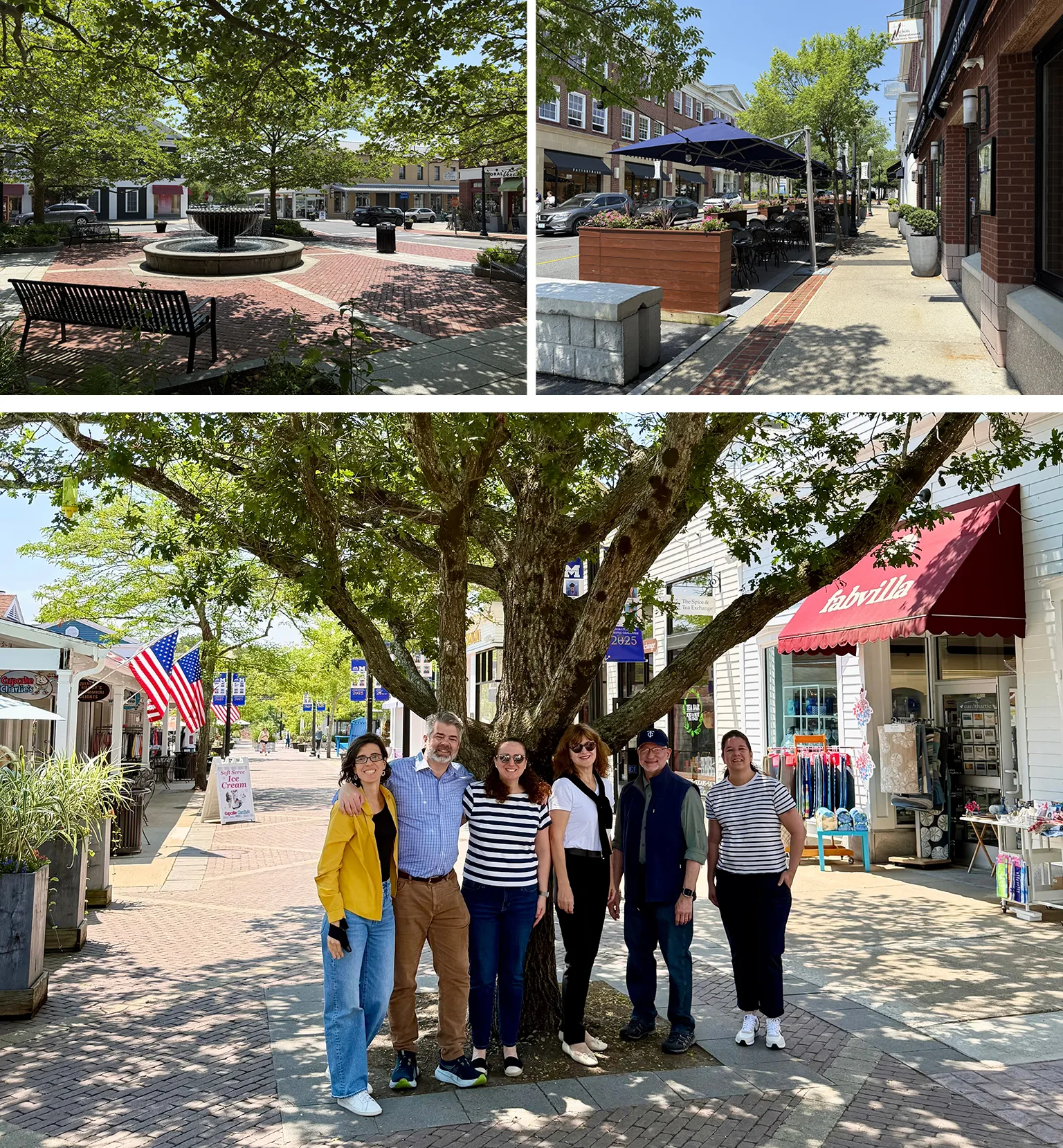
A group of DPZers took in the evolving streetscapes of Mashpee Commons.
This year’s conference saw a number of DPZers in action at a variety of sessions. Among them was outgoing CNU Board Chair Matt Lambert who handed the baton to next year’s Board Chair, frequent DPZ collaborator Jennifer Hurley. The sessions covered a wide range of topics organized around the principal tracks of climate, development, housing, urban design, and policy, as well as the Art Room.
The Influence of New Urbanism in the City of Providence opening session saw Andrés Duany share his thoughts on Downcity’s impact on the larger New England region.
Downcity Providence Project Showcasefeatured Buff Chace and Andrés Duany discussing the process and key challenges encountered during the nearly 40-year revitalization.
Building Regional Resilience Through Local Economies featured Andrés in a discussion of lessons from Latin America. The co-presenters were Fernando Pages and Korkut Onaran.
In Conversation: Reconsidering Recovery Response, in which Mallory Baches moderated six members with experience in recovery work, including Lizz Plater-Zyberk who traced DPZ’s experience from the firm’s response to Hurricane Andrew in 1992 to more recent recovery plans for Katrina (2005) and the Haiti Earthquake (2010).
The Perfect Little Town was led by longtime DPZ-collaborator Dhiru Thadani who was joined by Andrés on the lessons to be gleaned from the timeless urbanism and beauty of Uzès, France.
Model Climate Adaptation Enabling Legislation gave Camille Cortes a chance to share her research on Climate-responsive policy, covering climate resilience and economic diversification in Appalachian communities, and drawing from her nonprofit PLACE Initiative’s work with post-coal regions. Co-presenting were Hazel Borys, Korkut Onaran, and Scott Bernstein.
Adaptation in Action: Four Regions Respond to Climate Impact was moderated by Lizz Plater-Zyberk, who was joined by Galina Tachieva and DPZ client Sikes Ragan of the Village of Cheshire, Black Mountain, NC, along with Marc Wouters (New York) and Martin Dreiling (California). The conversations surrounded four presentations that illustrate adaptation responses to a variety of climate change impacts including coastal flooding, inland flooding, heavy rainfall, and fire in the wildland urban interface (WUI).
Neighborhood Design in the Art Room included Xavier Iglesias who showcased the art of DPZ illustrations as a tool in neighborhood planning. Moderated by James Dougherty of Dover Kohl & Partners, the session also included presentations by Eduardo Castillo and Kenneth Garcia– followed by an audience participation exercise.
Block Design in the Art Room included Xavier Iglesias who was joined by Chris Ritter to further showcase the art and techniques of DPZ block assemblages. Moderated by James Dougherty of Dover Kohl & Partners, the session also included a presentation by Thomas Dougherty– followed by an audience participation exercise.
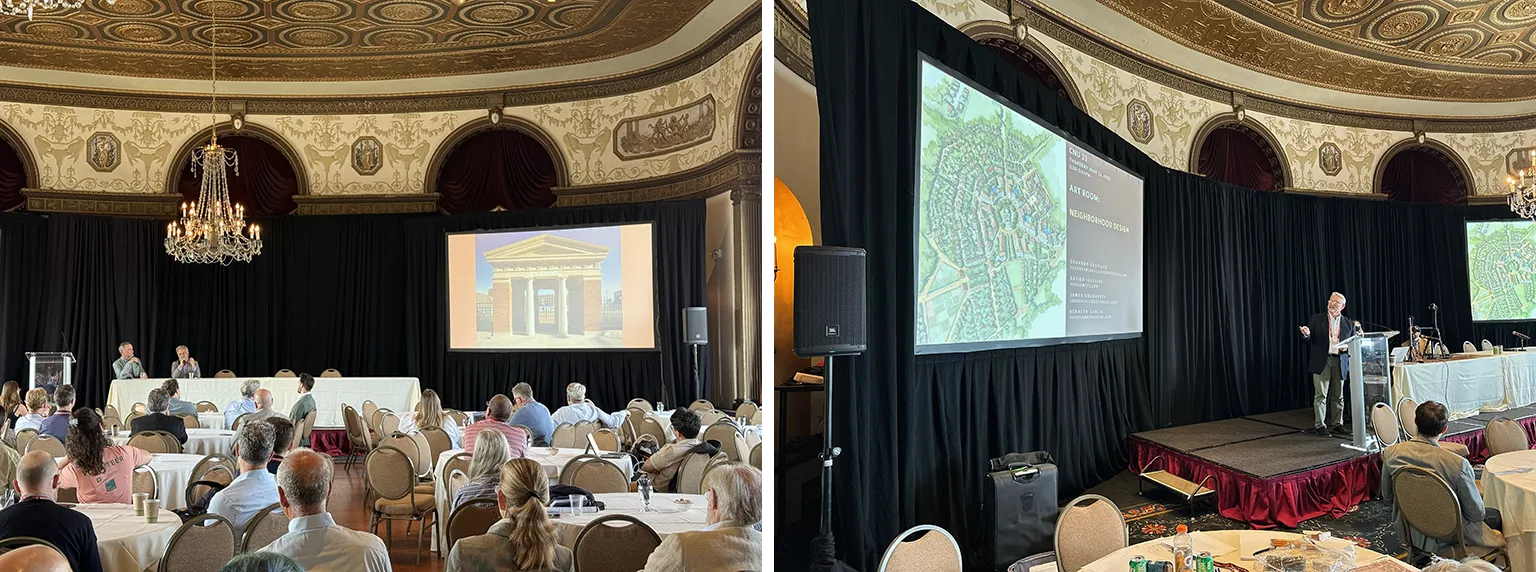
Andrés and Buff Chace recounted the story of Downcity Providence (left); Xavier Iglesias presented the techniques of Neighborhood Design via the art of DPZ illustrations (right)
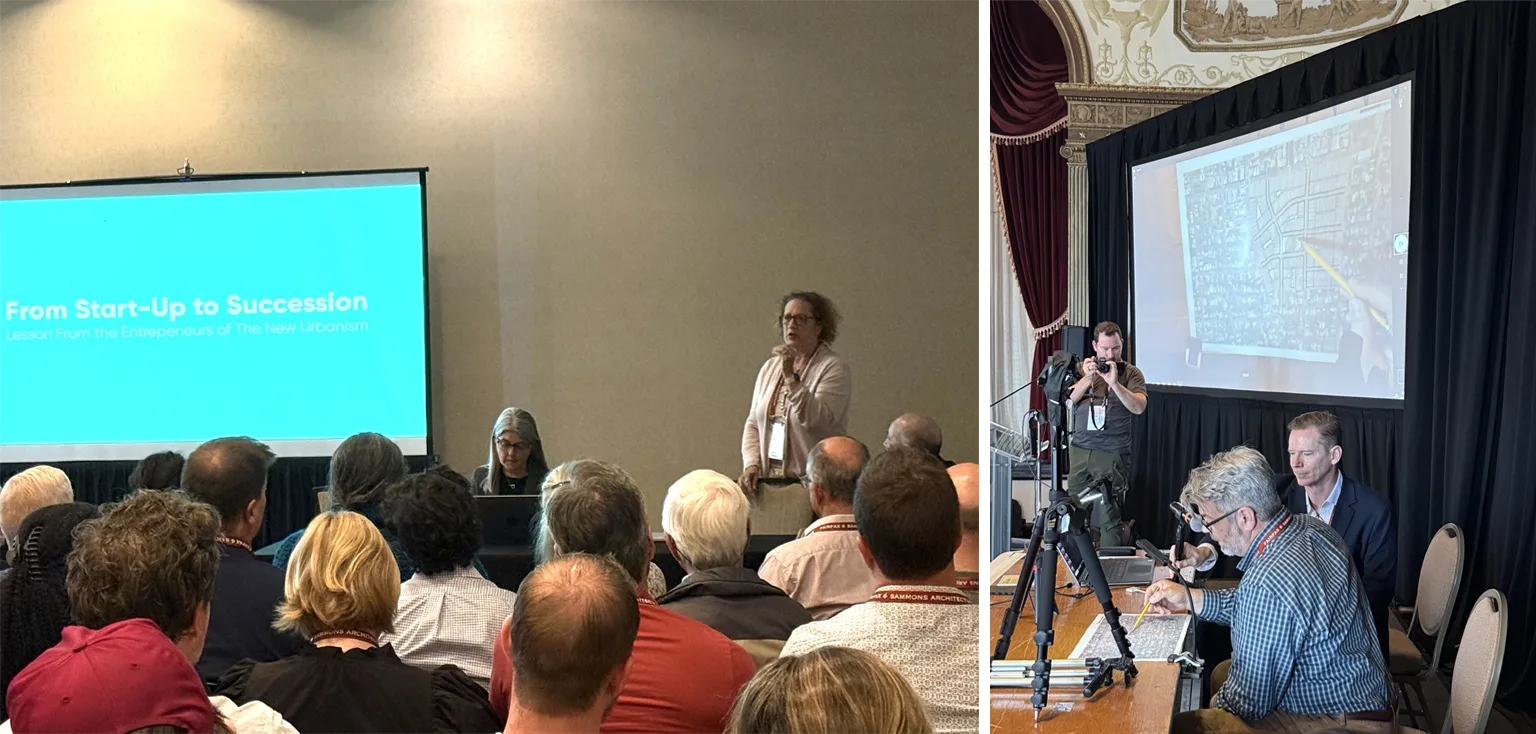
Marina Khoury shared a number of lessons learned in operating a new urbanist practice (left). Ben Northrup highlighted neighborhood design concepts during the audience participation Art Room session (right).
A New Urbanist and Necessary Perspective on Density had the participation of Marina Khoury addressing common misconceptions and misperceptions about density, where she emphasized design over numbers: people live in places. Other session presenters were David Dixon and Todd Zimmerman.
Urban Design Illustration: Principles and Work Flow in the Art Room featured Chris Ritter demonstrating his design methodology.
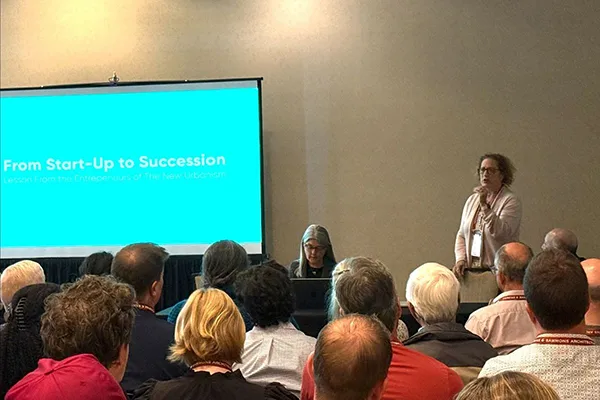
From Start-up to Succession: Lessons from the Entrepreneurs of the New Urbanism included Marina Khoury in a dynamic panel discussion where design company owners shared lessons on leadership, growth, and evolving firm succession. Moderated by Mike Lydon, the panel also included Joe Minicozzi and Lisa Wise.
Shaping the Future: Miami 21 and the Evolution of Form-Based Codes featured Lizz Plater-Zyberk. She was joined by Sevanne Steiner (moderator, City of Miami planner), David Snow, Melissa Tapanes Llahues and Juan Mullerat.
Hack the Code: Finding the Common Ground in Zoning Reform Strategies was a series of group discussions aimed at increasing zoning reform. Matt Lambert led the closing discussion and group report-outs. His co-facilitators in these sessions included Susan Henderson, Hazel Borys, and Jenn Hurley.
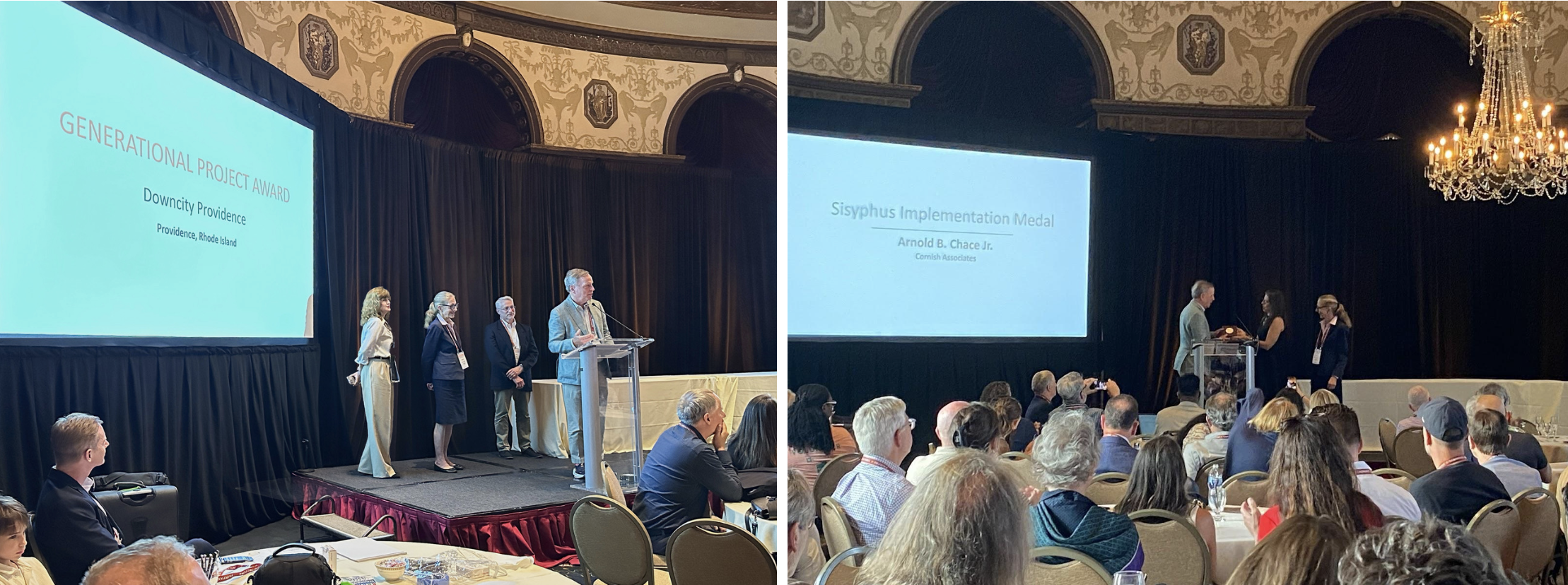
With DPZers by his side, Buff Chace accepted both the Downcity Providence Generational Project Award (left) and the Sisyphus Implementation Medal (right).
A highlight of CNU33 for DPZ was the Charter Awards presentation ceremony. Downcity Providence was honored with the inaugural Generational Project Award, recognizing the multi-decade effort usually required to revitalize older downtown neighborhoods.
Even more gratifying was to see Buff Chace, the indefatigable force behind Cornish Associates, presented with the inaugural Sisyphus Implementation Medal. The honor recognizes the importance of the private sector developer and his role in leveraging investment by individual entities with the public sector’s often-limited financial resources but all-important political support. Implied is the persistence by that private developer in cultivating the long-term returns that come from the many short-term commitments. Congratulations to Buff and his Cornish team!
To read more about Downcity Providence, you can see CNU’s Public Square article and the On the Park Bench interview with Buff Chace and Andrés Duany.
DPZ Spring Newsletter 2025
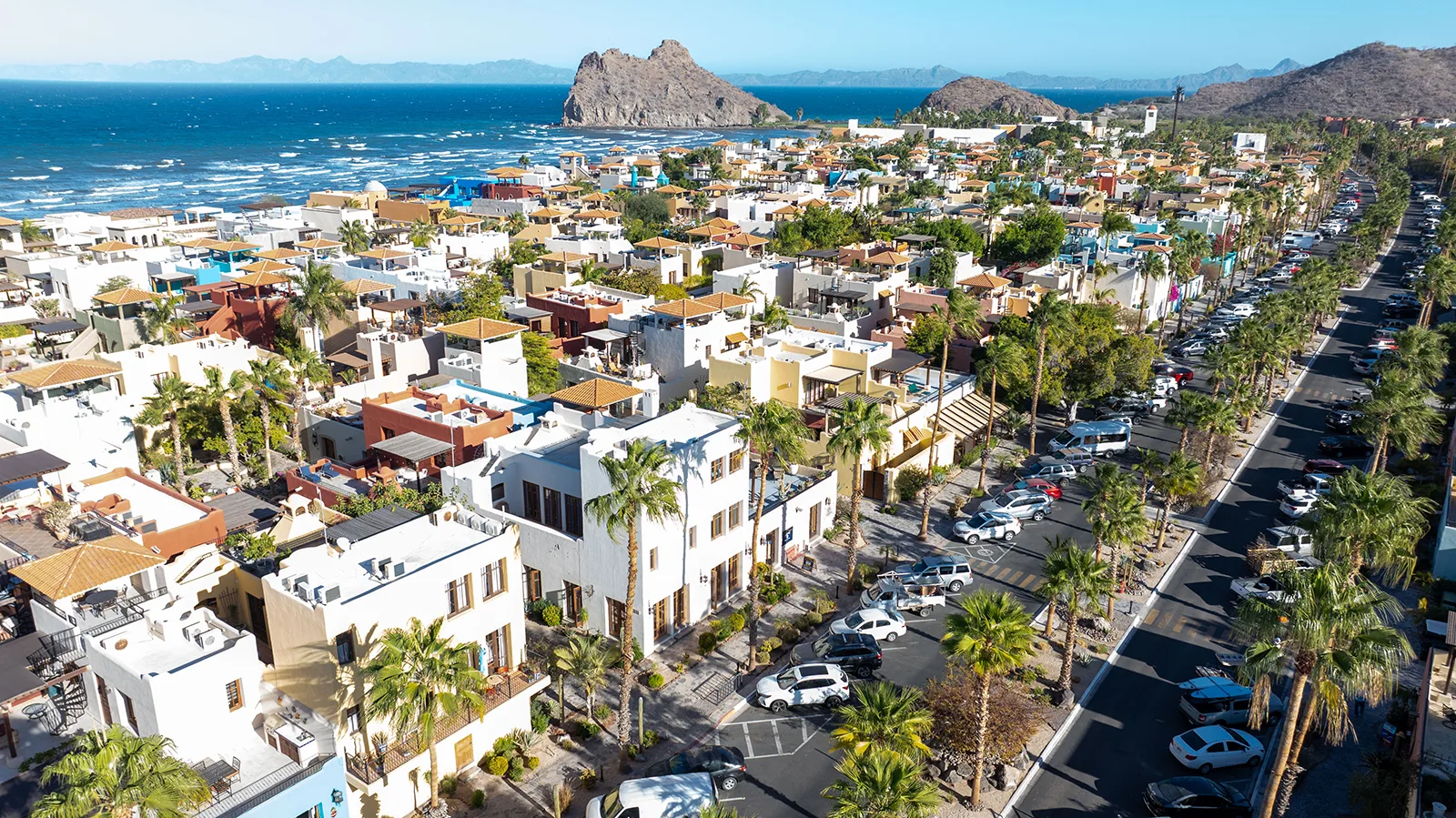
2025 aerial view of Loreto Bay resort in Baja California Sur
2025 has been off to a productive and exciting start with a full calendar of new projects, charrettes, and special events that have set the tone for the rest of the year. While many of the projects have leaned private in nature, there has been a broad reach across both the country and project types.
As we wrap up the first quarter and look ahead to the CNU33 in Providence and the summer beyond, we wanted to share some of the recent highlights with you.
To read and learn more in depth about our work this past year, check out the other posts on the DPZ Pulse.
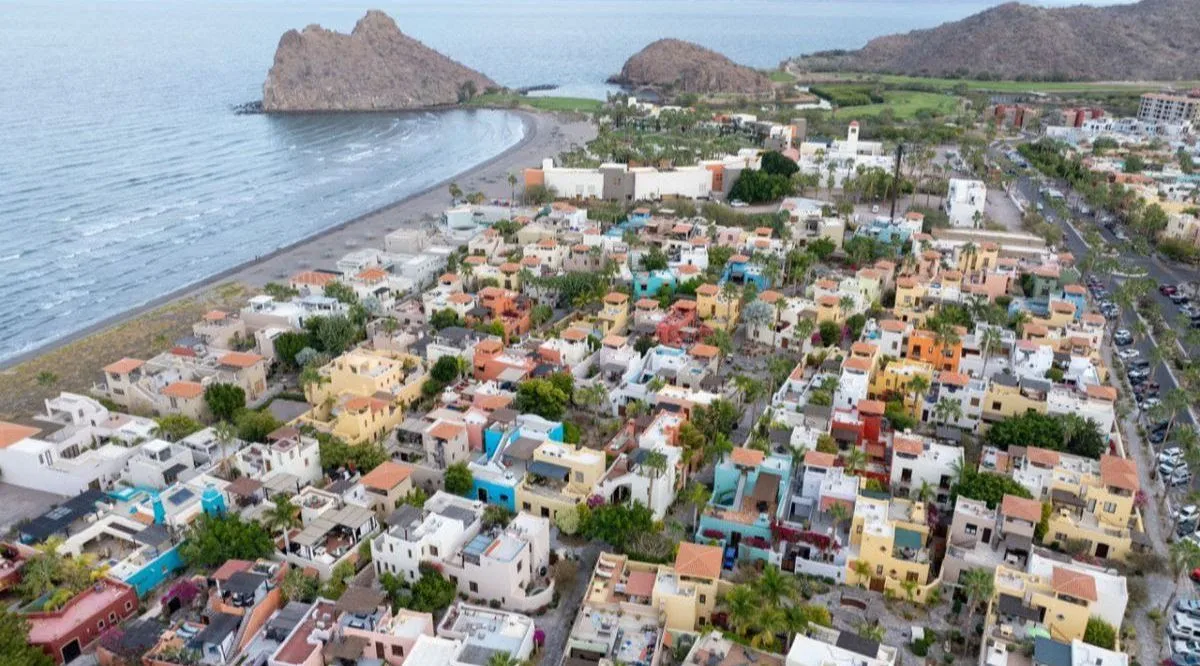
Color, pedestrian paseos, and rooftop viewing towers define Loreto Bay’s urban fabric
Return to Loreto Bay
This January, DPZ returned to Loreto Bay to update their code and meet with developers. This gave DPZ an opportunity to witness the village’s remarkable growth since the original 2003 planning process — as well as how true it is to the version that was drawn.
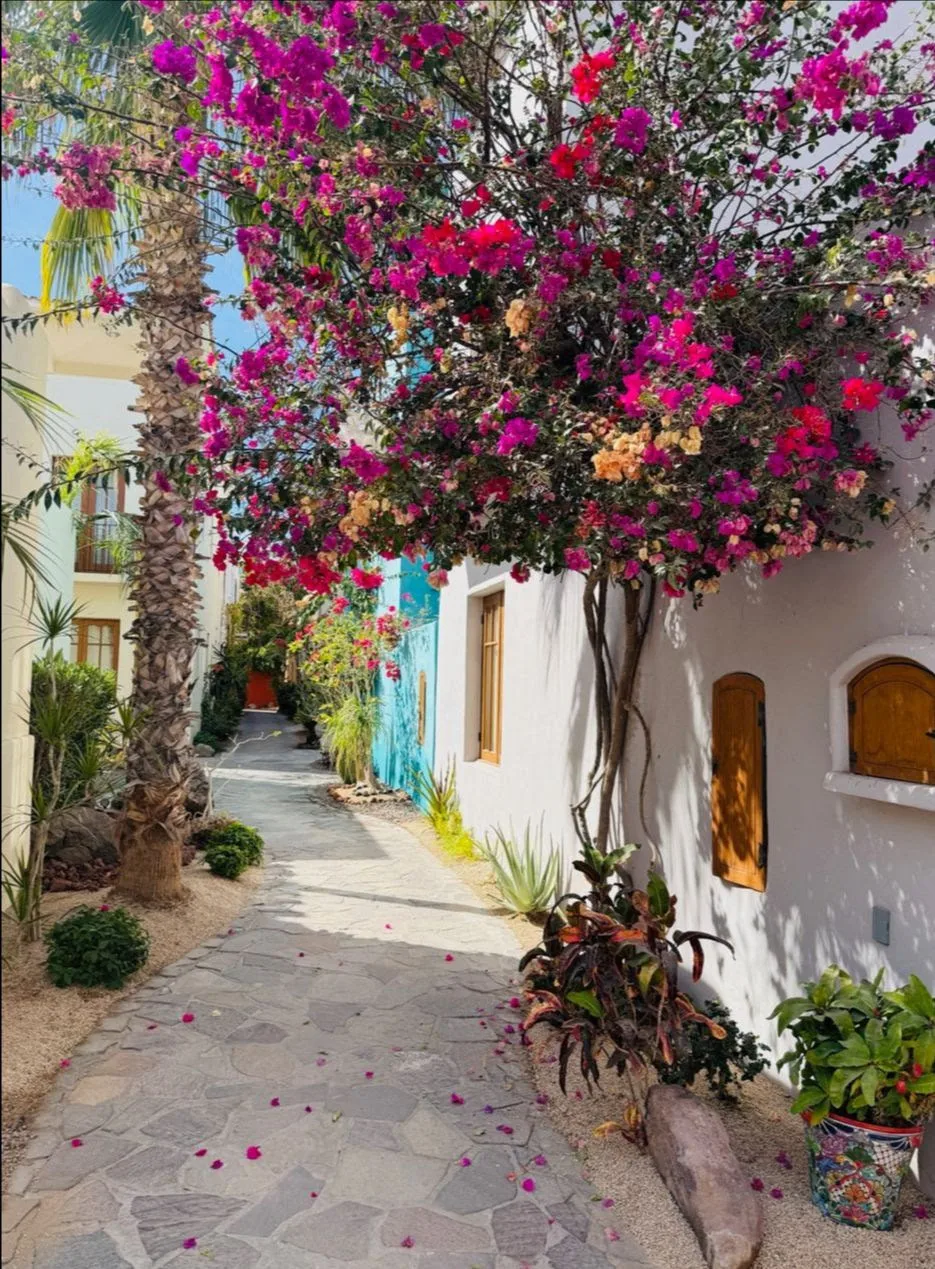
As planned in the original vision, on-site parking remains limited to its Main Street Paseo. This is seeing a successfully diminished reliance on cars, with most residents—whose average age is now over 60—opting to walk, bike, or travel by golf cart from parking areas to their homes. Bordered by the Sea of Cortez and the Sierra de la Giganta mountains, recreation and conservation are central to the community. Daily life for residents incorporates activities such as golfing, kayaking, swimming, and whale watching.
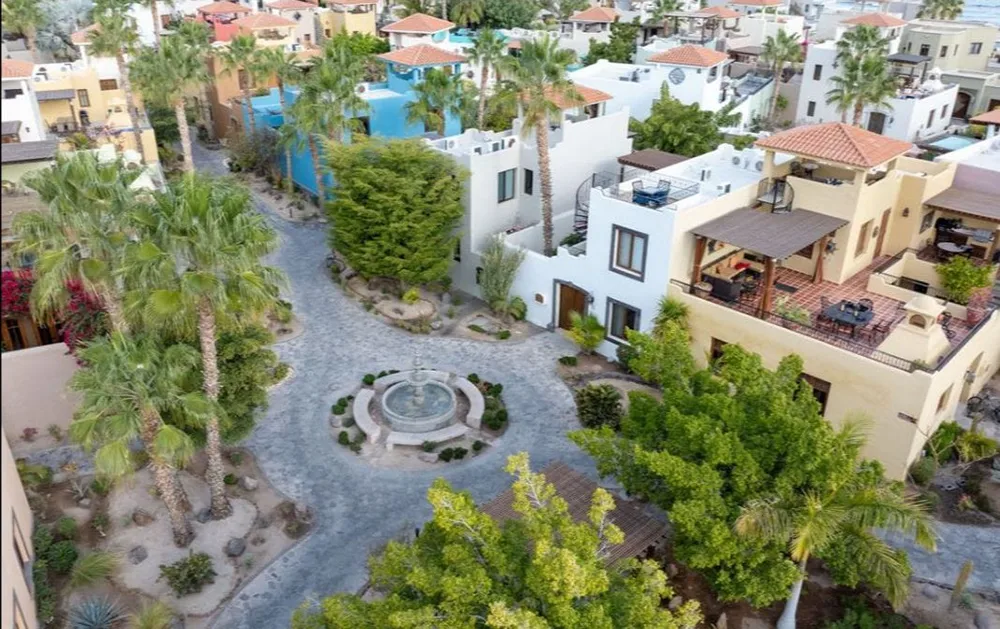
The range of non-residential uses has also flourished, with the village now home to three small markets, restaurants, offices, and more.
Read more about Loreto Bay and the update here.
The range of non-residential uses has also flourished, with the village now home to three small markets, restaurants, offices, and more.
Read more about Loreto Bay and the update here.
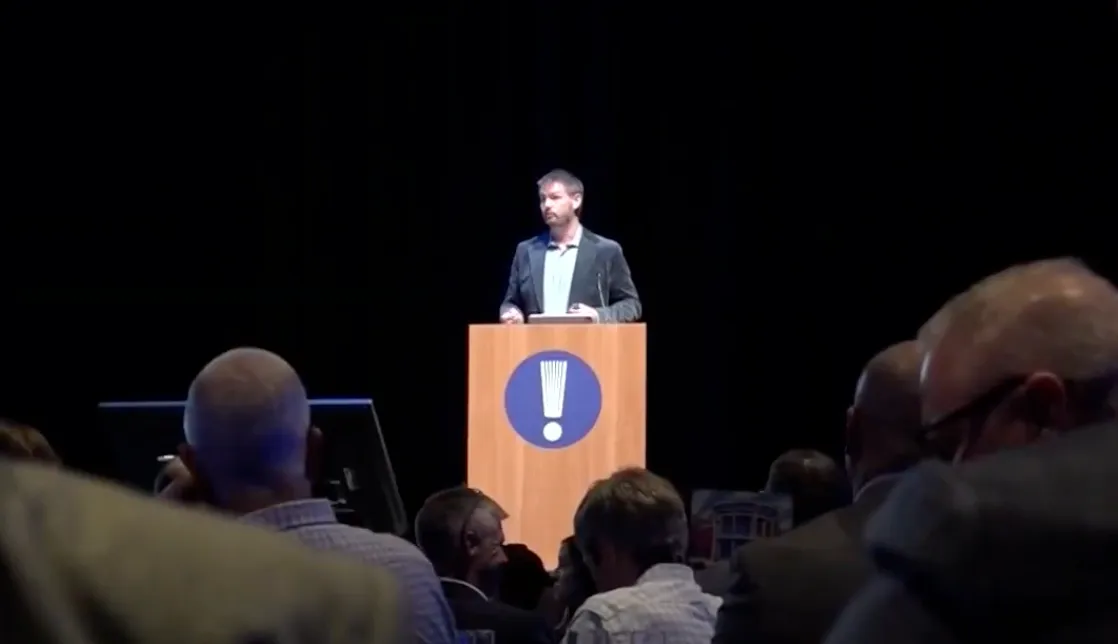
Matt Lambert presented to the NWA Council and community at the 2025 Spring Meeting
Northwest Arkansas Regional Growth Strategy
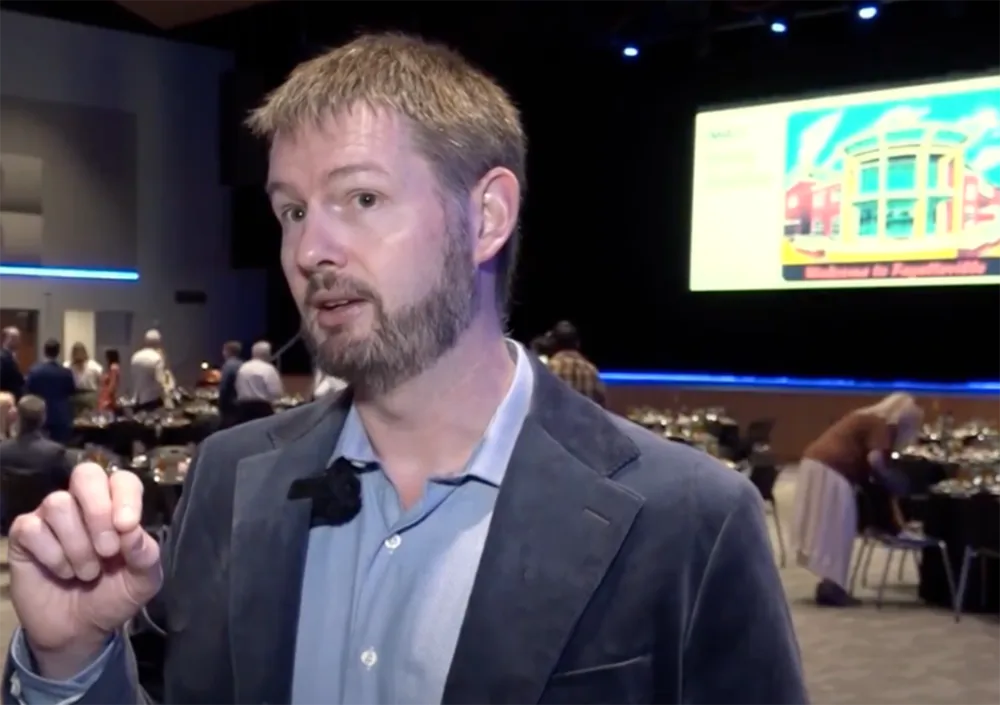
On April 16th, the Northwest Arkansas (NWA) Council held their Spring Meeting to discuss the Regional Growth Strategy that DPZ has been helping to develop. Featured speaker DPZ Partner Matt Lambert presented the challenges and key priorities to be addressed.
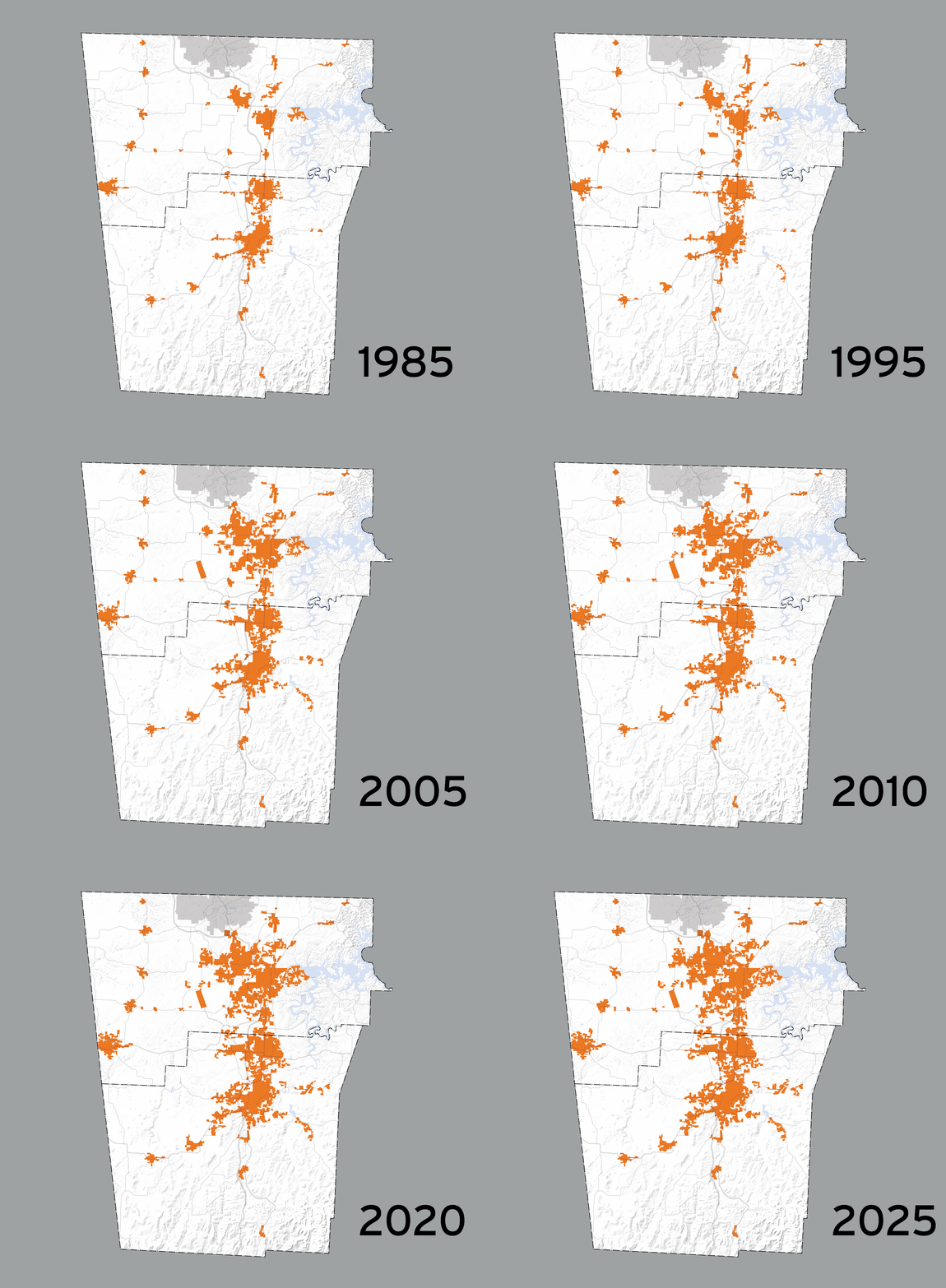
DPZ is developing a suite of tools for the region’s diverse communities to coordinate and adopt that will set the region on a path to sustainable, fiscally responsible growth. The toolkit will offer codes and strategies that communities in the region can select based on their unique needs.
Learn more about the plan here.
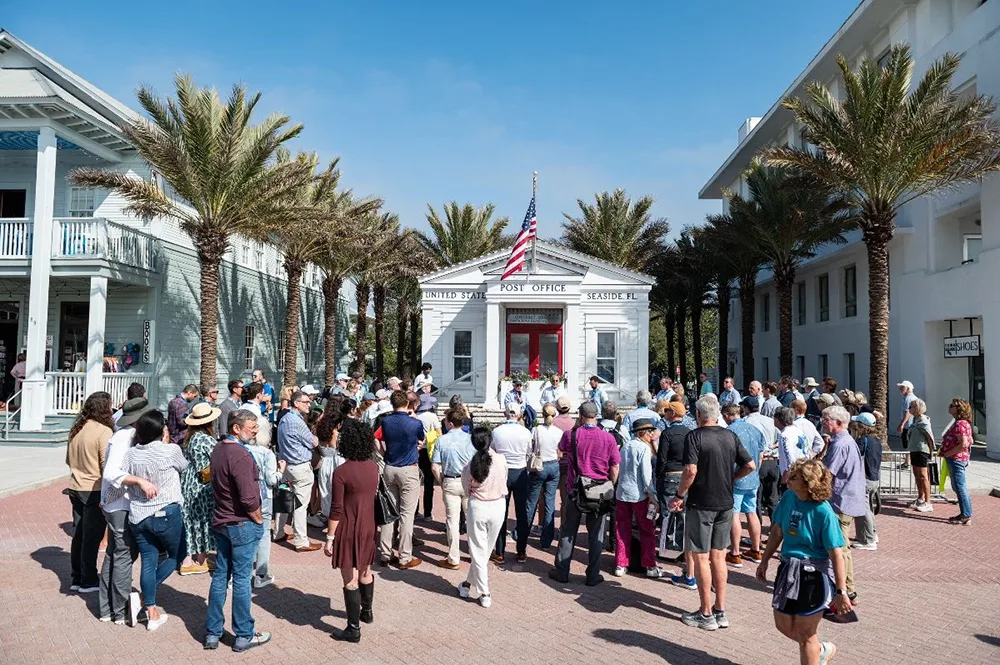
The annual Seaside Prize walking tour with Robert Davis and Dhiru Thadani
Photos courtesy of Christy Milliken
Seaside Prize Weekend
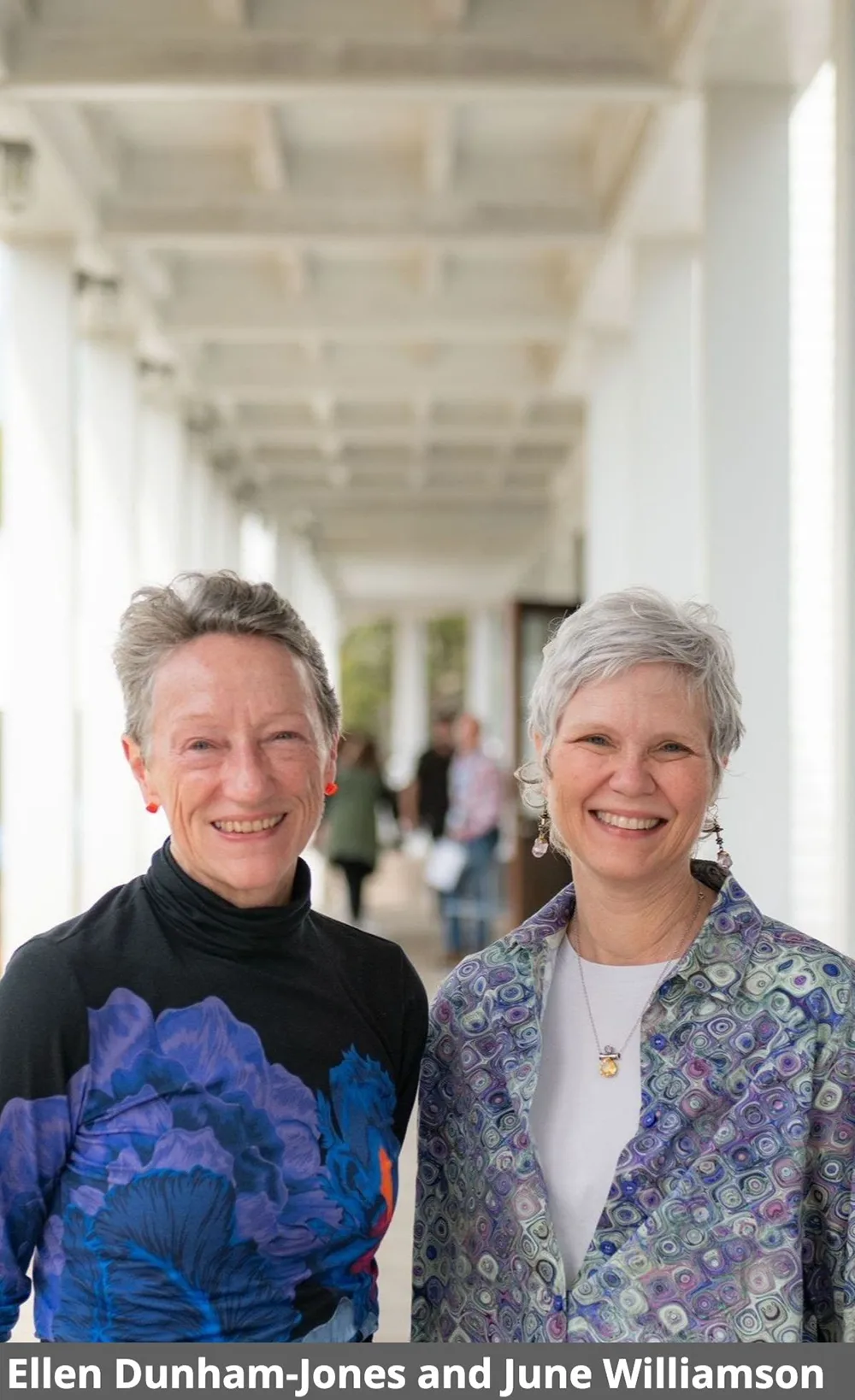
This past February, DPZ Partners Galina, Marina, and Senen were honored to participate in the 31st annual Seaside Prize weekend. Prize recipients Ellen Dunham-Jones and June Williamson were recognized for bringing awareness to the problem of suburban sprawl within academic circles.
Galina described her longstanding association with Ellen and June in analyzing sprawl and identifying tools to repair its damaging effects. Marina shared our recent study for Walton County to better understand and manage the exponential growth expected in the coming decades.
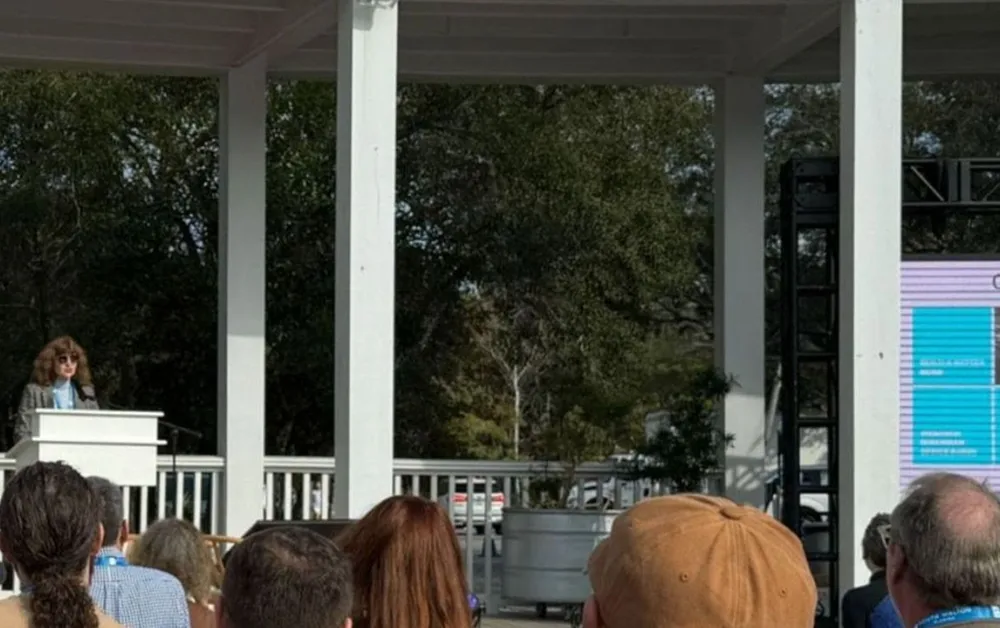
Finally, Senen gave his Green By Design presentation on Seaside, Rosemary Beach, Alys Beach, and Watercolor as part of the program.
Read more about the event and its participants here and here.
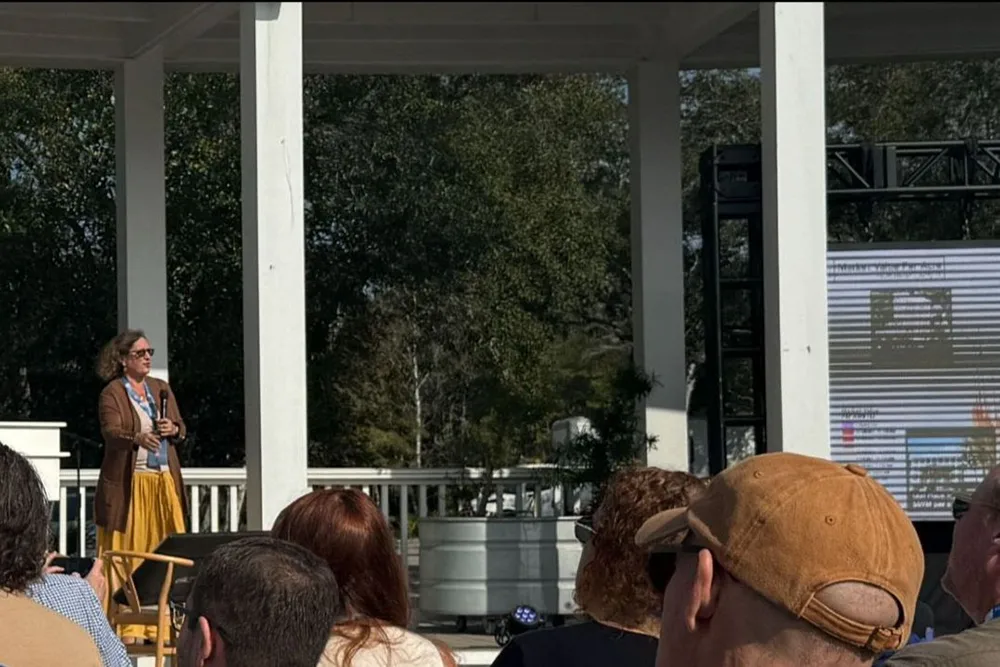
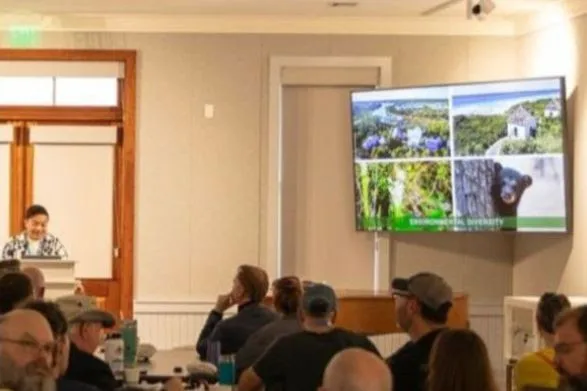
Finally, Senen gave his Green By Design presentation on Seaside, Rosemary Beach, Alys Beach, and Watercolor as part of the program.
Read more about the event and its participants here and here.
ENU Spring Urban De-Code Miami
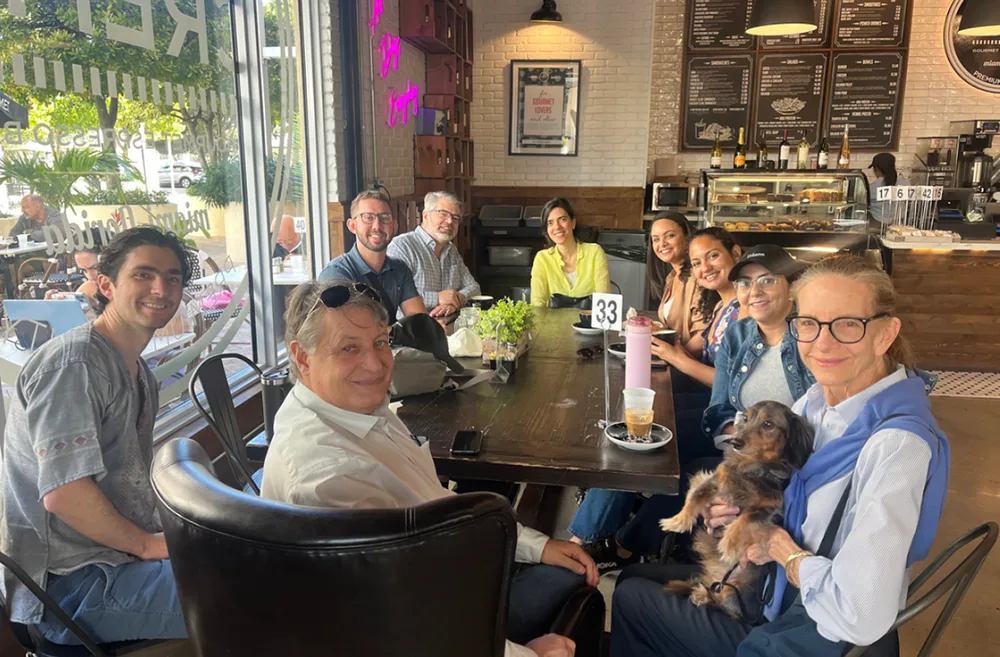
Emerging New Urbanists (ENU) meet with DPZ, Dover Kohl & Partners, and Kimley Horn for their Miami Spring Event
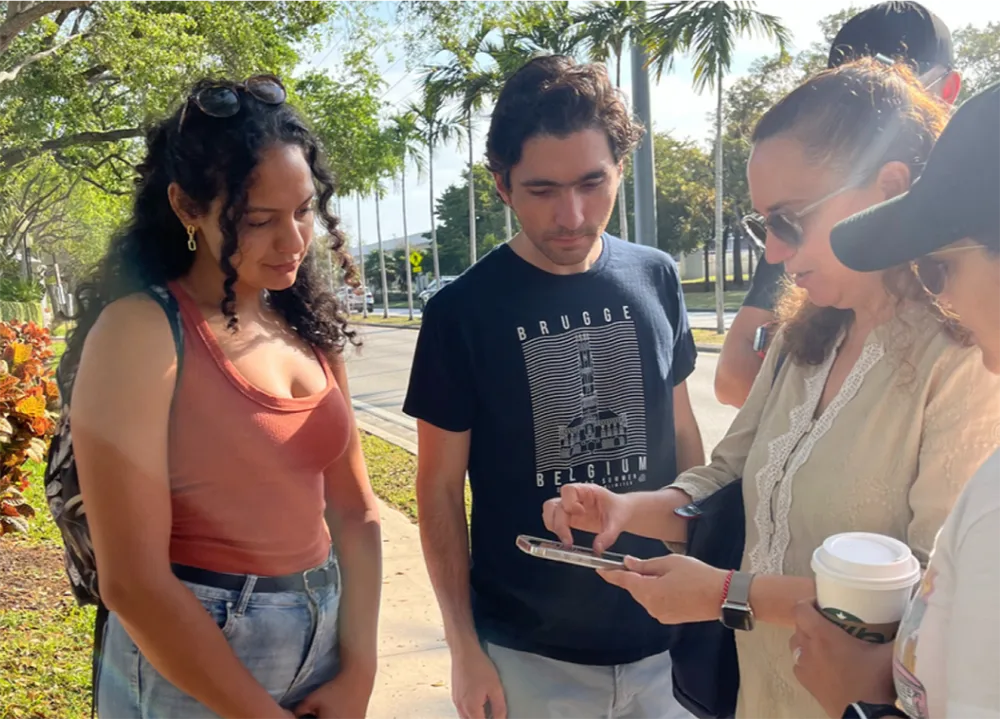
This March, DPZ helped host the Emerging New Urbanists (ENU) group as part of their Urban De-Code Miami program. The weekend-long event explored urban interventions, transformations and innovations in South Florida communities.
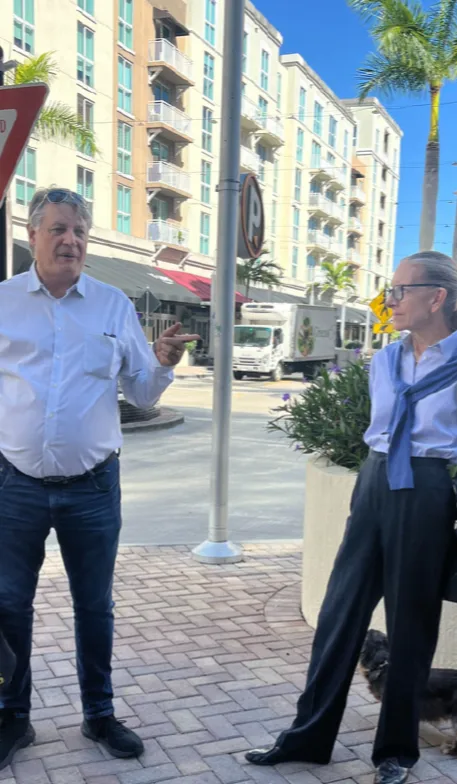
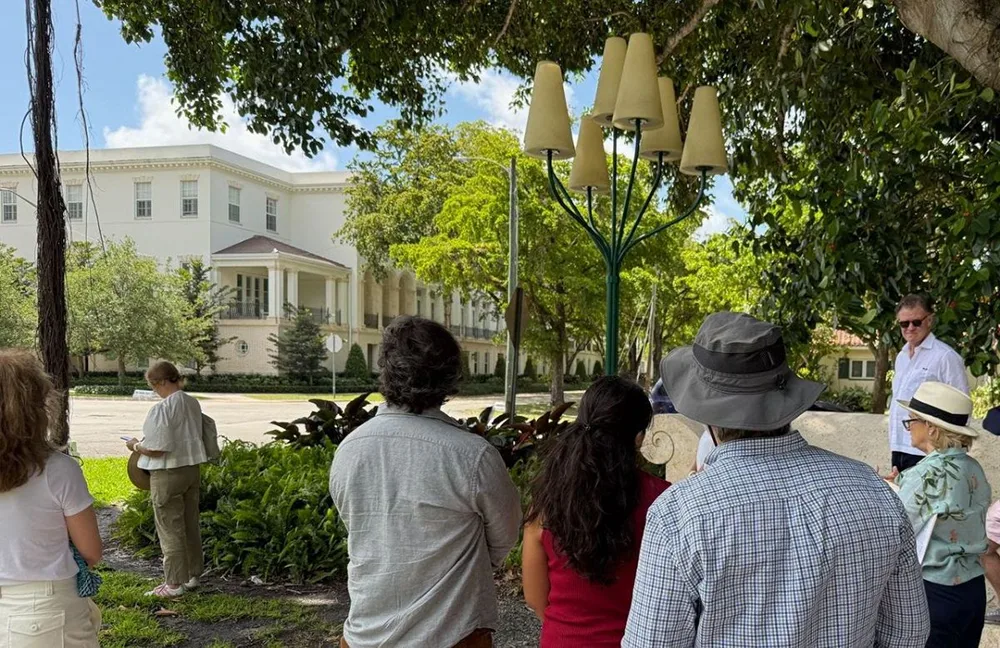
DPZ Associate Judith Bell helped ENU organize the activities. On Saturday a tour of Downtown Kendall, led by Lizz and Joe Kohl of Dover, Kohl & Partners, was followed by a walk along the Underline, guided by Kimley-Horn’s Stewart Robertson. After a working lunch, an interactive workshop at the DPZ Miami Office touched on a number of topics, including charrette techniques and public engagement. On Sunday, Judith led a tour of DPZ’s Campo Sano and Bermuda Villages that inspired discussion on effecting change at various urban scales.
For more information about ENU and this event, visit their website.
DPZ Associate Judith Bell helped ENU organize the activities. On Saturday a tour of Downtown Kendall, led by Lizz and Joe Kohl of Dover, Kohl & Partners, was followed by a walk along the Underline, guided by Kimley-Horn’s Stewart Robertson. After a working lunch, an interactive workshop at the DPZ Miami Office touched on a number of topics, including charrette techniques and public engagement. On Sunday, Judith led a tour of DPZ’s Campo Sano and Bermuda Villages that inspired discussion on effecting change at various urban scales.
For more information about ENU and this event, visit their website.
ICAA-FL Awards & Teófilo Victoria Tribute
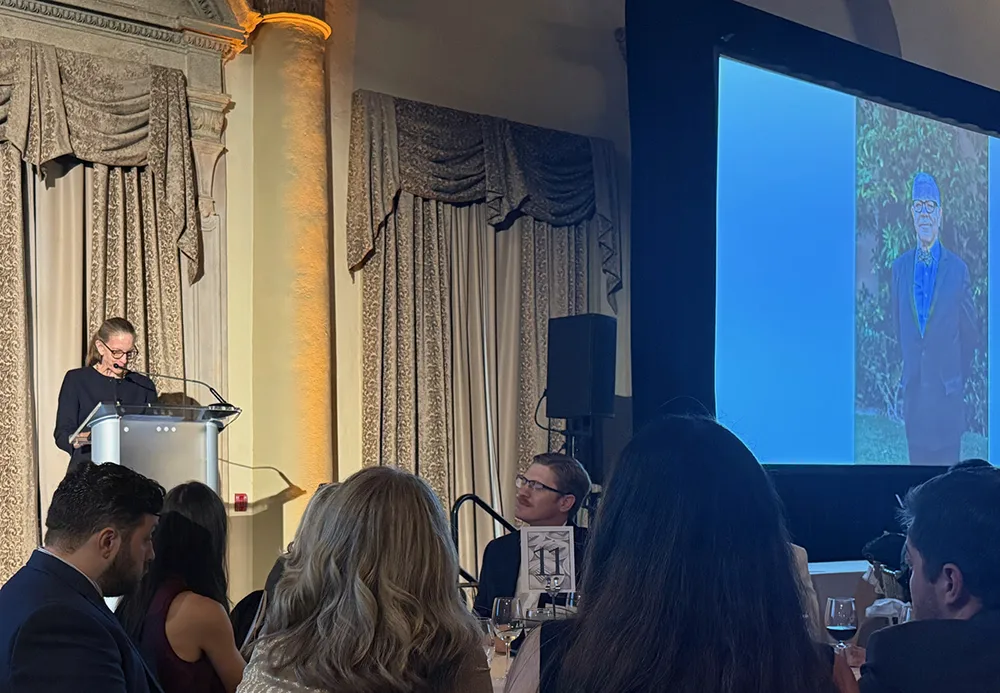
The ICAA-FL World Accomplishment Award was presented posthumously by Lizz to Teófilo Victoria
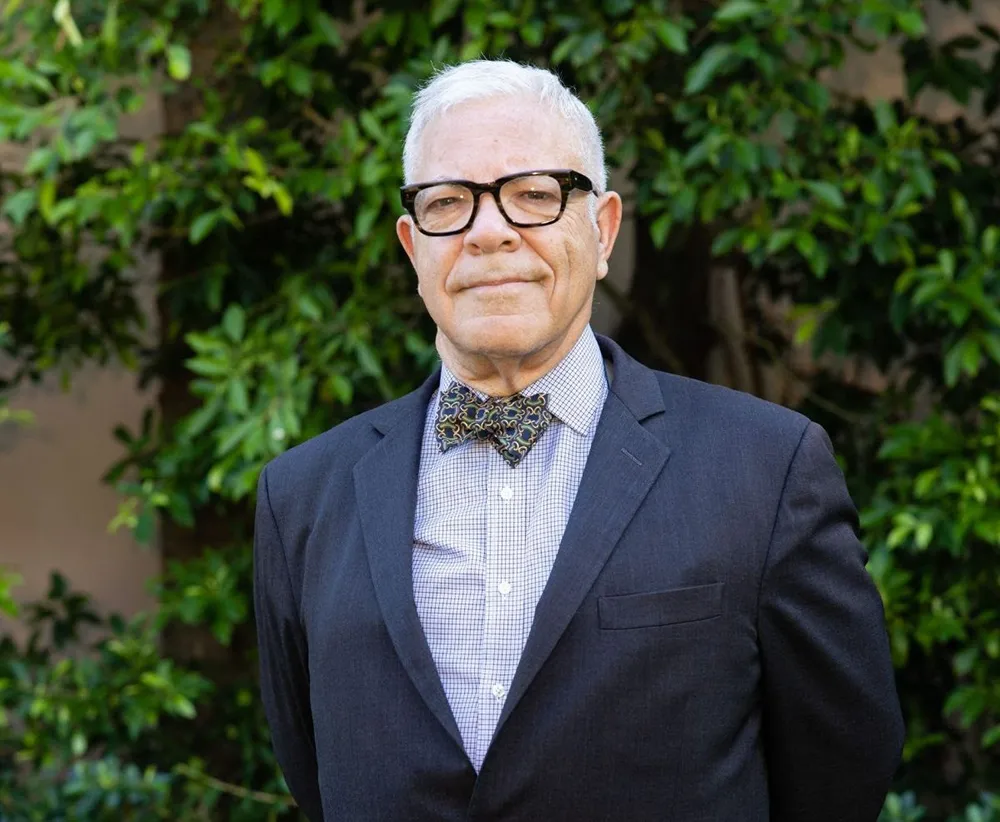
On Saturday, April 26, several DPZers attended the ICAA Florida Chapter’s 13th Annual Addison Mizner Awards in Coral Gables. The event paid tribute to the remarkable legacy and lasting impact of the late architect and UM professor, Teófilo Victoria, the posthumous recipient of the World Accomplishment Award.
In presenting the award to Teófilo’s life and business partner, Maria de la Guardia, Lizz delivered an eloquent memorial in his honor. Longtime DPZ colleague, collaborator, and supporter, Teófilo was also Seaside’s first Town Architect.
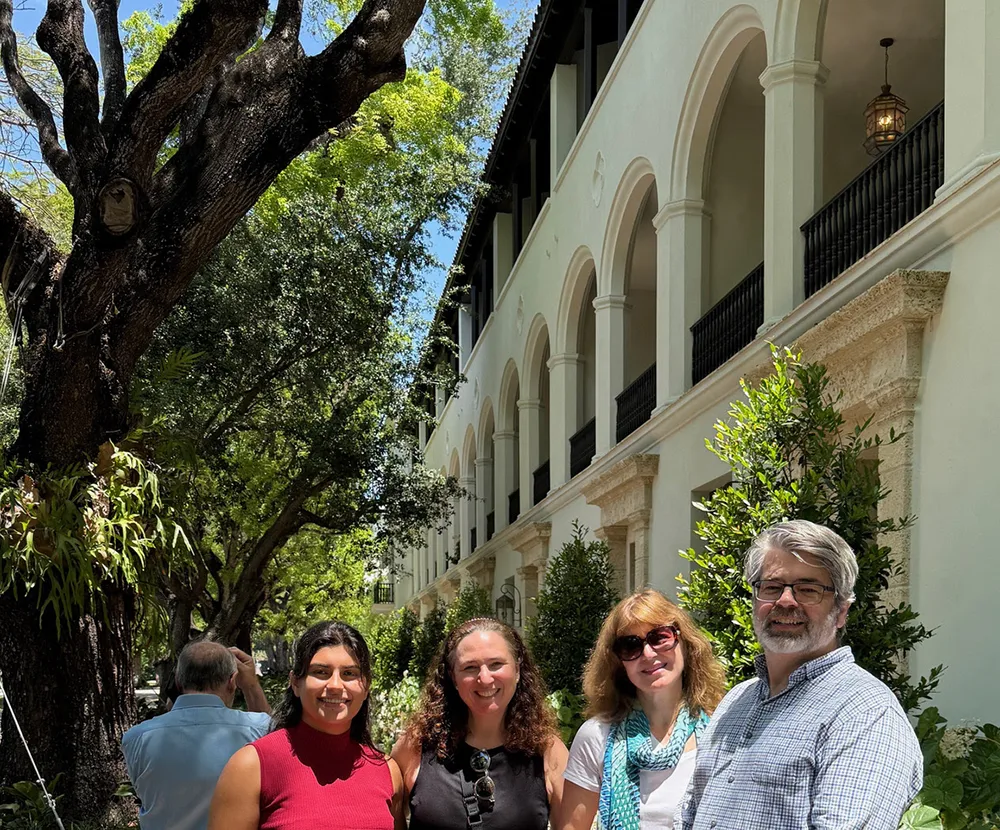
Maria was also on hand at the ICAA-FL gala to accept a number of prizes won by their firm, DLGV Architects. Earlier in the day, she had led a tour of DLGV prize-winning residential projects in Coral Gables that had several DPZers in attendance.
Read Lizz’s tribute to Teófilo here.
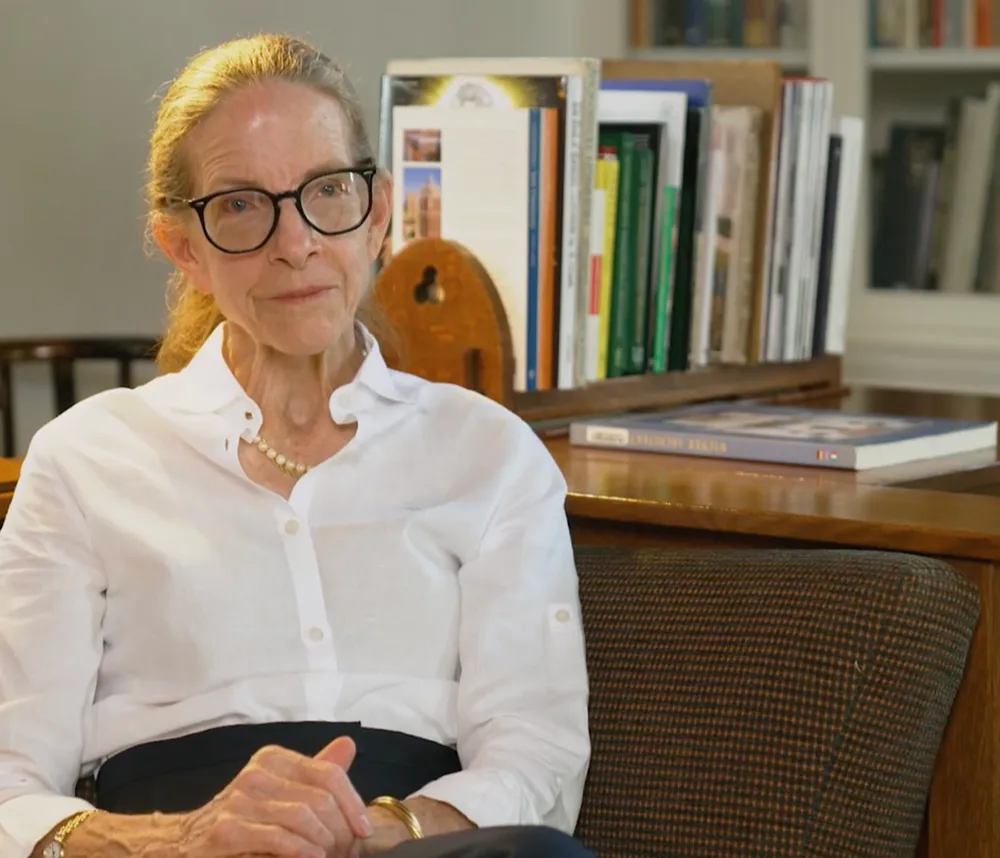
Walkable USA – PBS Documentary
Andrés and Lizz give insightful interviews in this PBS documentary on the master planning efforts by Speck Dempsey for the transformation of Downtown Hammond, IN.
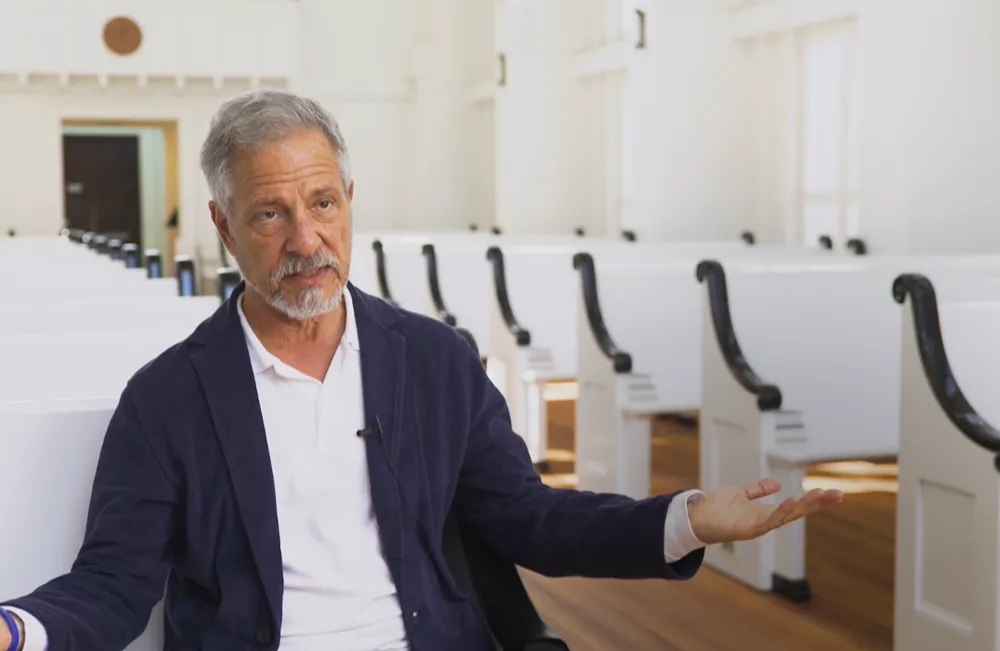
Citing lessons learned from his decade with our firm, DPZ alumnus Jeff Speck highlights the key moves needed to restore Hammond’s once walkable, lively streetscapes.
Watch the full documentary here.
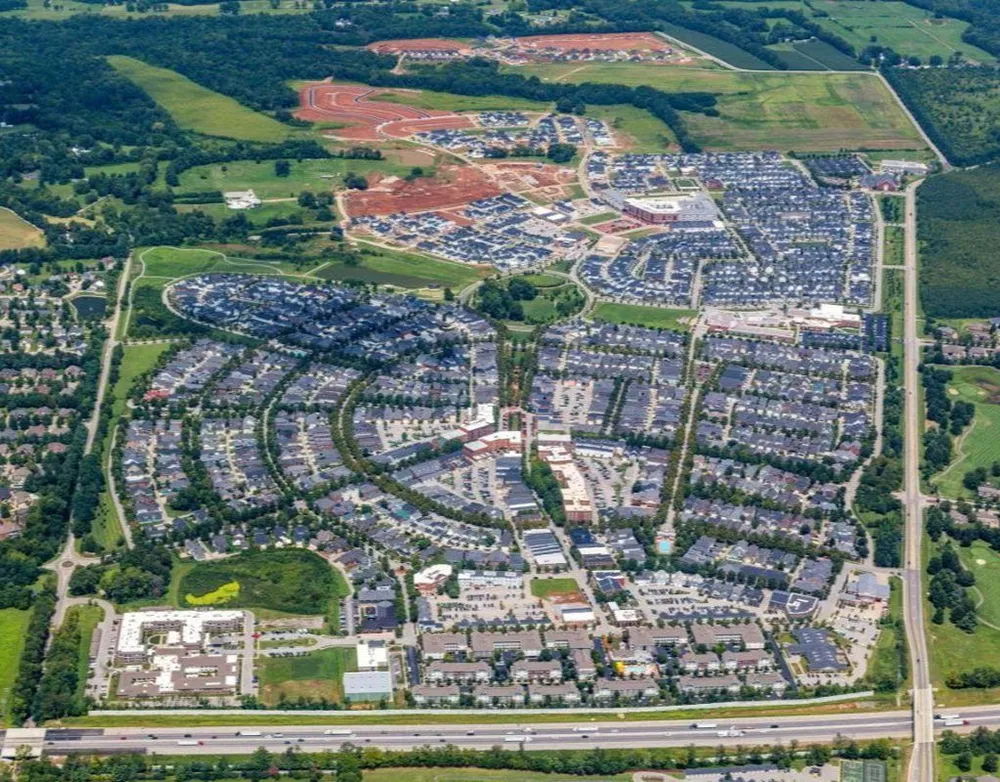
Norton Commons Geothermal Case Study
It is not common knowledge that DPZ community Norton Commons near Louisville, KY, is heated and cooled by geothermal energy.
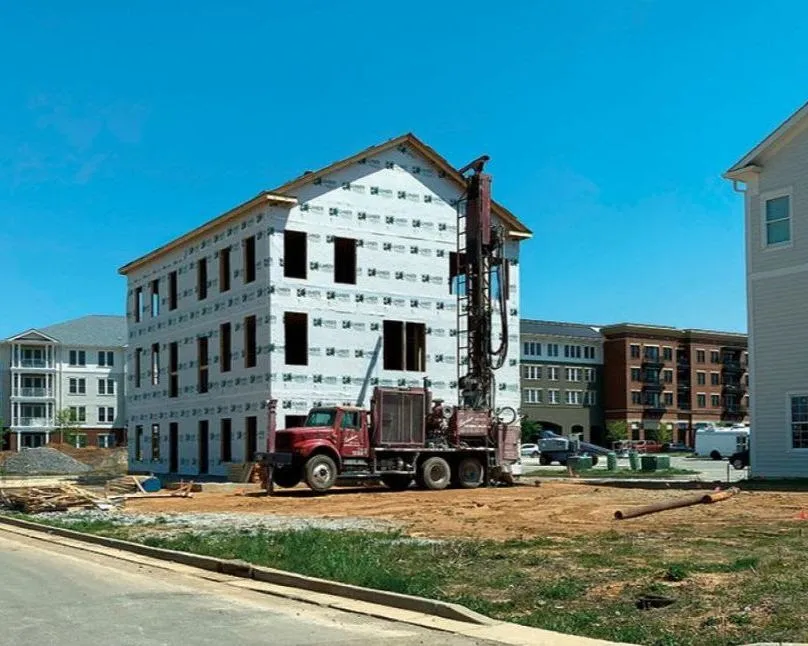
This recent study by the U.S. Department of Energy’s Geothermal Technologies Office documents the prerequisites, the impacts, and the cost savings associated with employing this tecnology.
Read more about the case study here.
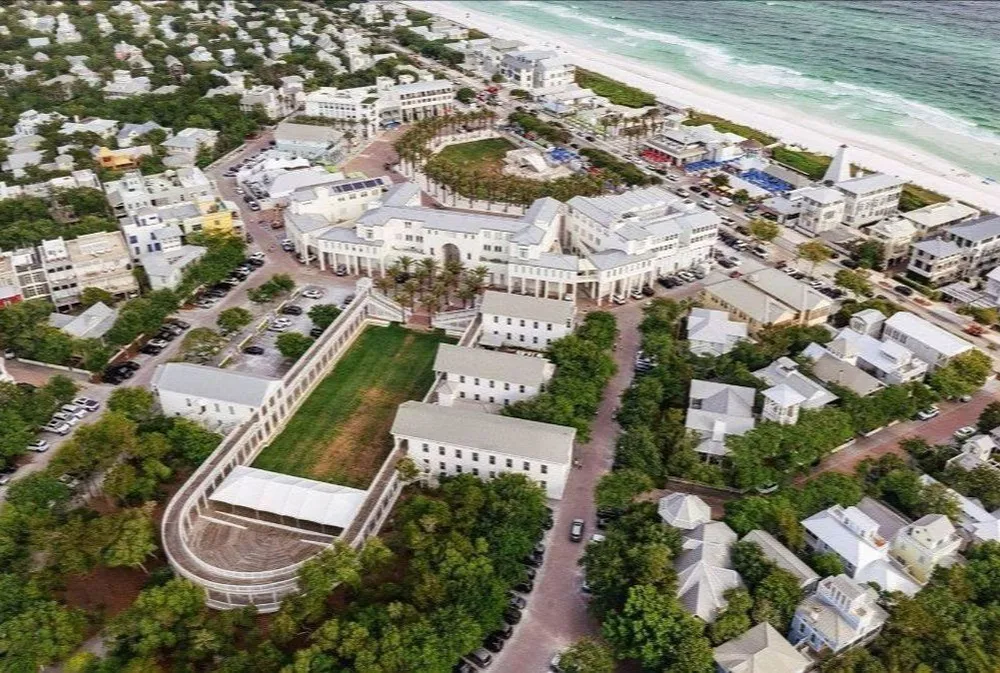
Experiencing Utopia – New Urbanism vis-a-vis Arcosanti
The ambitious topic of “Utopia” is the theme of Texas Architect magazine’s Winter 2025 issue.
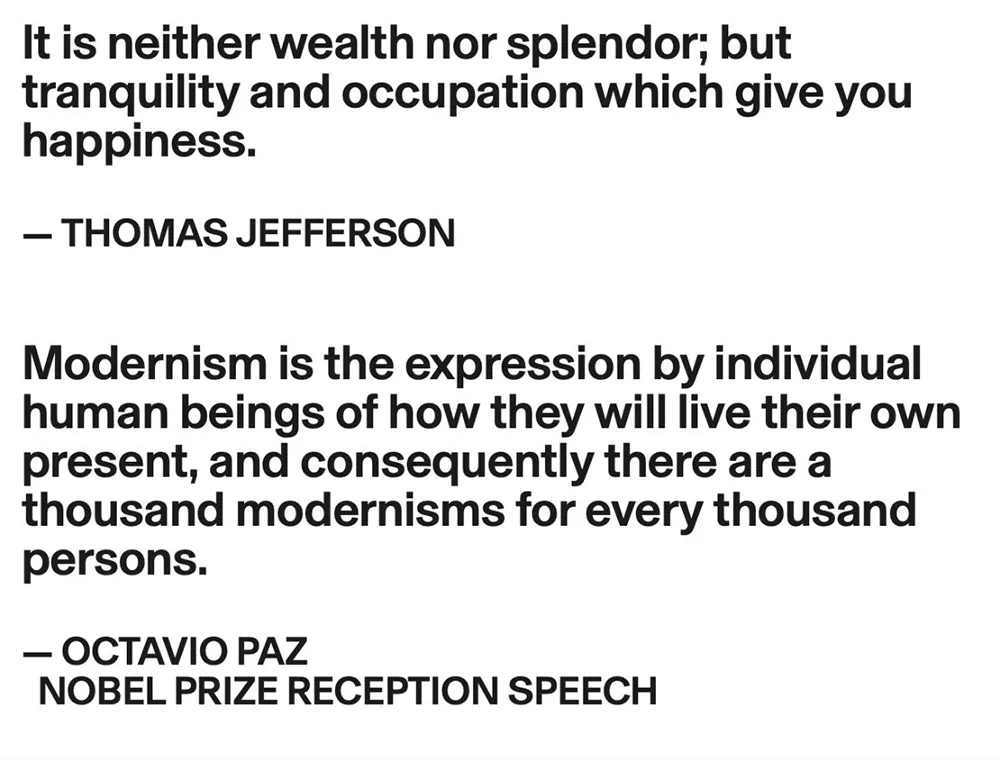
Quoting Octavio Paz and Thomas Jefferson, architect and University of Houston Associate Professor of Architecture, Tom Diehl, draws parallels between the modernism of Paolo Soleri and the New Urbanism of DPZ, as well as delving into the utopian pursuits of other designers.
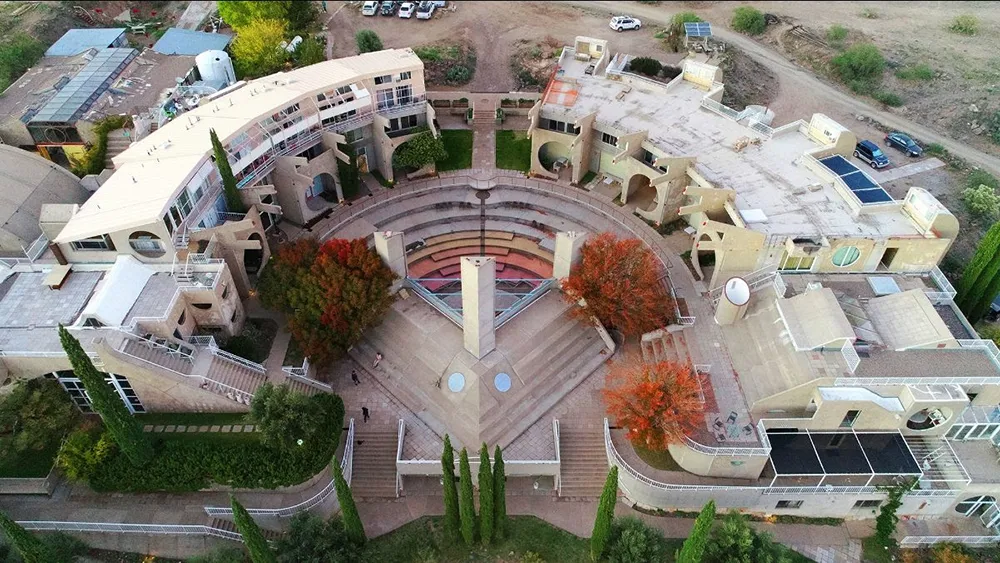
In this kind of theoretical piece more frequently seen in the early 1990s, Seaside is compared and contrasted with Arcosanti.
Read the full article here.
TNDs and the British Housing Crisis
Venerable British publication, Country Life, recently tackled the pressing housing crisis in the UK, citing the reported need for 1.5 million houses within the next four and half years.
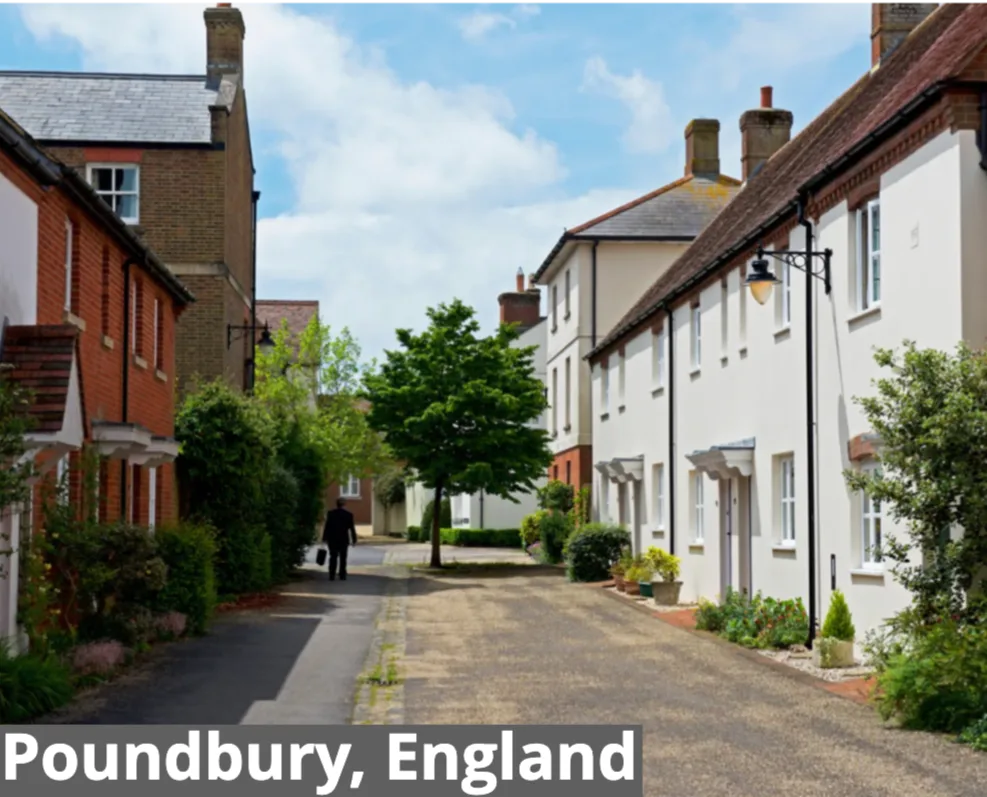
The article points to the success of King Charles’ Duchy of Cornwall’s leadership at Poundbury. Once derided as old-fashioned and pastiche, today Poundbury is considered a mixed-use model of innovation in building sustainably, creating jobs, and providing affordable housing.
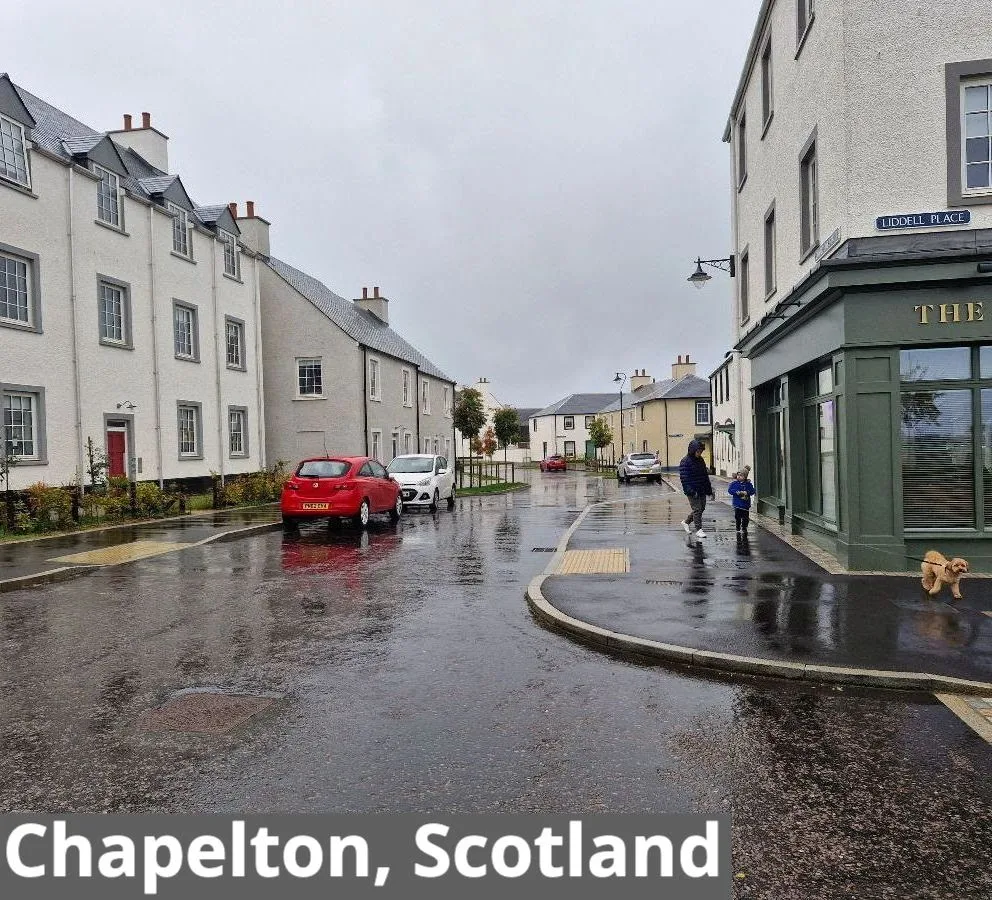
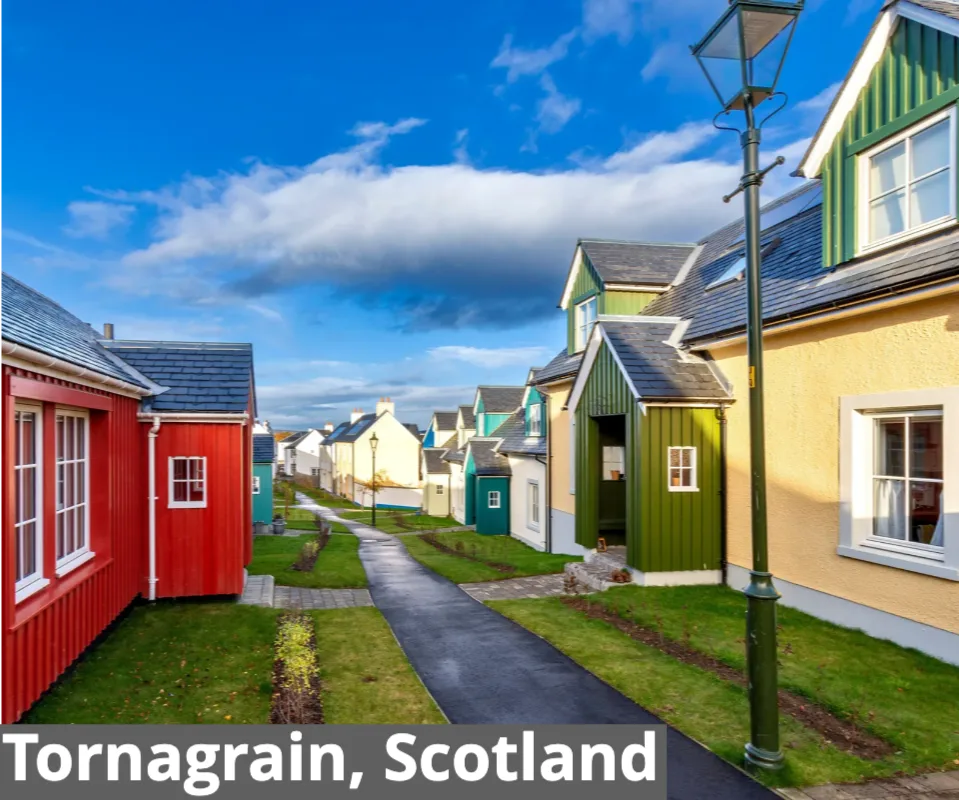
Two DPZ towns in Scotland, Tornagrain and Chapelton, are included to demonstrate the influence of Poundbury’s legacy. Aside from the benefits of building compactly, these towns respond to a diversity of housing options and walkable lifestyle choices.
Read the full article here.
The John Nolen Legacy in Venice, FL, and Beyond
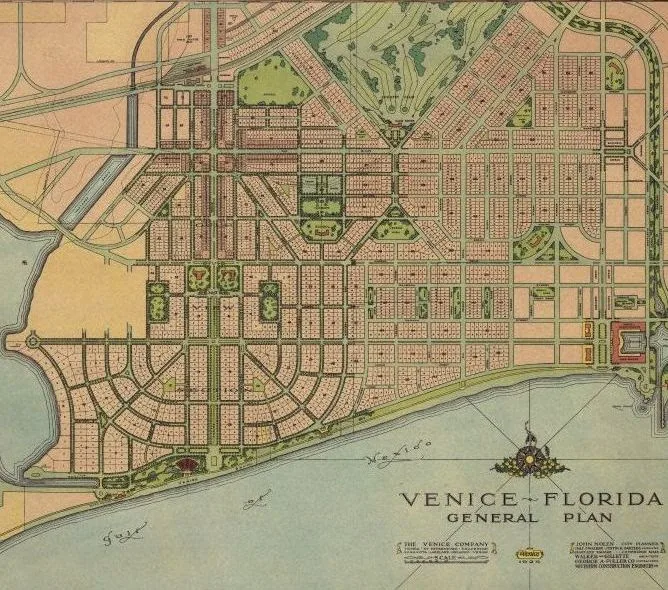
The early 20th-Century town-planning projects of John Nolen were a primary source of inspiration that helped shape Florida’s Growth Management principles in the 1990s.
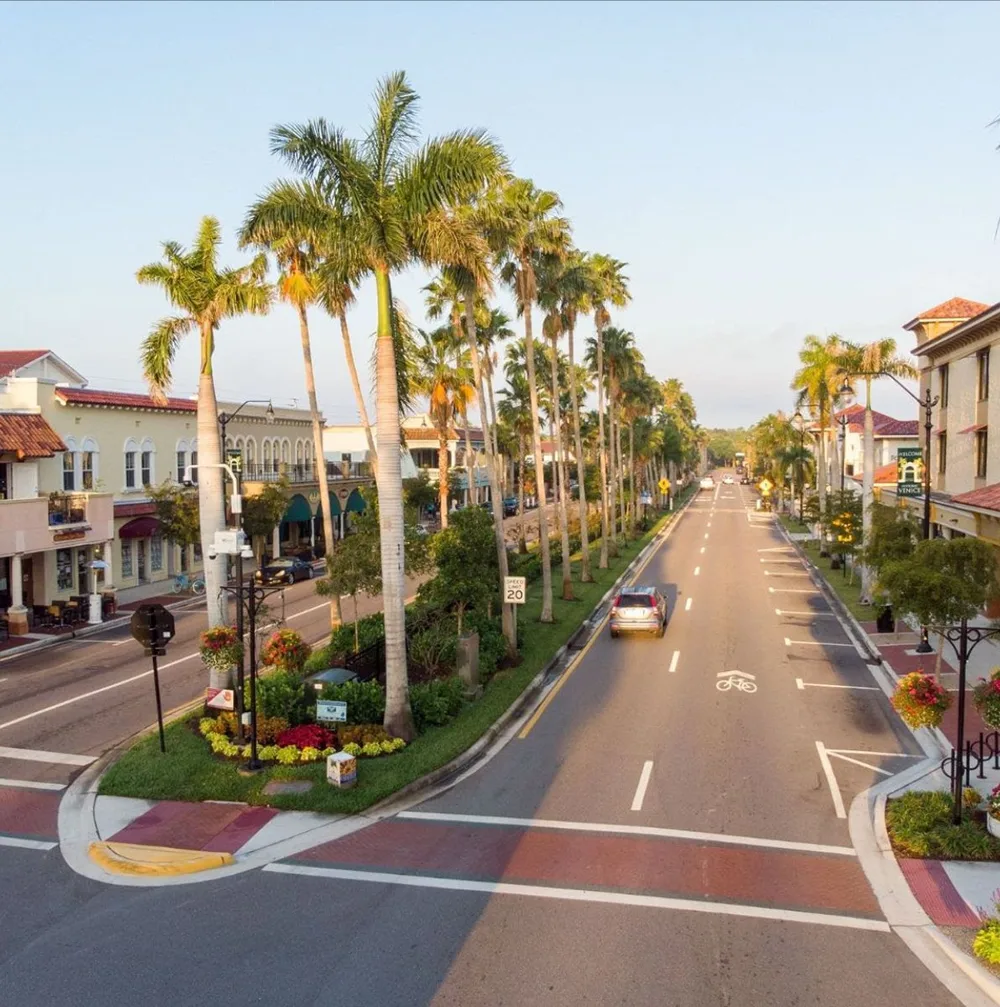
A recent Governing Magazine article highlights Nolen’s plan for Venice, FL, and how its City Beautiful street layout both influenced New Urbanist thinking — as reflected in DPZ’s design of Seaside — and later showed remarkable flexibility in accomodating unanticipated post-Depression modernism.
Read the full article here.
Naples Design Walk
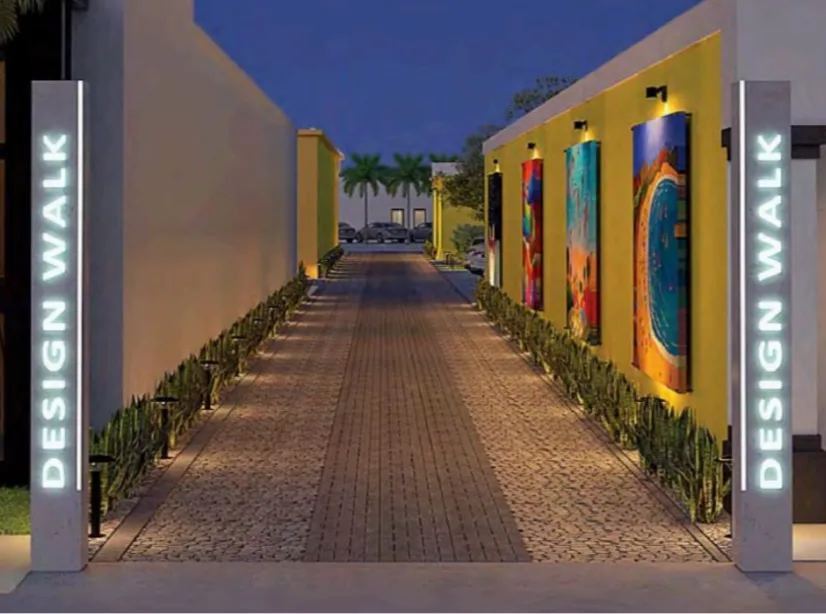
The Design Walk in the Naples Design District took another step forward in January with the unanimous approval by the City Council in their capacity as the CRA Board.
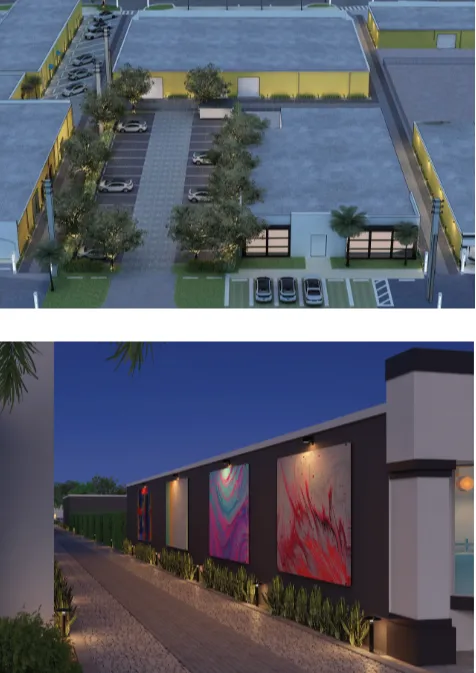
As Gulfshore Business reported, DPZ Associate Xavier Iglesias presented the final schematic design proposal and answered the board’s questions. The project now moves into implementation as the City seeks to coordinate this pilot block design with the adjacent improvements to the 1st Ave South streetscape, connecting the Design Walk with the recently completed Gulfshore Playhouse.
For more details, read the full article here.
Coastal Living Feature
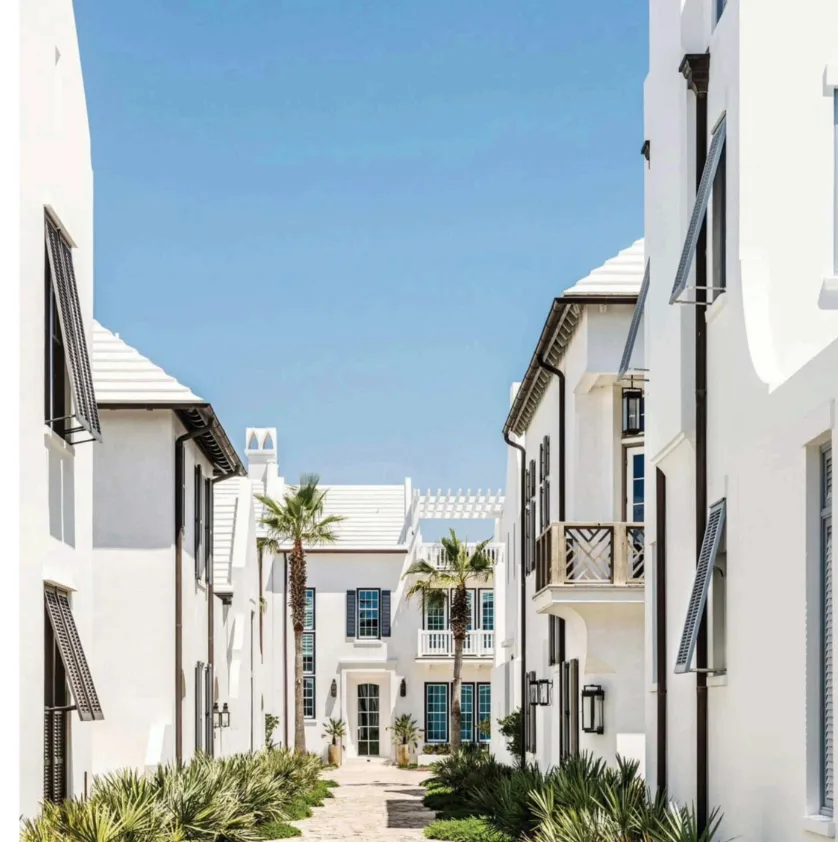
The Spring 2025 issue of Coastal Living once more features our 30-A projects in their best Beach Towns cover story. This time they go beyond the usual vacation destination checklist to identify why Seaside, Rosemary Beach and Alys Beach remain compelling to repeat visitors. Spoiler: it’s the urbanism.
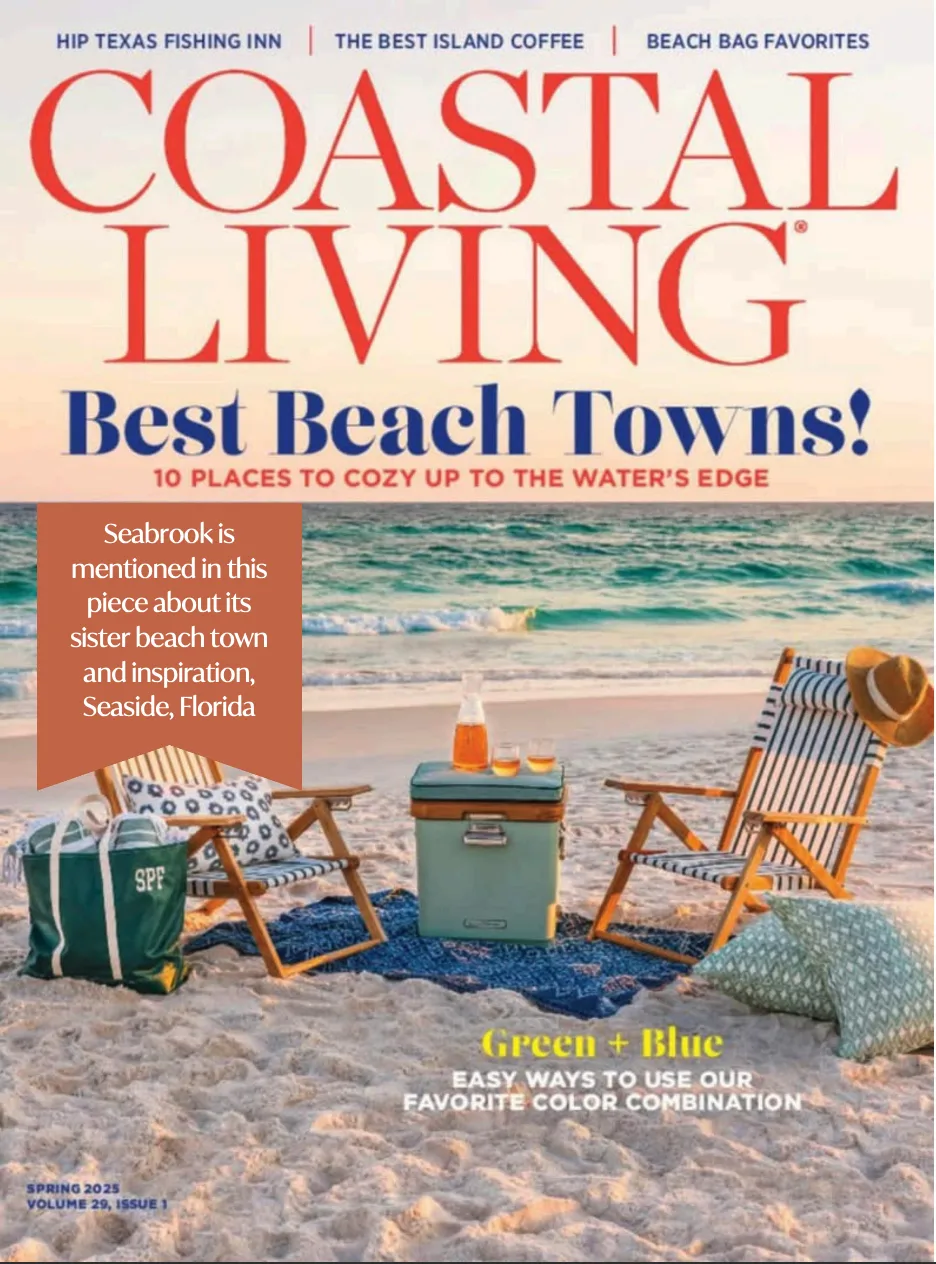
Interviewed are Daryl and Micah Davis on the early ideas that produced Seaside and the current thinking about its future. Alys Town Architect and official first resident, Marieanne Khoury Vogt, shares her perspective on how the town has evolved as more owners are spending more time there. Included is a sidebar of key coastal New Urbanist communities in the US that lists the DPZ villages of I’On and Habersham in SC.
Read the full excerpt here.
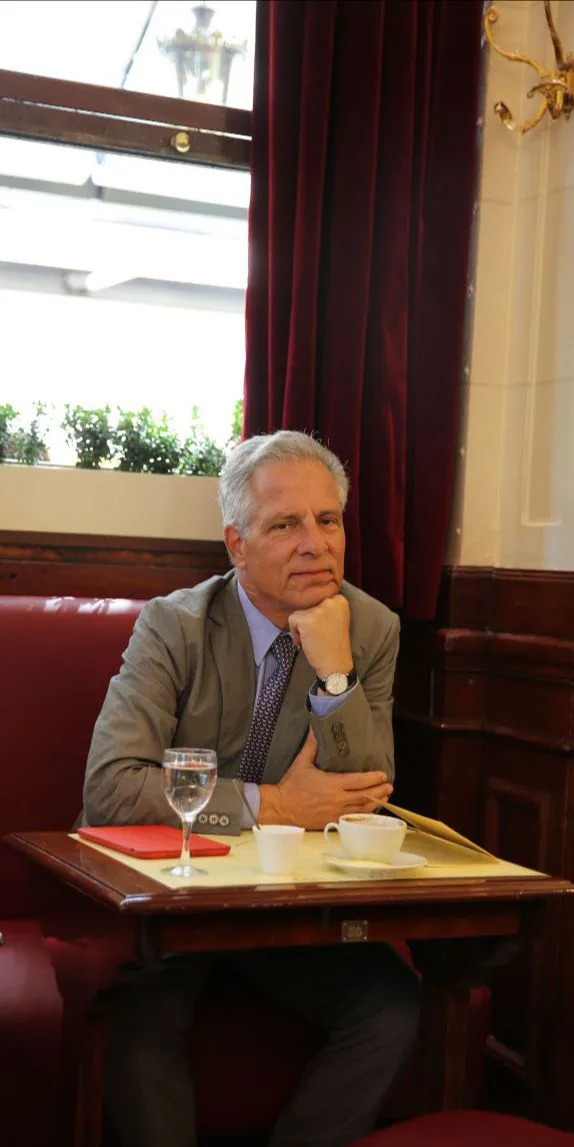
If you have attended a recent DPZ charrette you have probably seen a master plan that features a new housing block type that Andrés has been shaping and fine-tuning for several years.
The block, typically square in shape, consists of a double layer of lots. The outer layer fronts the primary street network, and the inner layer of homes enclose a shared open space. In between, an alley or shared mews connects the rear of each lot to the side streets. A flexible variety of configurations enable multiple pedestrian passages. The result is an extremely porous urban fabric that prioritizes pedestrian safety while delivering a more cost-effective infrastructure with a grid of fewer major streets.
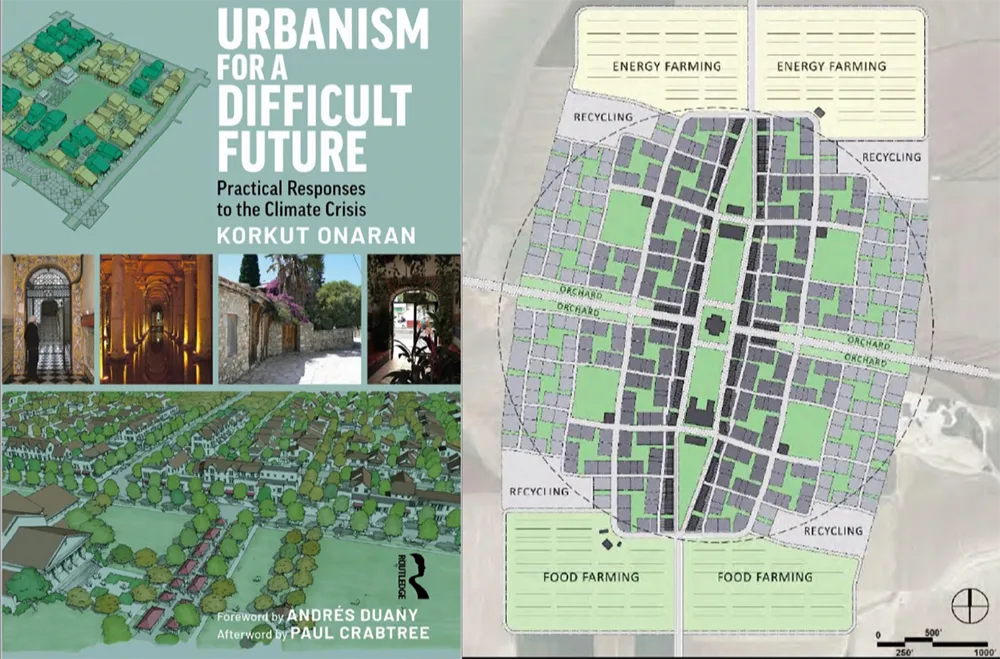
Recently CNU’s Public Square showcased Urbanism for a Difficult Future by Korkut Onaran in collaboration with Andrés. The book details the climate-response concept of the “Adaptation Village” with early explorations of this new block type.
DPZ Returns to The Villages of Loreto Bay
This January, DPZ returned to The Villages of Loreto Bay (Loreto Bay) in response to an RFP to update the community’s design code. It’s always a rewarding experience to reconnect with past clients and help further shape a community as it grows. We’re grateful for the continued trust and excited to keep contributing to Loreto Bay’s evolving vision.
DPZ was first engaged by Loreto Bay—a budding 8,800-acre eco-friendly resort village in Baja California Sur, Mexico—in 2003. Bordered by the Sea of Cortez to the east and a golf course and the Sierra de la Giganta mountains to the west, the vast majority of the property was preserved for recreation and conservation. Since then, the community has made additional strides in protecting the natural landscape, putting even more land under federally protected conservation status. Most of this area remains in its natural state, offering recreational trails for hiking, horseback riding, and nature appreciation. From the outset, the project embraced a deep commitment to sustainable and regenerative design.
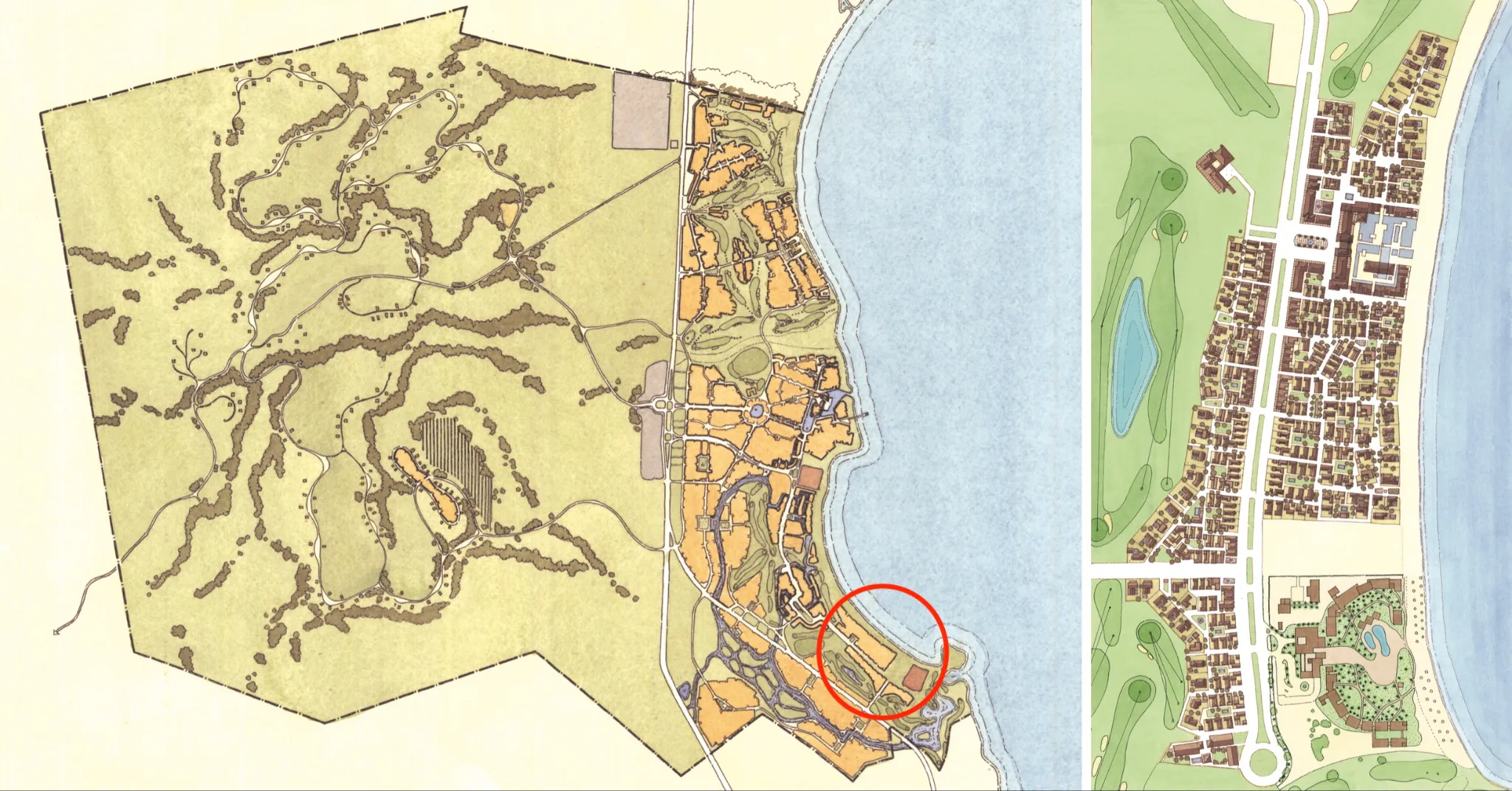
The DPZ Loreto Bay Master Plan (left) depicts the vast expanse of conservation land to the west of the developed area. The Phase 1 detail plan (on the right) illustrates the fine grained urban fabric of pedestrian paseos defining the residential blocks.
The master plan, which unfolds in multiple phases, envisioned Loreto Bay as a smart, environmentally conscious, and highly walkable community. Six compact neighborhoods and a lively town center were planned along the coastline. These neighborhoods offer a mix of housing types—including Village and Custom homes—with the village homes designed as variations on a few efficient and flexible plans. Instead of large front yards, homes are clustered together and centered around private interior gardens with fountains.
The majority of homes, except those along the waterfront or golf course, are permitted a viewing tower for wide expansive views of the stunning landscape. A defining feature of the community are the homes viewing towers. Great care has been taken to position individual towers to minimize their impact on private courtyards and to avoid obstructing neighbors’ views.
Basic amenities are all within walking distance, while the town center features the highest concentration of commercial space, anchored by 5-story mixed-use posada buildings.
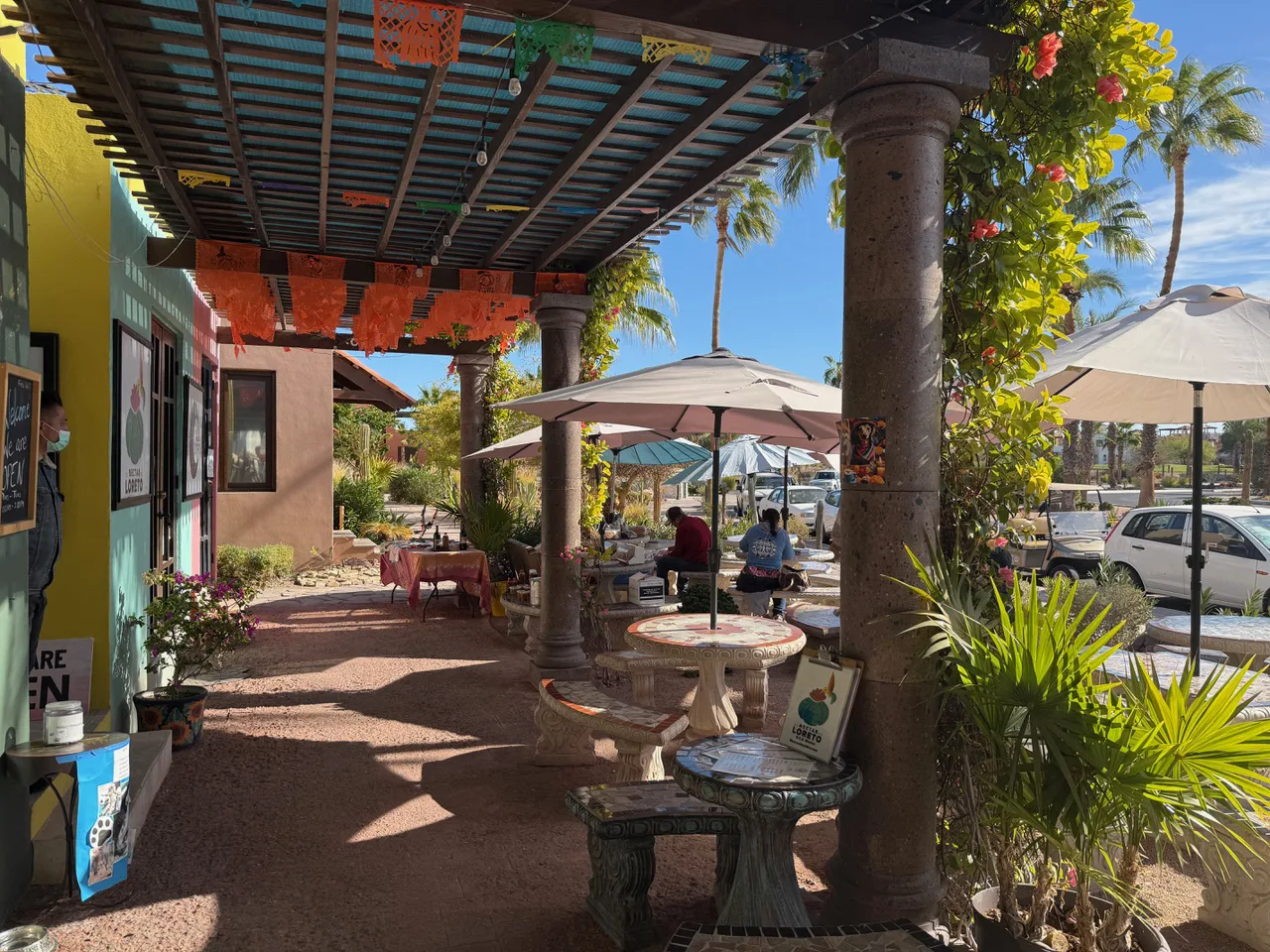
A cafe along the Main Street, Paseo Misión de Loreto.
Community life is supported by a range of gathering spaces and shared facilities, including pools and social courtyards that foster ongoing interaction among residents. Beyond the central Main Street, Paseo Misión de Loreto (known simply as “the Paseo”) which permits cars and provides on-street parking spaces, the community is entirely pedestrian-oriented, with homes accessed only by foot, bicycle, or solar-powered electric carts. A charming network of narrow pedestrian paths winds through the neighborhoods, opening into small shared courtyards and inviting communal spaces.
Sustainability is deeply embedded throughout the development, with strategies that include passive solar design, dark skies, water conservation, the use of local building materials, and the bold elimination of cars with a reliance on solar-powered carts as the most intense mode of transportation. The strategic and limited use of water, combined with native plantings, is employed in courtyard fountains to create a cooling and tranquil microclimate. The interplay of greenery and flowing water helps to lower surrounding air temperatures while enhancing the serenity and beauty of courtyards.
Loreto Bay has become a model for highly restorative and inspiring development. Homeowners are deeply committed to preserving the beauty and simplicity of village life while actively enhancing the surrounding ecosystem.
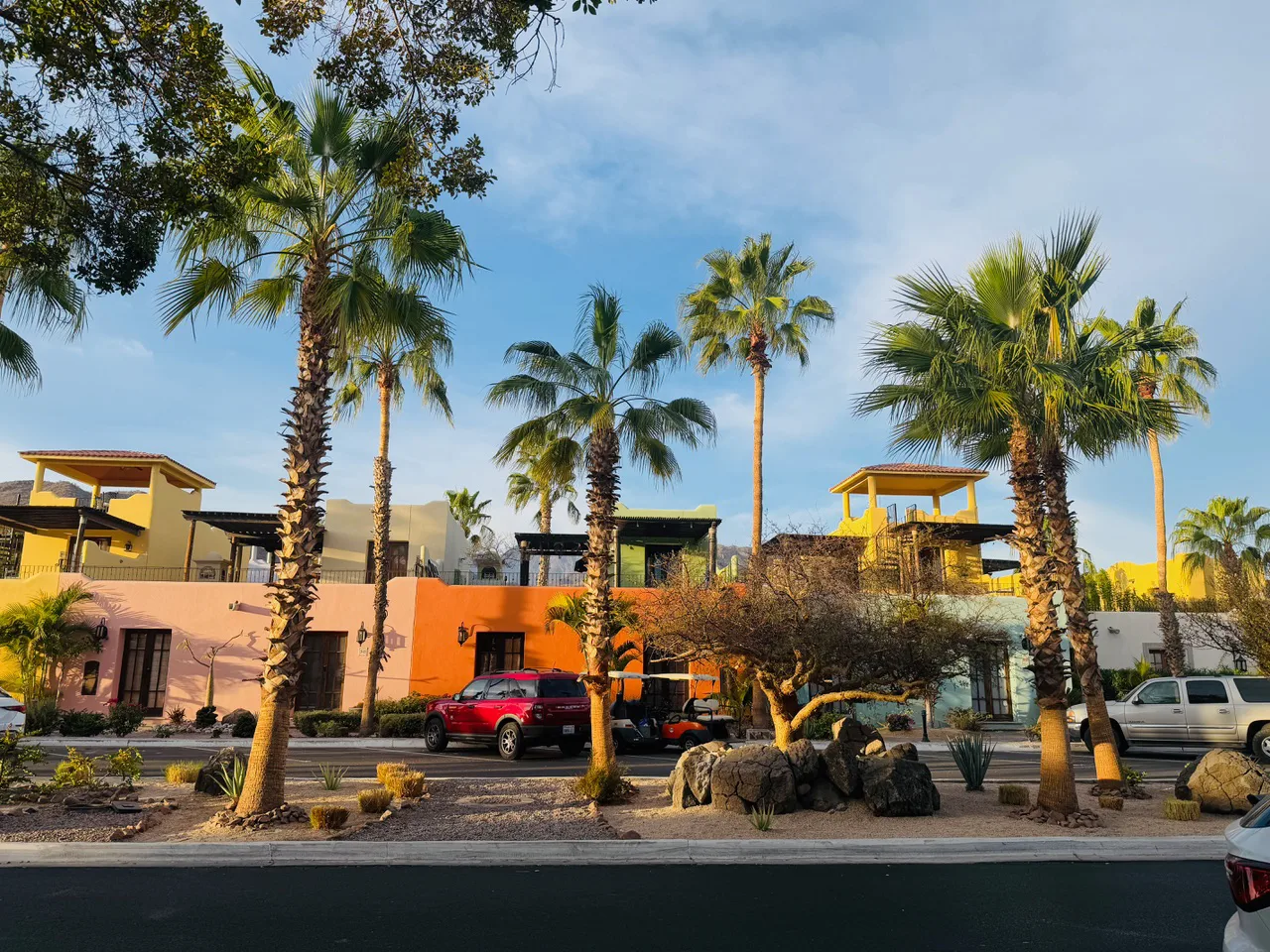
Mixed-use buildings, rooftop terraces, and viewing towers facing the Paseo.
In 2024, DPZ was selected to conduct a charrette in January 2025 to provide a comprehensive code update and collaborate with developers on planning several key vacant and controversial sites.
The return to Loreto Bay also gave DPZ an opportunity to witness the village’s remarkable growth since the original 2003 planning process. True to the original vision, on-site parking remains limited to the Paseo reflecting a diminished reliance on cars. Most residents—whose average age is now over 60—prefer to walk, bike, or travel by golf cart from parking areas to their homes. Recreation is deeply woven into daily life, with activities like golfing, kayaking, swimming, and whale watching thriving amid the community’s spectacular natural surroundings.
The range of non-residential uses has also flourished, with the village now home to three small markets, a dozen restaurants, coffee shops, spas, offices, salons, dog groomers, pools, and more. Ultimately, Loreto Bay is building out remarkably true to the vision that was first drawn 21 years ago.
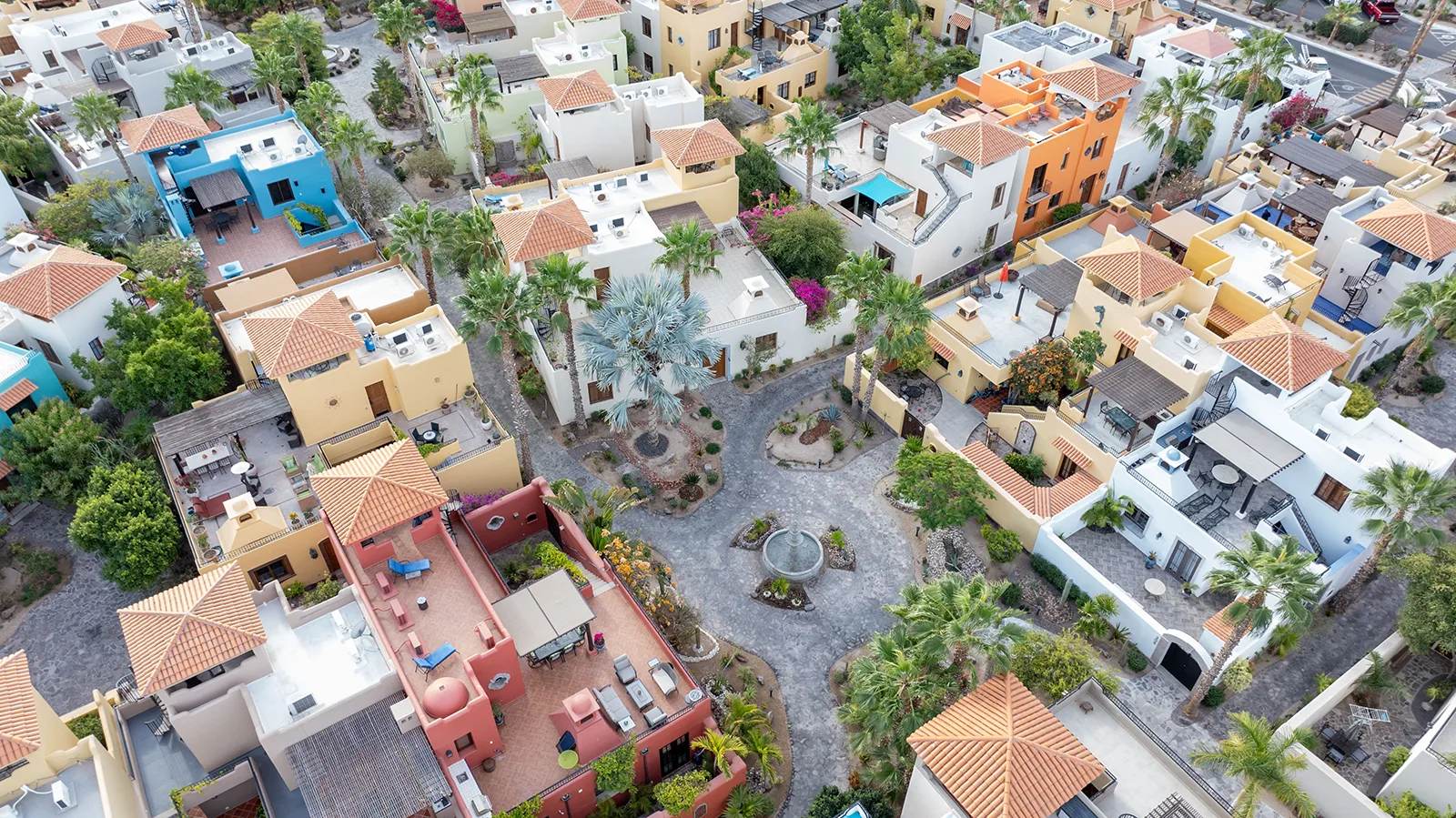
Drone-view of one of Loreto Bay’s pedestrian path plazas.
Unique to Loreto Bay’s Spanish Colonial–inspired architecture are brightly colored homes that present a calm, generally unadorned street frontage, reserving decorative details for special elements such as door surrounds, entry doors, tiled wall bases, decorative iron lighting, and sculpted rooflines.
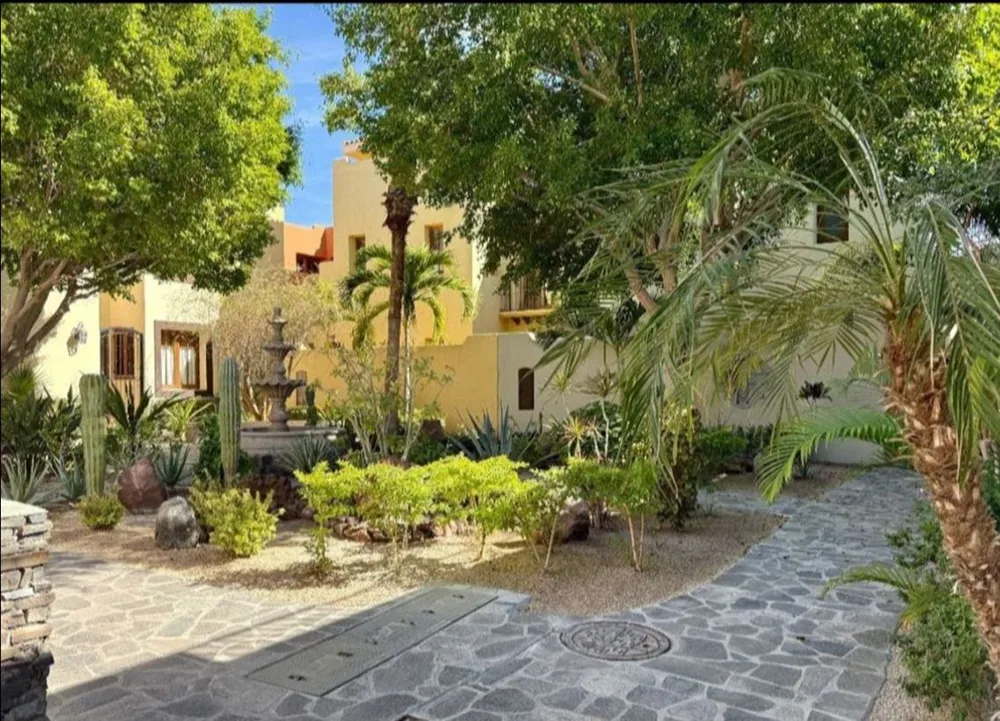
The beauty of the maze of pedestrian paths is enhanced by a lush and colorful mix of plantings and trees, with bougainvilleas often cascading over courtyard walls, adding vibrant splashes of color to the walkways.
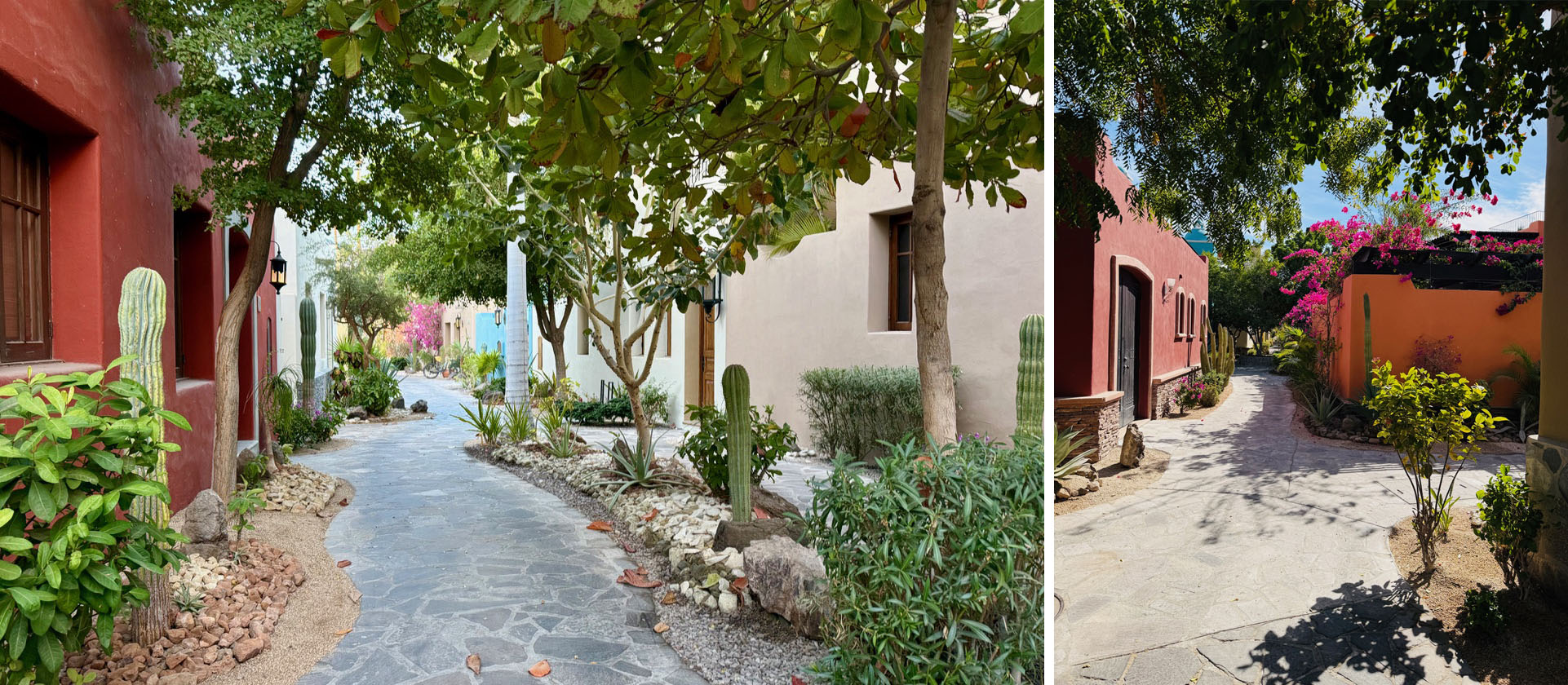
Pedestrian paseos
Though largely built out—and now guided by an updated code—Loreto Bay will continue to grow, evolve, and refine itself for years to come. This ongoing process is the nature of urban planning, and DPZ is proud and grateful for the opportunity to return and continue helping to shape this community toward its long-term vision.
DPZ Holiday Newsletter 2024

Happy Holidays from DPZ!
The time has come to bid farewell to a fast-paced and action-packed 2024. It is important to take a moment to reflect on all we have experienced, learned, and shared as we look ahead to 2025.
2024 kept us occupied with numerous charrettes, conferences, and updates to ongoing projects. We are excited to share some of our highlights with you.
May the new year bring you all continued health and happy prospects.
To read and learn more in depth about our work this past year, check out the other posts on the DPZ Pulse.
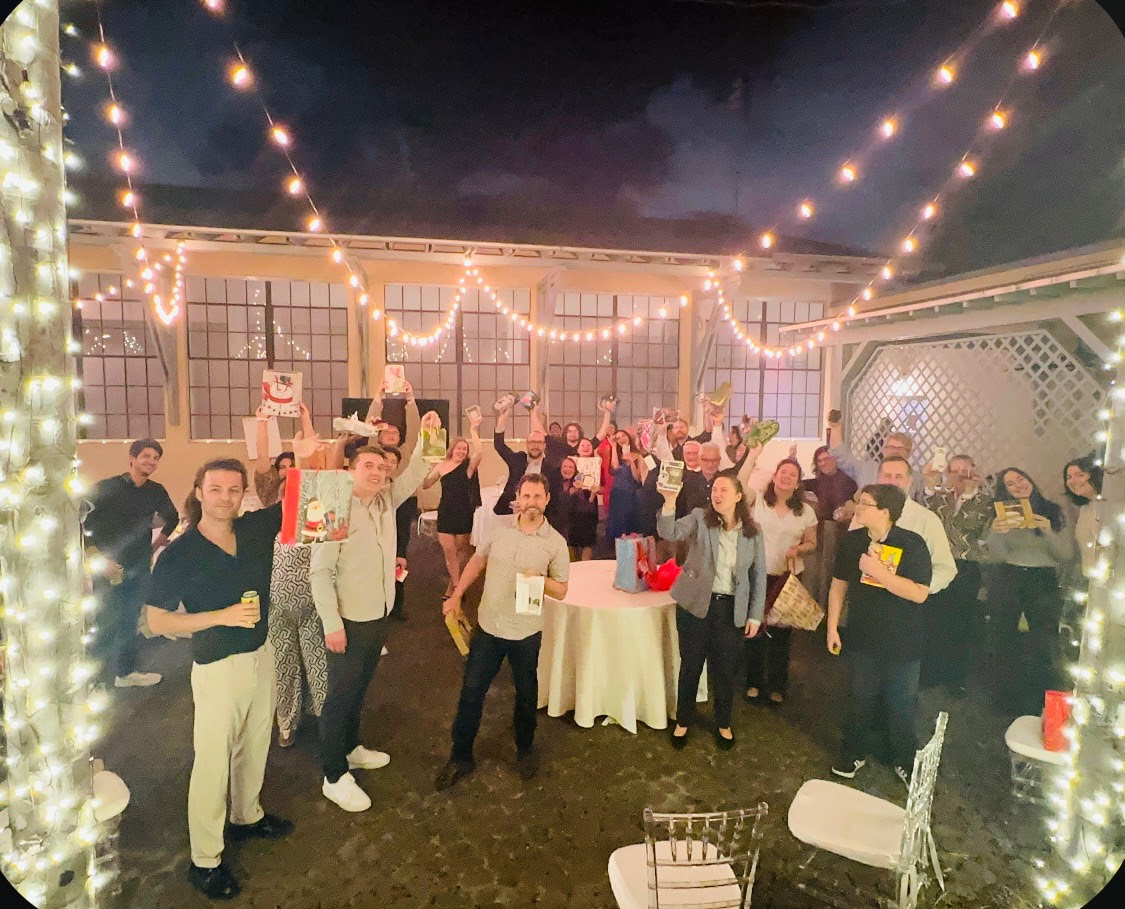
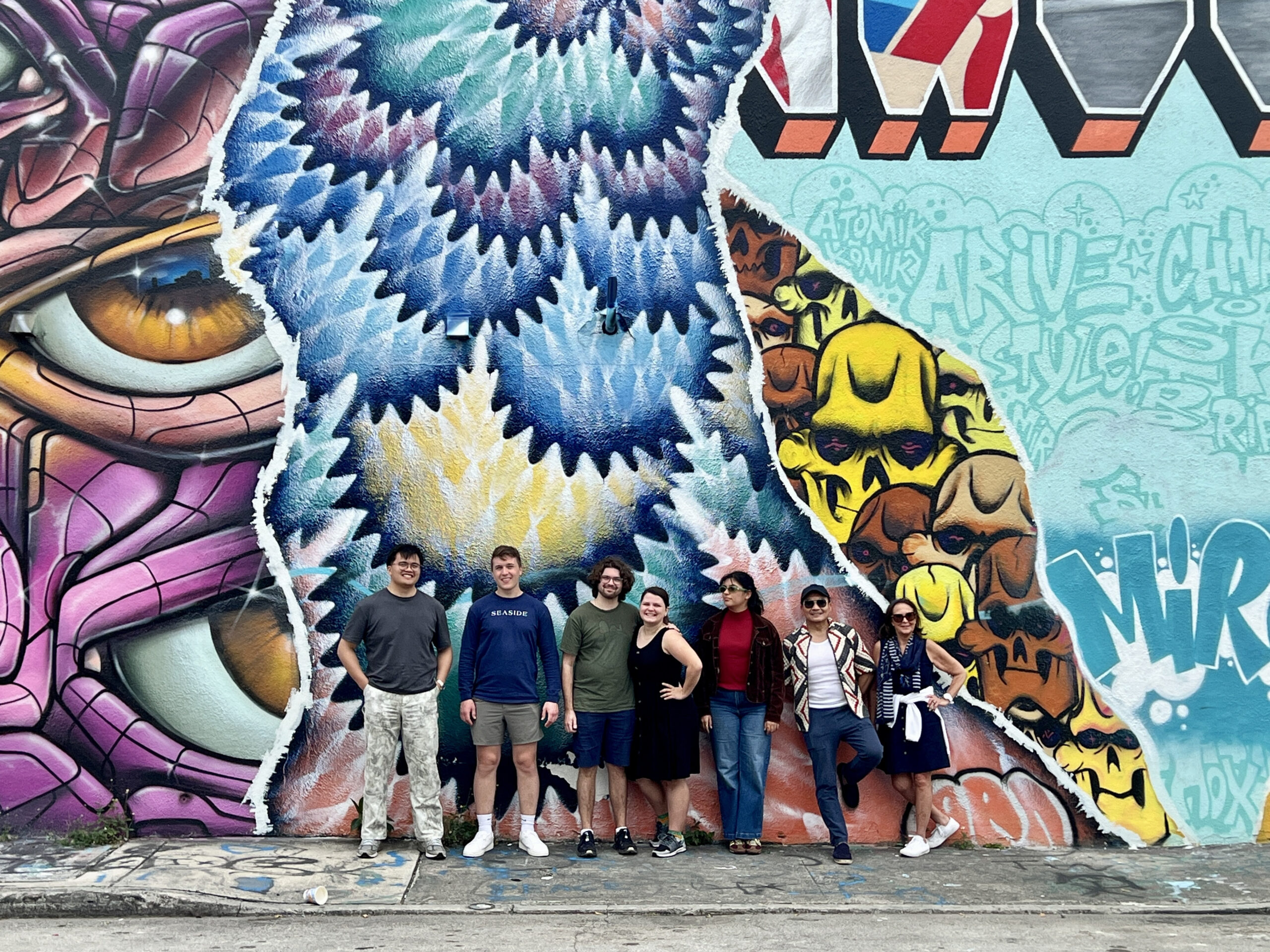
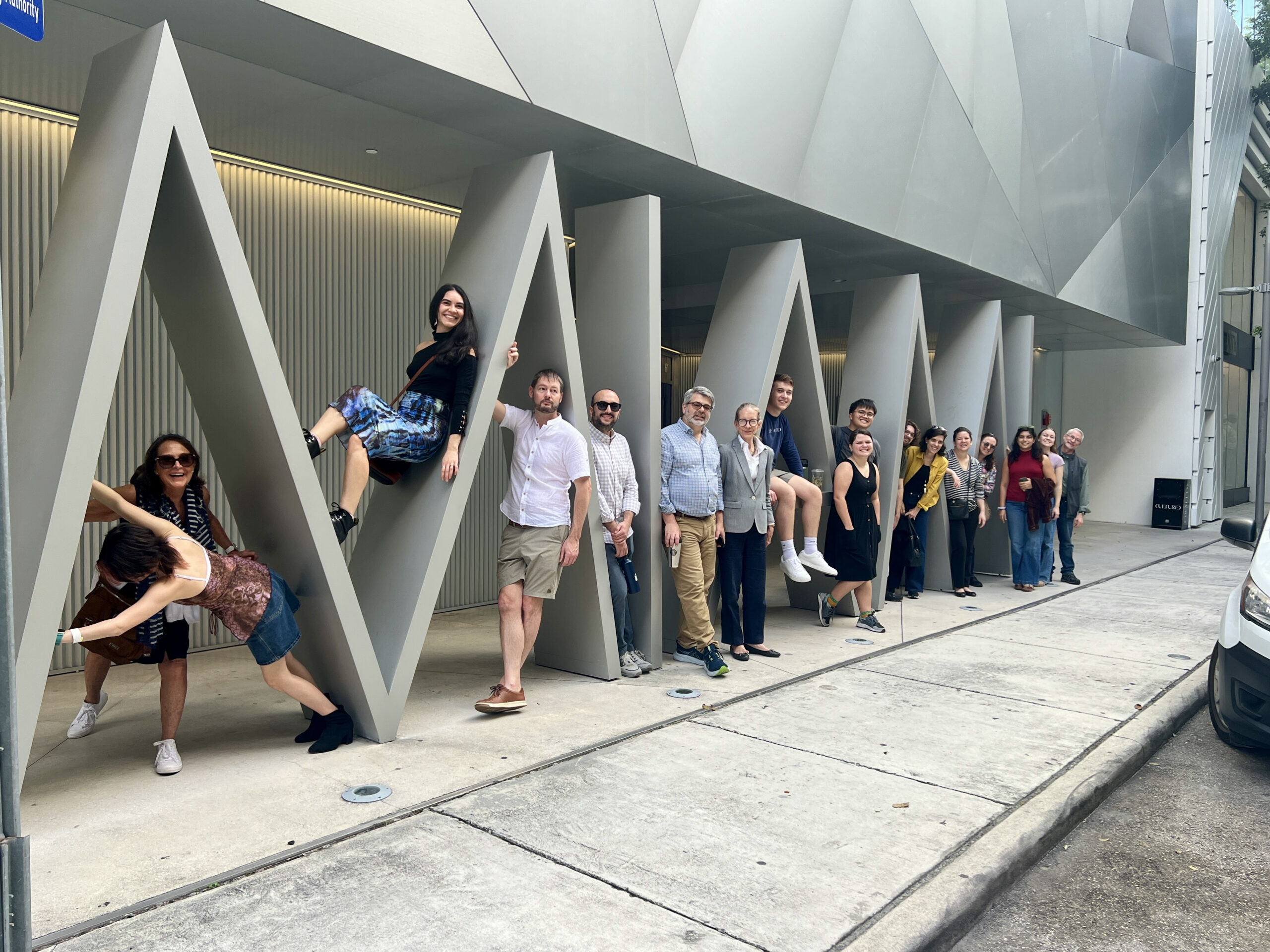
DPZ Company Meet & Holiday Party
To close out the year, DPZ celebrated with our annual Company Meet and Holiday Office Party. Our three offices gathered to share valuable lessons from the past year and brainstorm ways to make 2025 even better.
The following day was packed with tours and exploration of several great South Florida neighborhoods: the Miami Design District (led by Lizz), Wynwood (led by Wynwood BID), and South Beach. These adventures gave new employees the opportunity to learn from DPZ veterans about some of our firm’s contributions to the local urban realm.
DPZ’s three offices were busy in 2024 with a variety of new public and private sector projects. We were also excited to see ongoing projects continuing to grow. Here are some highlights:
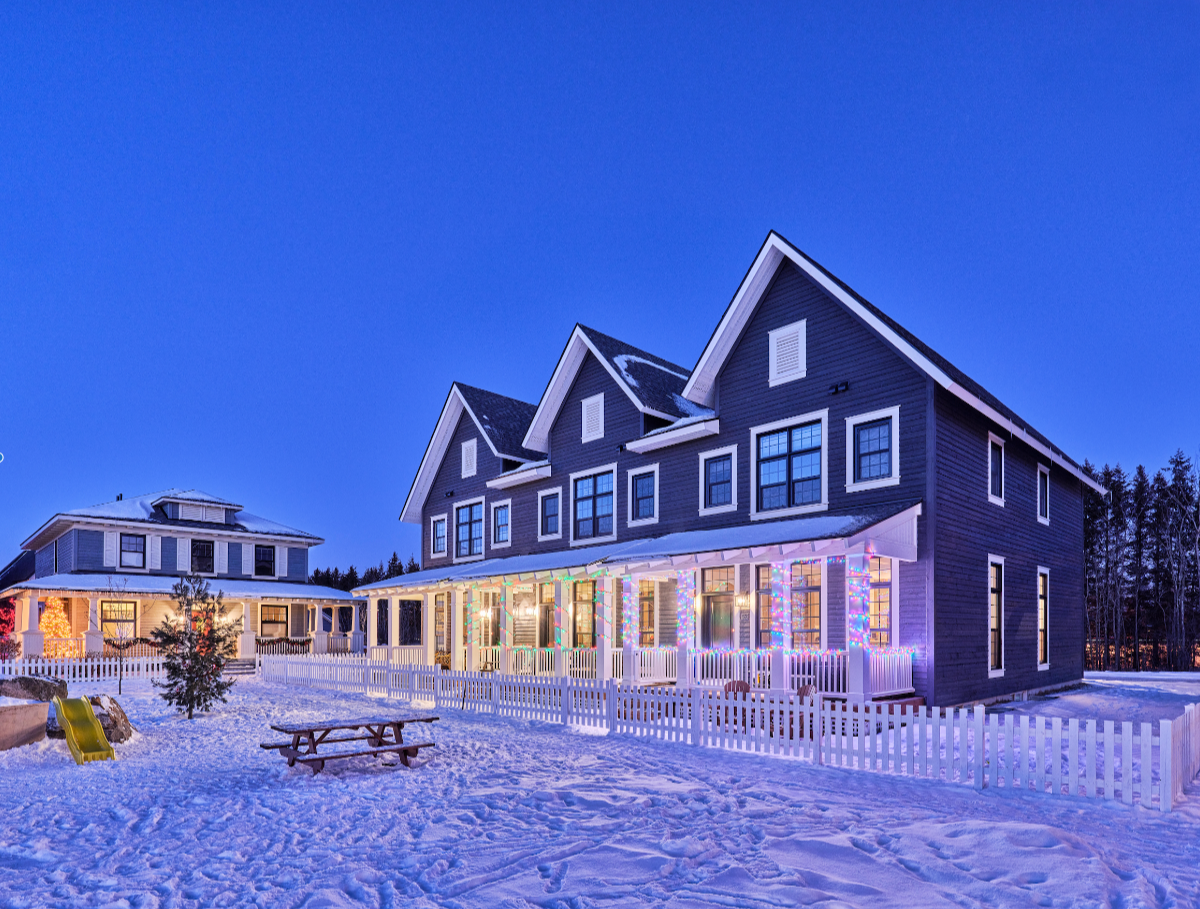
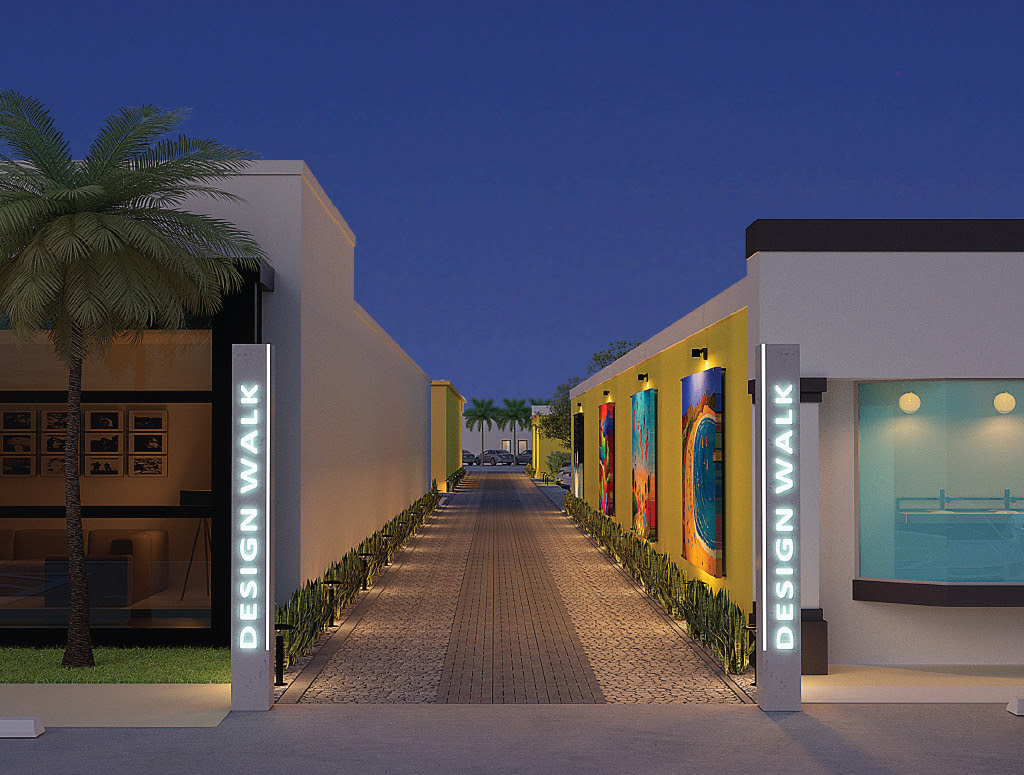
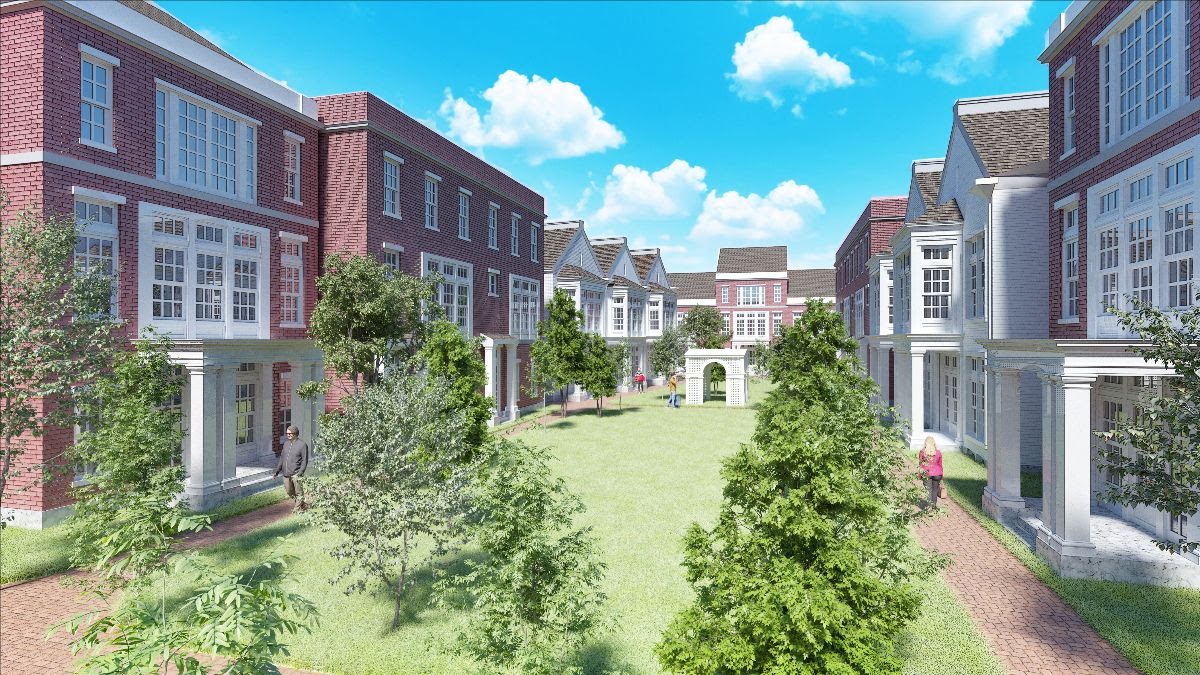
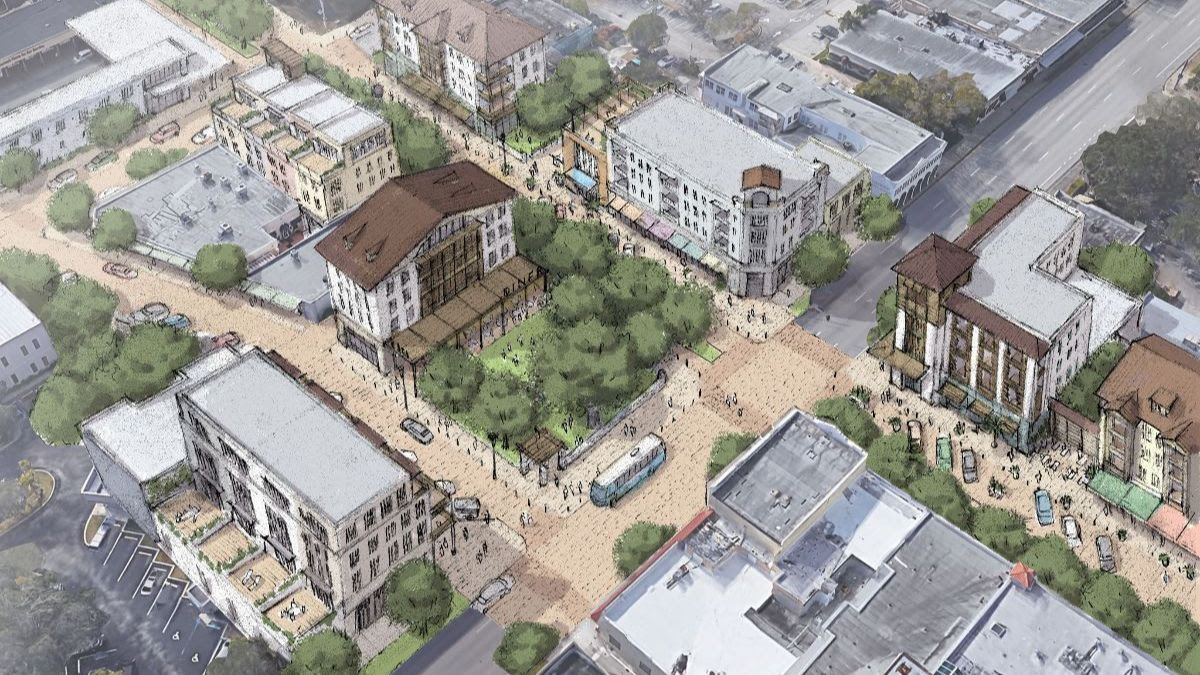
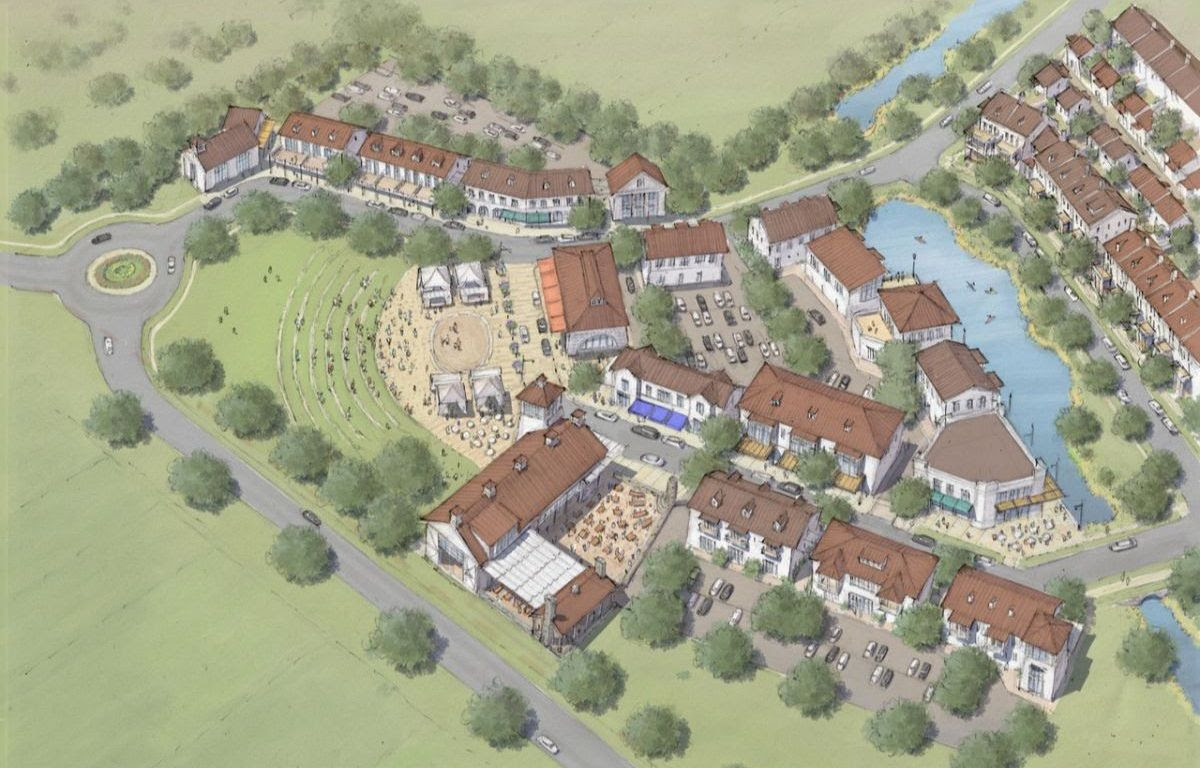
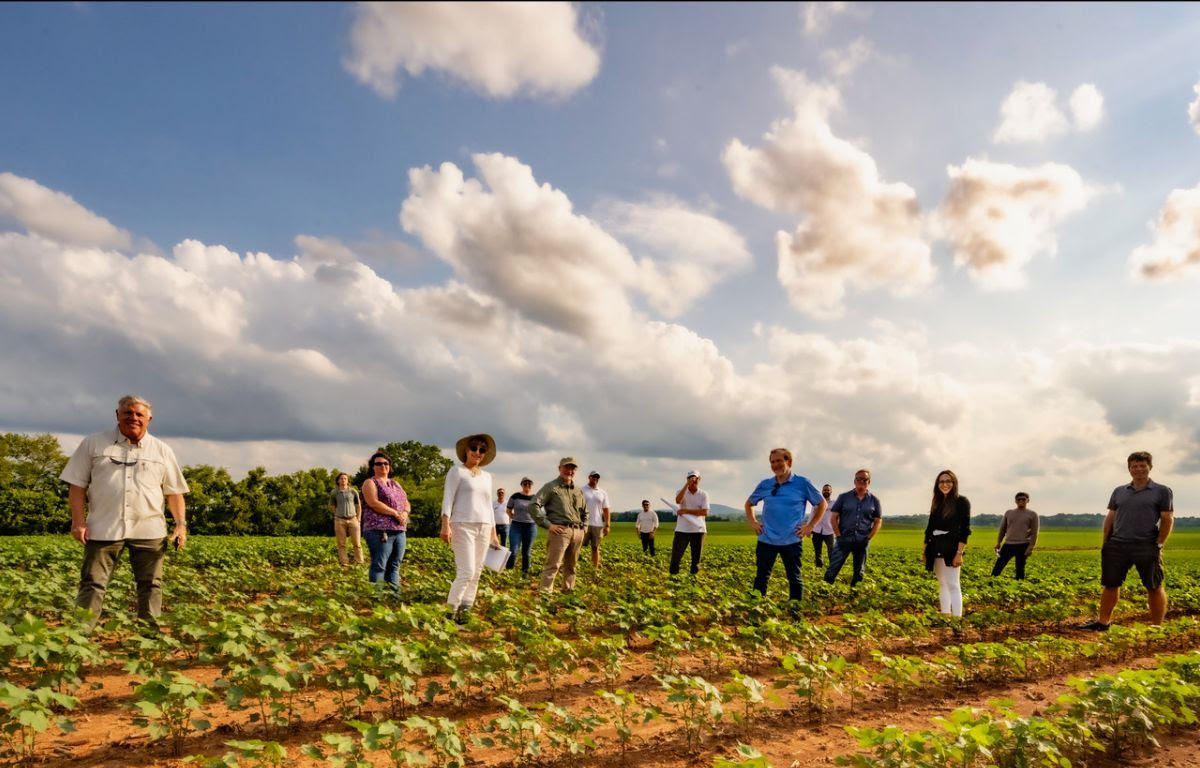
Top: Hendrick Farm, Chelsea, Canada; Naples Design Walk, FL
Center: Fishkill, NY; Downtown Vero Beach, FL
Bottom: Meridianville, AL
Miami Office Showcase
Some of the most notable updates the Miami team have seen include:
- Fishkill, NY – DPZ, in collaboration with Alex Gorlin Architects, participated in a developers’ bid for the redevelopment of a state penitentiary facility. The bid was successful, and the DPZ renderings and master plan were exhibited on the NY Governor’s websitehere.
- Vero Beach, FL – Last February, a charrette took place for the revitalization of Downtown Vero Beach. The Master Plan was approved by Council in May. While the referendum to raise downtown density failed on Election Day, the planning director has expressed confidence that many of DPZ’s master plan recommendations can be implemented. Additionally, a new RFP for the Three Corners redevelopment into mixed-use center was issued, moving the much anticipated project to the next stage. Learn more about Vero Beachhere and Three Cornershere.
- Naples Design District, FL – The design for the Pilot Block for the Design Walk has evolved, more interaction with the property owners is expected in the first quarter of 2025, and updates will be presented to the City Council in late January. Read more about DPZ’s history with Napleshere.
- The Village in Niagara-on-the-Lake, Ontario, Canada – The Village began in 1997 and has been a labor of love with DPZ guiding its planning and architecture for decades. In 2017, DPZ designed the Village Center master plan and code and is now overseeing its final phase as Town Architect, moving toward completion in 2025. Learn more about Village in Niagara on the Lakehere.
- Hendrick Farm, Chelsea, Canada – DPZ began design work for Hendrick Farm in 2016 and continues as the town architect, contributing to the design phases that are now underway. Learn more about Hendrick Farmhere.
- Meridian Commons, Meridianville, AL – 10 years after the Village of Providence Charrette, DPZ returned to Huntsville, AL, this past summer to design a new community 10 miles north of the downtown. The 568-acre project will consist of 3 new walkable neighborhoods and a regional park. The project aims to establish an activity node for a sector of suburban Madison County that currently has no real urban center, and will begin with a mixed-use hamlet at the northeast corner of the property. A number of parks will highlight the site’s natural features, including the Overlook Bluff whose pavilion graces our animated holiday card above.
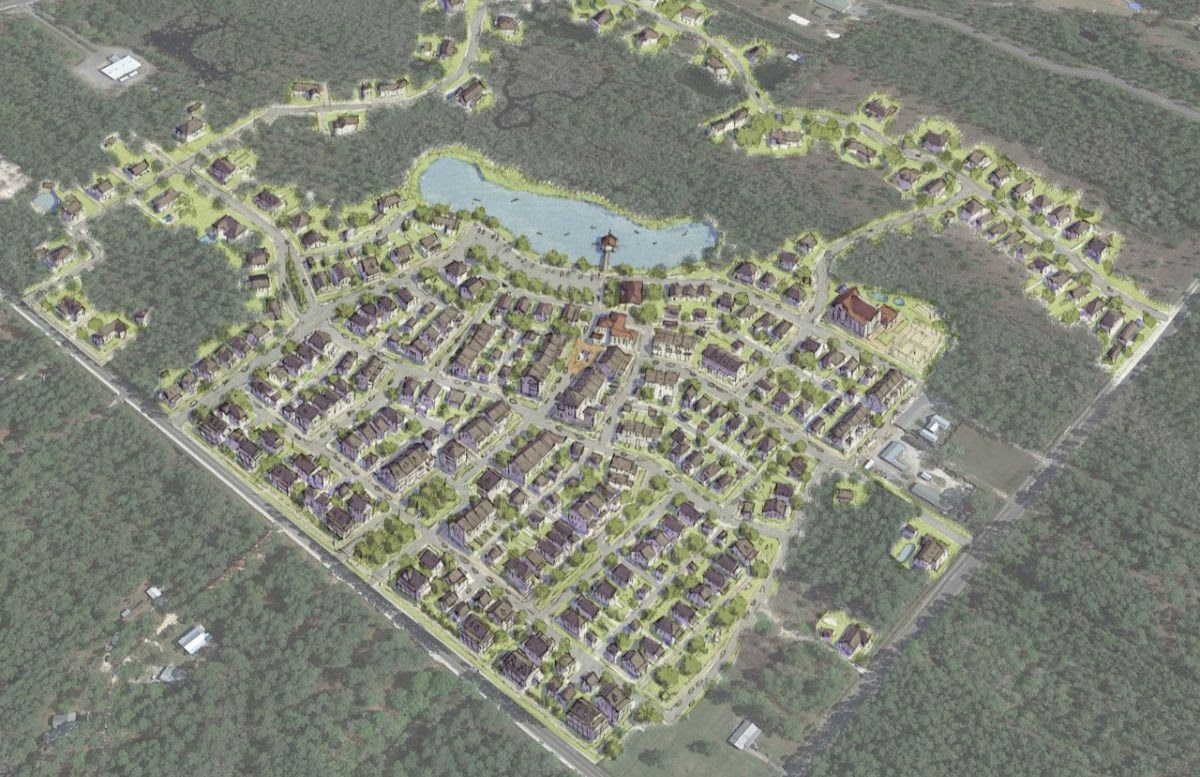
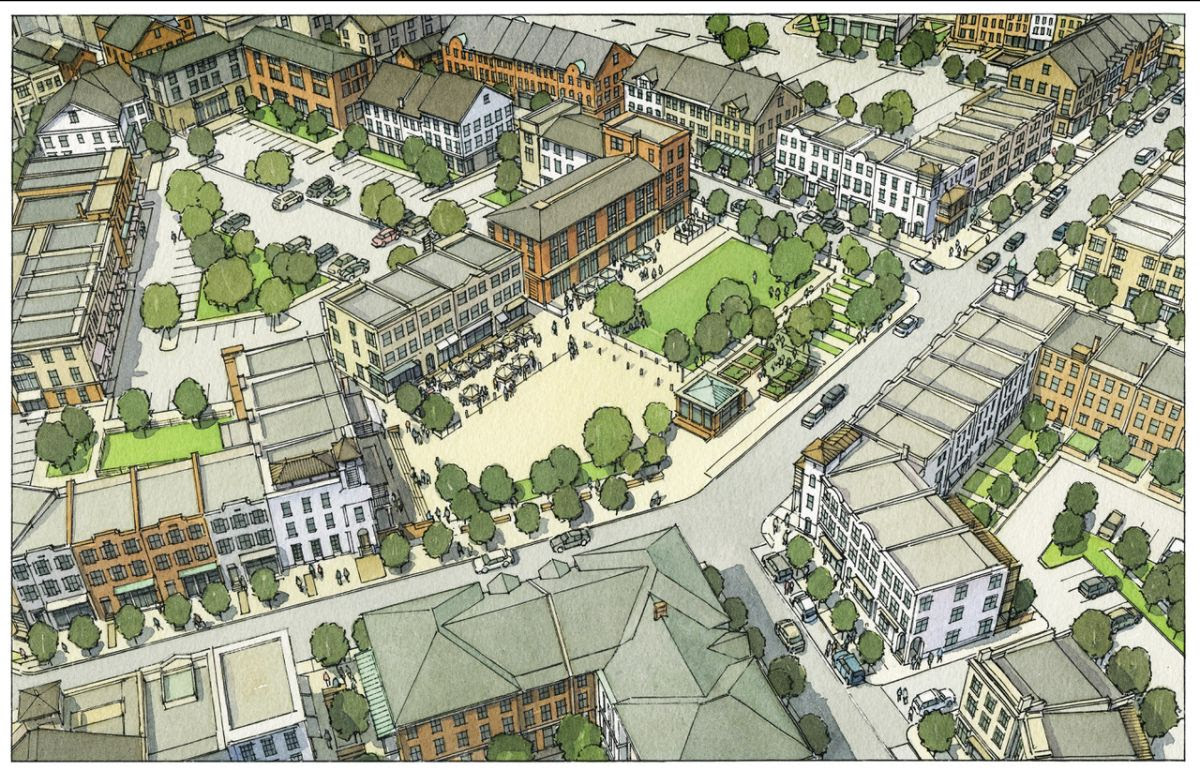
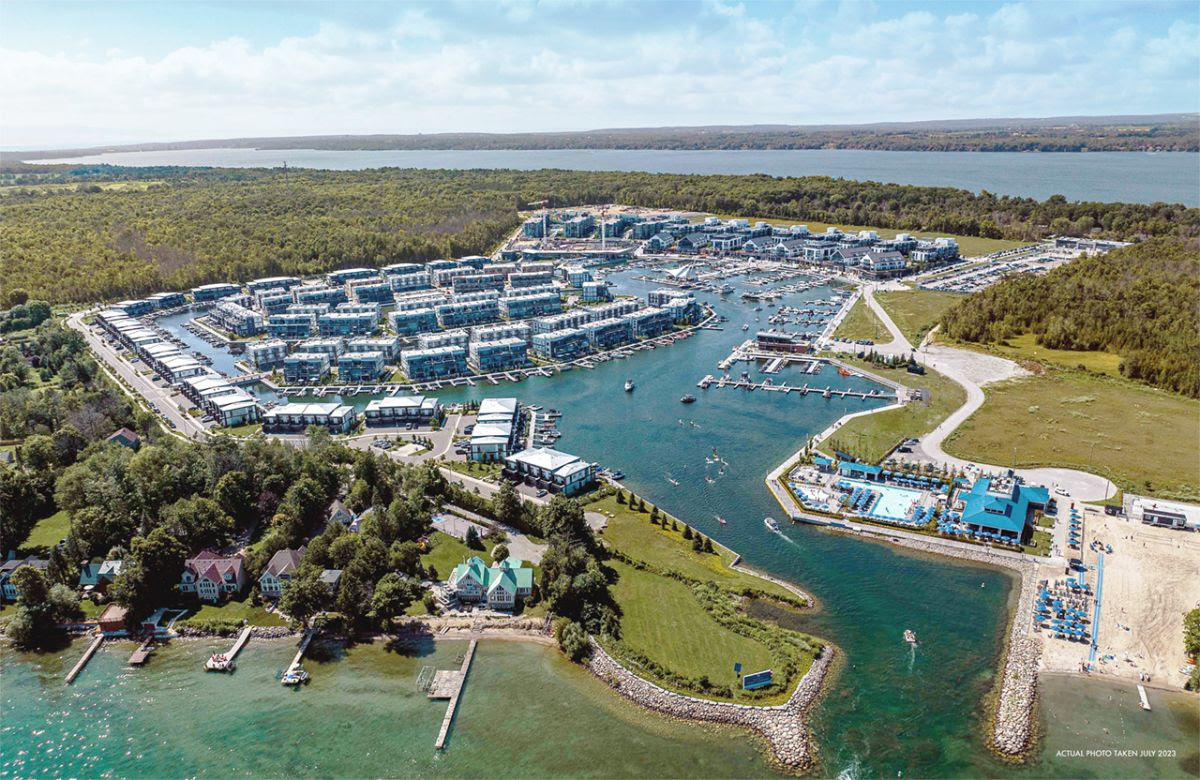
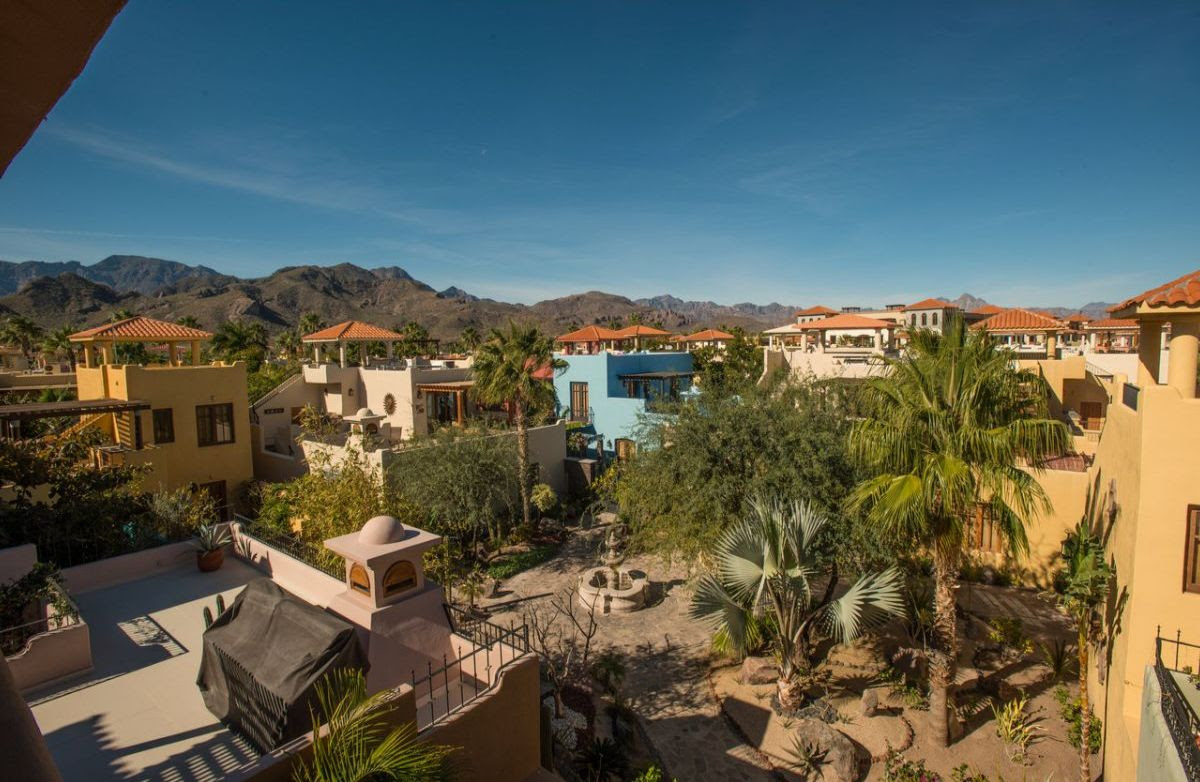
Top: Walton County, FL; Ivanhoe Village, IL
Bottom: Friday Harbour, ON, Canada; Loreto Bay, Mexico
D.C. Office Showcase
The DC Office has rounded out 2024 with a great deal of international work, but a few significant domestic ones as well. In addition, a number of events and lectures have kept the travel schedule quite active. Notable project updates include:
- Musqueam Village, BC, Canada – Master planning work on this master plan for the Musqueam band outside Vancouver has been completed this year. Local architectural firms, including Perkins & Will, are now working on the first phase.
- Loreto Bay, Mexico – A resort town designed the same week as Alys Beach has returned to DPZ to redo their design code.
- Skylands, Tasmania – This 300-hectare site in Australia was approved by Council this year, and the city is now working on a Structure Plan based on the one developed by DPZ in 2020.
- Friday Harbour, ON, Canada – This 2003 DPZ project achieved a number of milestones the past year, and is now looking to densify around its waterfront. Read more about the updates on this projecthere.
- Ivanhoe Village, IL – This 800-ac new town in Mundelein was designed in 2022. This year, we have worked on securing entitlements, and developing the codes for the village. Phase 1 is also being developed to accommodate multiple builders.
- Cane Bay Village, SC – The design process for this 900+-acre new village with a town center anchored to an existing conventional project began in 2019. It has required 2 codes for 2 different municipalities with the client negotiating with each. Following a moratorium on all development in the County that has been lifted, PUD and Plan approvals are now in process.
- Walton County Comp Plan EAR, FL – This past spring, a visioning charrette was held to commence the design for a Comprehensive Plan Update. With the assessment now complete, the next step is to assemble a list of recommendations to the County. Read more about this projecthere.
- Middle East – The flow of work in this region continued with a new town project and several public codes. Some promising new RFPs should keep DPZ traveling to this region in 2025.
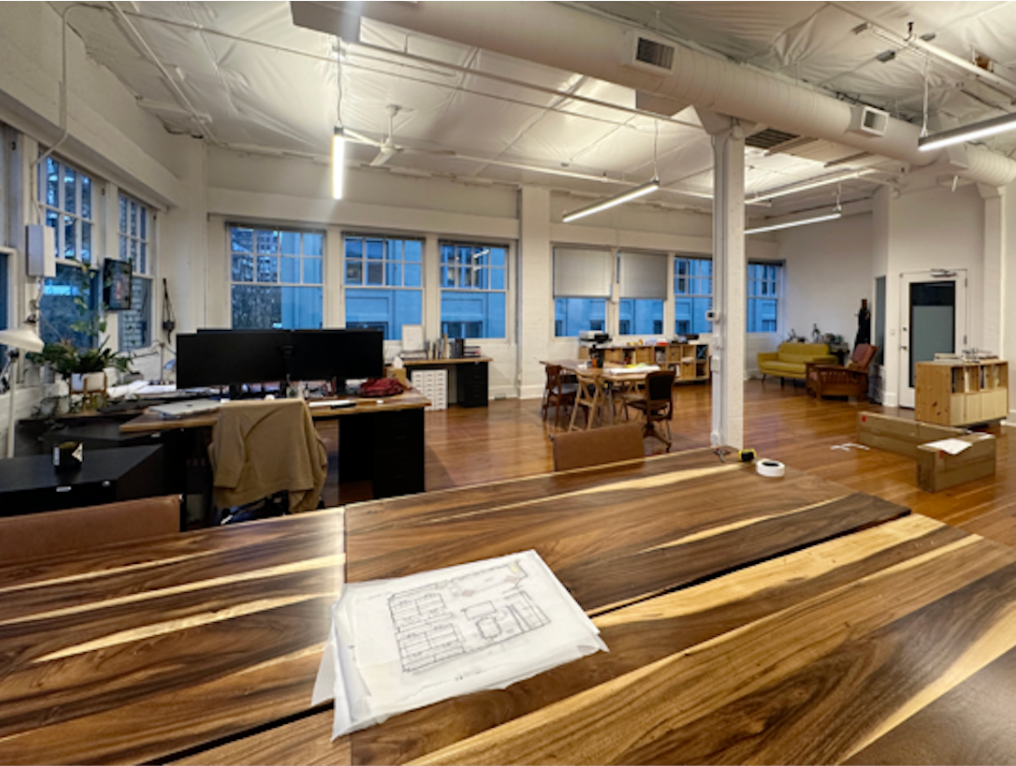
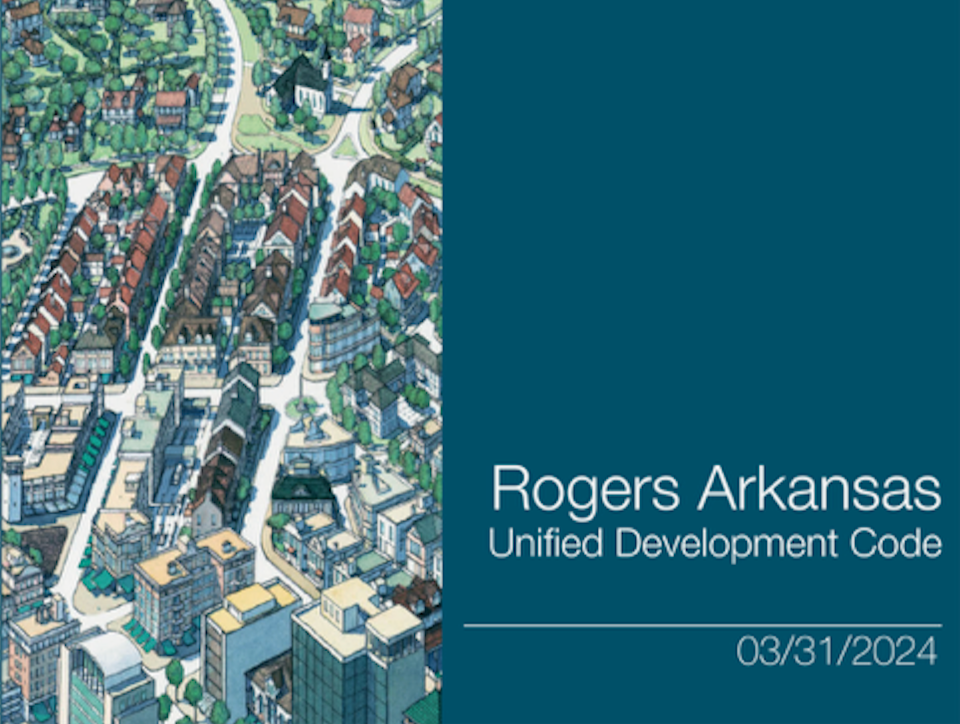
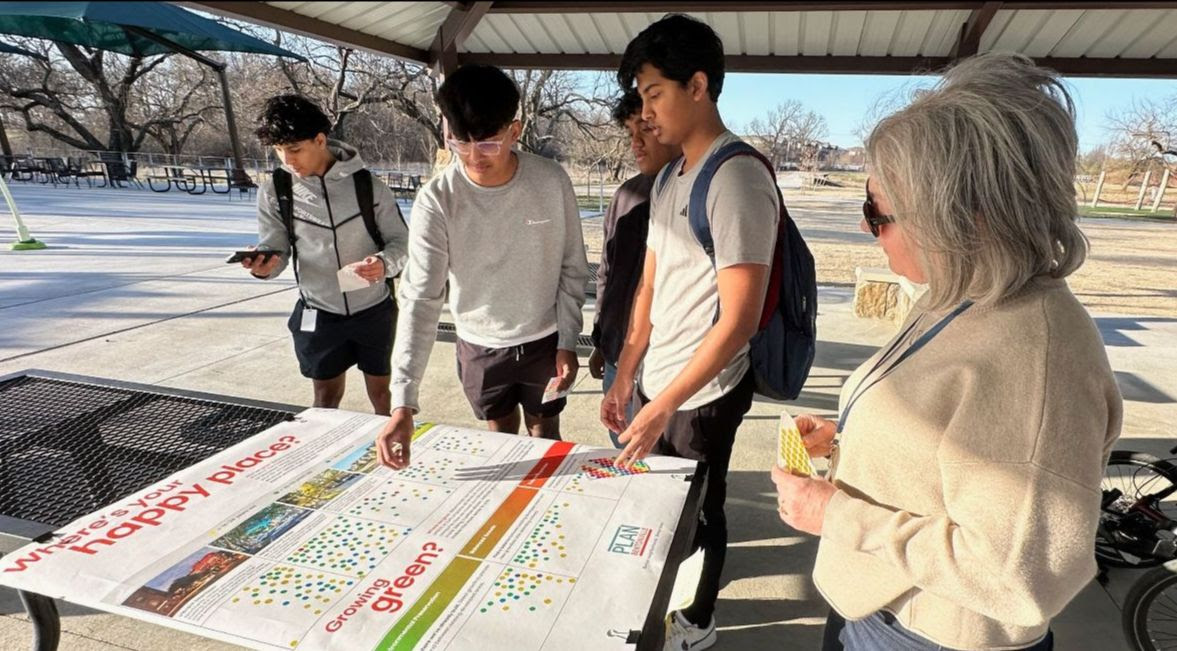
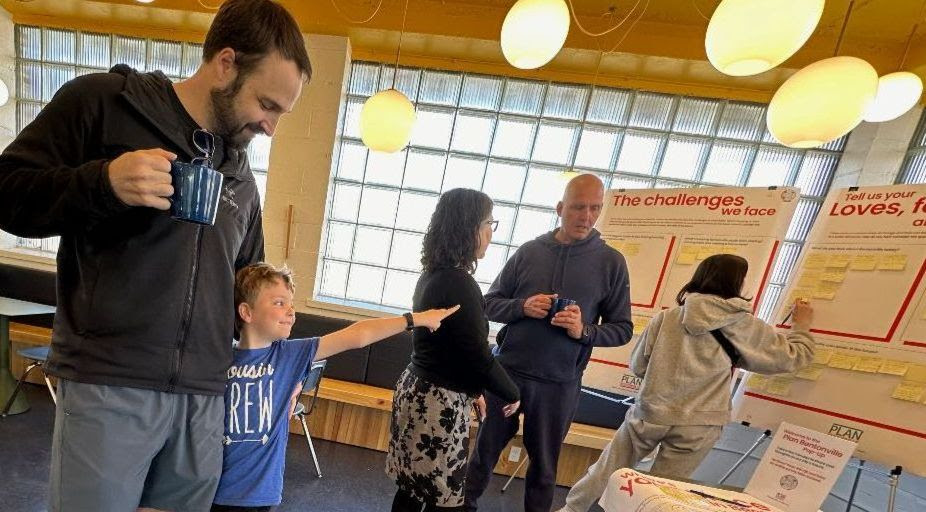
Top: PDX Office; Rogers, AR
Bottom: Plan Bentonville, AR
Portland Office Showcase
DPZ’s Portland Office has moved and expanded to the Pearl District in Downtown Portland in 2024, while advancing a diverse portfolio of projects. Some of their most notable project updates include:
- Winnipeg, MB, Canada – Workshopped in June, DPZ’s by-right zoning code for high-density, incremental development of strip malls, malls, and major corridors throughout the city was adopted this fall. In the works, is by-right zoning for missing middle housing.
- Northwest Arkansas – The Portland office has seen the passing of a new unified development code and future land use map in Rogers, AR, development of a fiscally-based future land use map for Bentonville, AR, has received multiple awards, and the office took part in an Urban Thinkers Campus as part of ULI Northwest Arkansas’s annual Place Summit along with PLACE Initiative.
- Orange County, FL, Code – In collaboration with DPZ DC, a great deal of work went into developing this county-wide code in Central FL, in 2024. After a midyear pause, a home stretch is envisioned in early 2025.
- Montava, Fort Collins – Approval of phase 1 is underway and will begin construction in 2025. See past updates on Montavahere.
- Clore Station, KY – The phase-1 design for this community, a neighbor of DPZ’s Norton Commons, is complete with construction slated to commence in 2025.
- Vista Field, Kennewick, WA – With construction on the first building now underway, Vista Field has received four additional Town Architect Review applications. For a better visual, The Port of Kennewick released this aerial videohere.
- Nonprofit Work – Portland’s the office has contributed to both the Congress for the New Urbanism and PLACE Initiative, two non-profits closely tied to the work of DPZ. You can learn more about PLACE Initiative’s mission and effortshere.
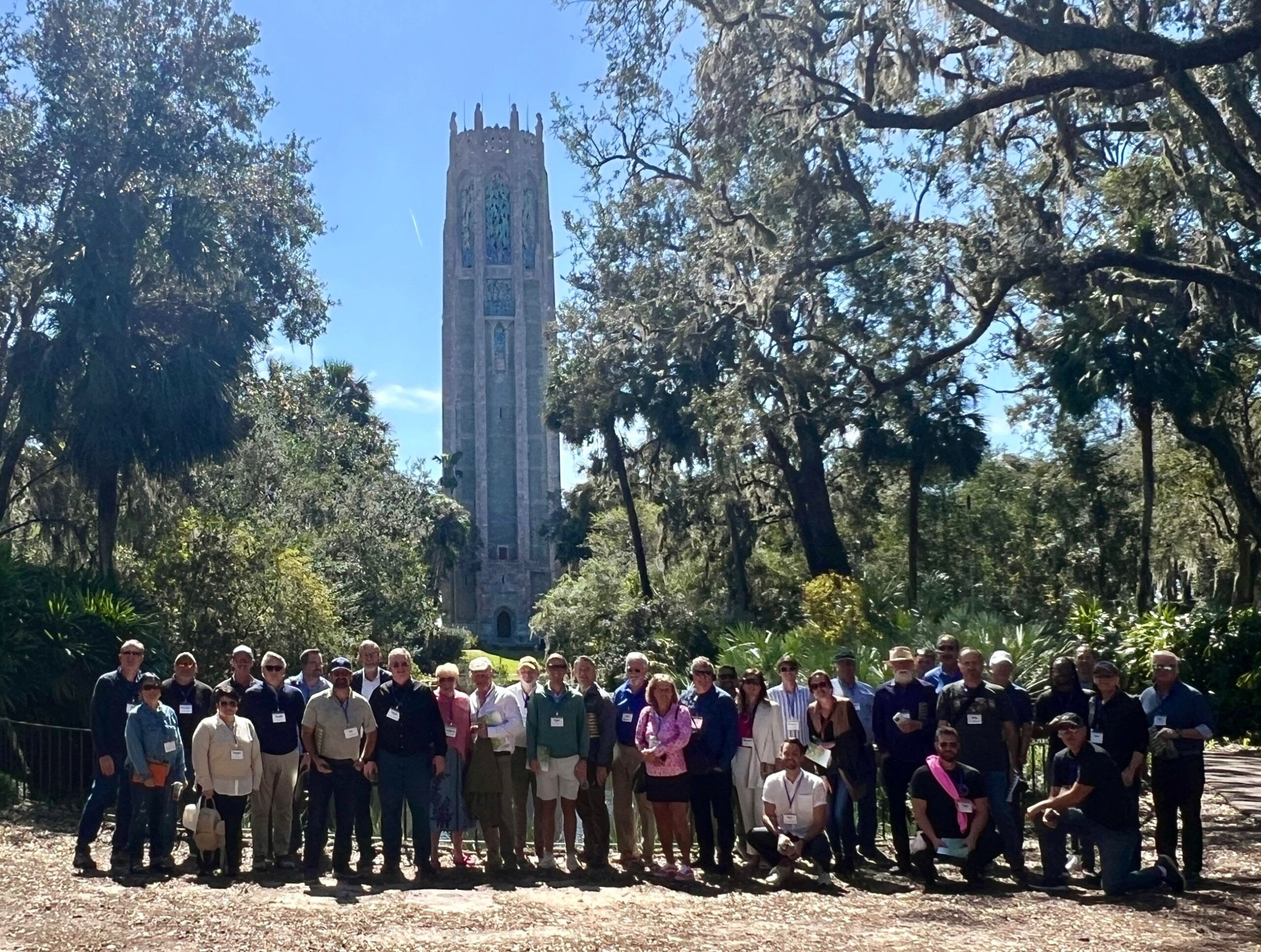
NTBA Fall Roundtable
This October, DPZ Partner Senen Antonio joined the NTBA in Winter Haven, FL for the annual Fall Roundtable. Members gathered in the “Chain of Lakes City” to examine the downtown development in Central Florida that has succeeded through the use of local capital and by reviving and animating one building at a time.
The purpose of roundtable discussions are to bring together industry specialists and NTBA members to share their expertise with the goal of advancing the town building industry.
Read more about NTBA’s Fall Roundtable here.
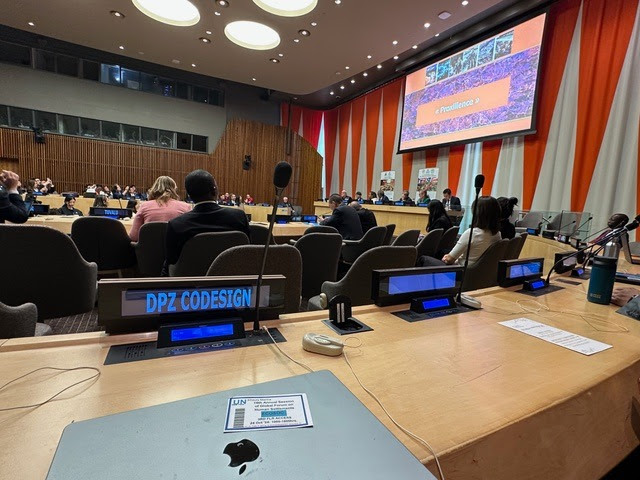
DPZ attends United Nations HQ
Also in October, DPZ Partner Marina Khoury was at the United Nations 19th Annual Session of the Global Forum on Human Settlements (GHFS) in New York. She took part in a panel on innovation and integration in urban planning and design.
She showcased DPZ’s various Initiatives such as Transect-based development, Agrarian Urbanism, Sprawl Repair, Light Imprint, Lifelong Communities, and Green By Design. Earlier in the summer, Marina had served as a juror for the awards given out by the UN Environmental Program – GHFS. The award ceremony was part of this October forum.
In addition, Carlos Moreno gave a presentation on the 15-minute city, the idea for which he credited many, including Lizz and Andres.
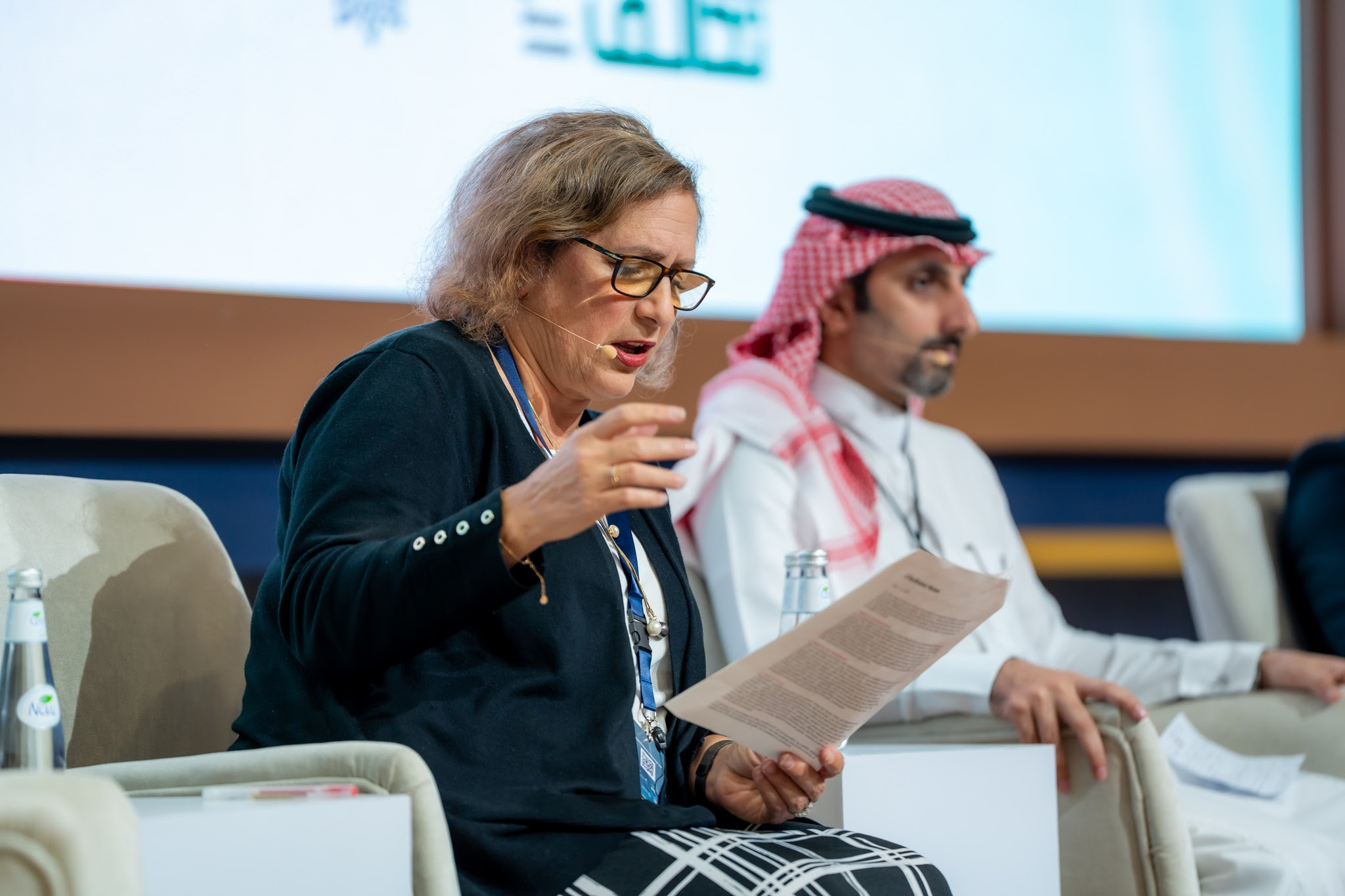
Cityscape Global 2024 in Riyadh
In November, Marina was in Riyadh, Saudi Arabia, for Cityscape Global 2024. She participated in an Oxford Style debate comparing the virtues of skyscrapers vs. low-rise buildings. As you might expect she advocated for the many urban benefits of low-rise buildings.The session was moderated by Anthony Woods, President of the Council on Tall Buildings and Urban Habitat. She was joined in the discussion by Paul Rodgers of 10 Design, Maxime Laroussi of Urban Agency, and Mohammed Al Mohammed of Retai.
USGBC Presentation by Lizz Plater-Zyberk
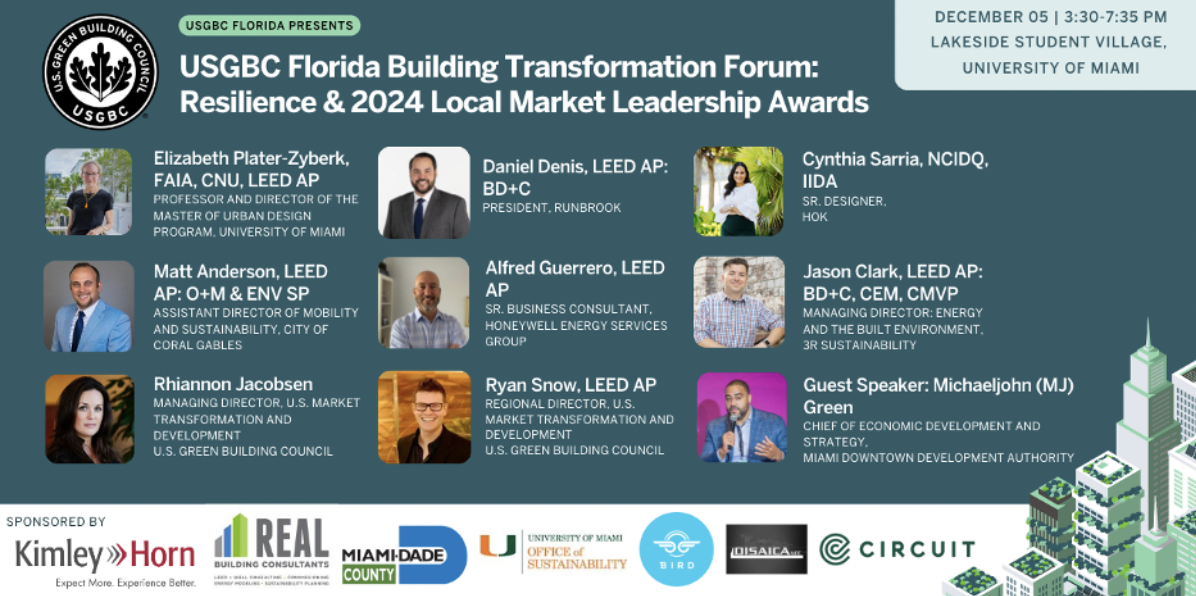
In December, Lizz Plater-Zyberk spoke at the USGBC’s Florida Building Transformation Forum. The event was held to celebrate the achievements of Florida’s leadership in shaping the green building industry. The activities included a Centennial Village Tour, cocktail hour, awards reception, a Leadership in Green Building Panel, and a Keynote Address by Lizz on New Urbanism and South Florida’s Role.
Learn more about this event and the agenda here.
2024 Hurricane Season
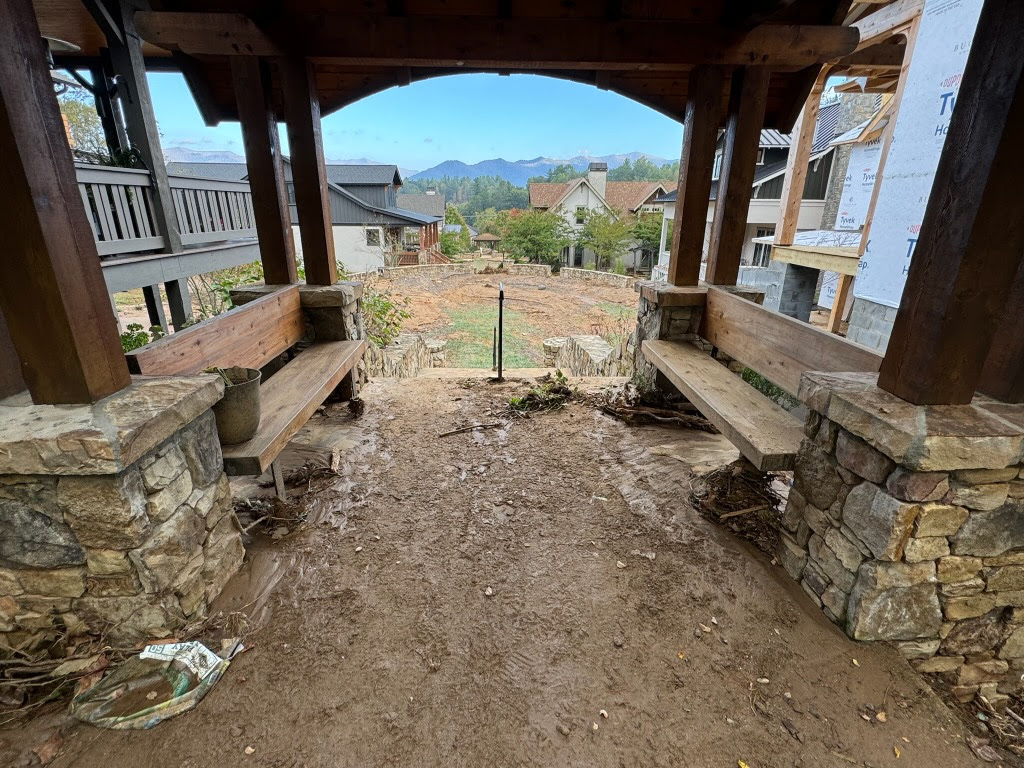
Settling into the 2024 holiday season we are very much aware of our friends in the South who are still in response mode to this year’s hurricanes. We are grateful that friends and communities in which DPZ has worked in the region survived the storms safely. But damage to individual homes and community assets have been enormous and the recovery will be prolonged.
Read more about DPZ’s thoughts on pathways to recovery from Helene and Milton here.
Alys Beach 20th Anniversary
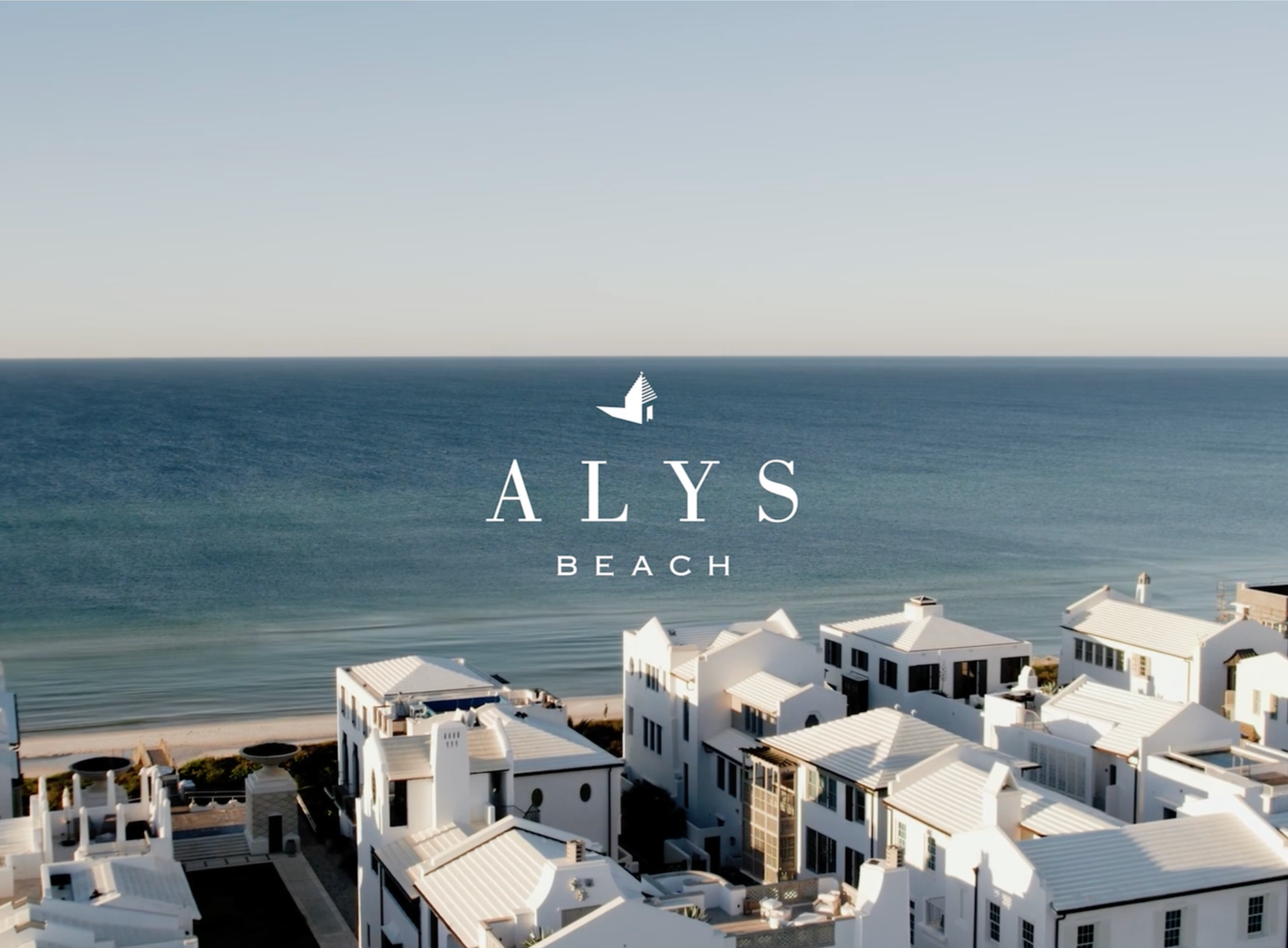
In celebration of their community’s 20th anniversary, Alys Beach has released a brief documentary exploring the early history of the development.
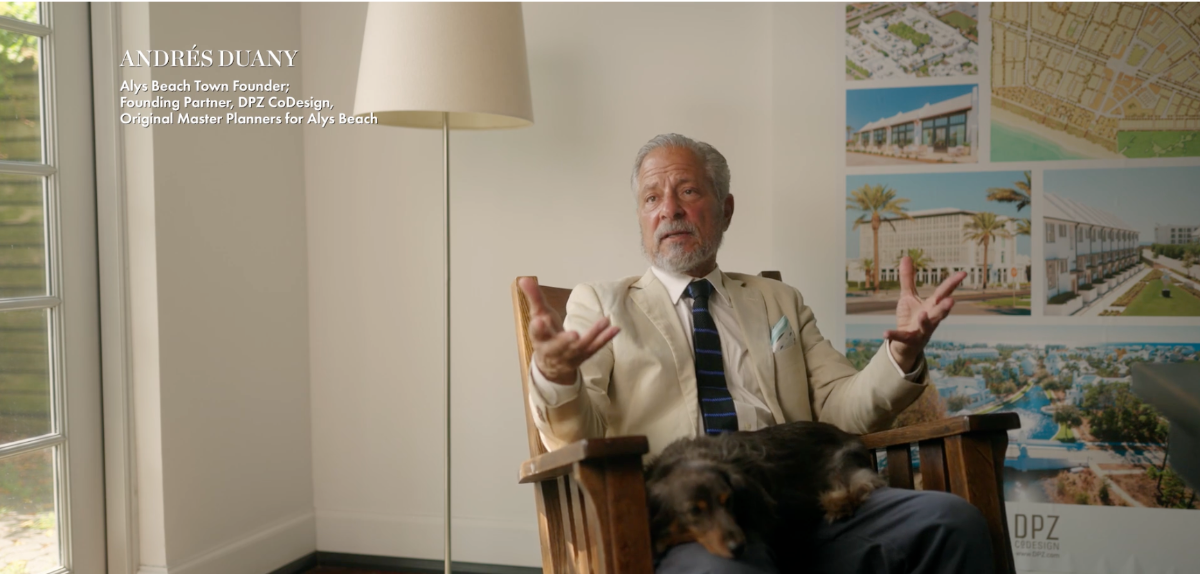
Andres is featured sharing his thoughts on what makes Alys unique.
Watch the documentary here.
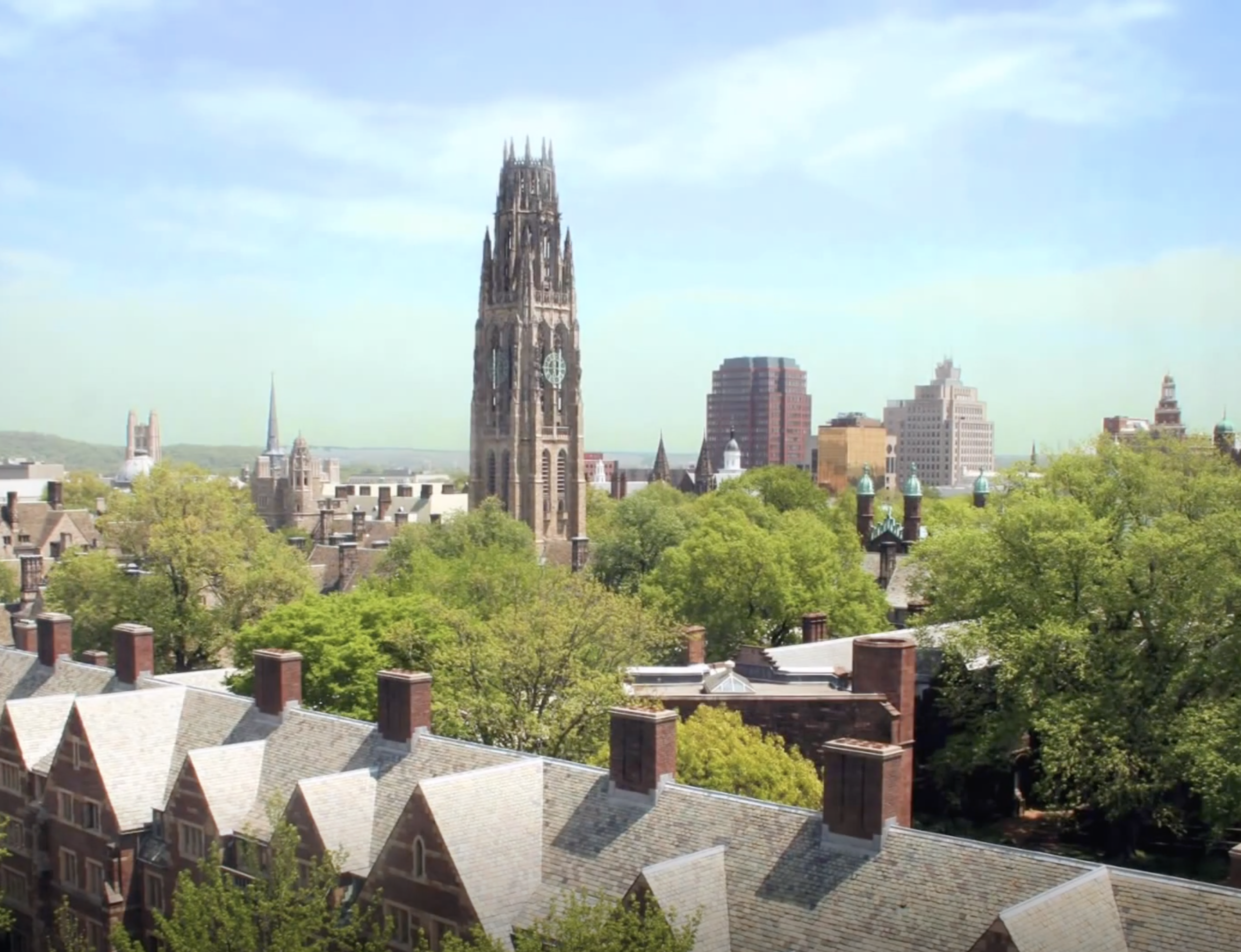
Documentary Featuring Students of Vincent Scully
A 2010 documentary from Yale University, Vincent Scully: An Art Historian Among Architects, has been given new life recently.
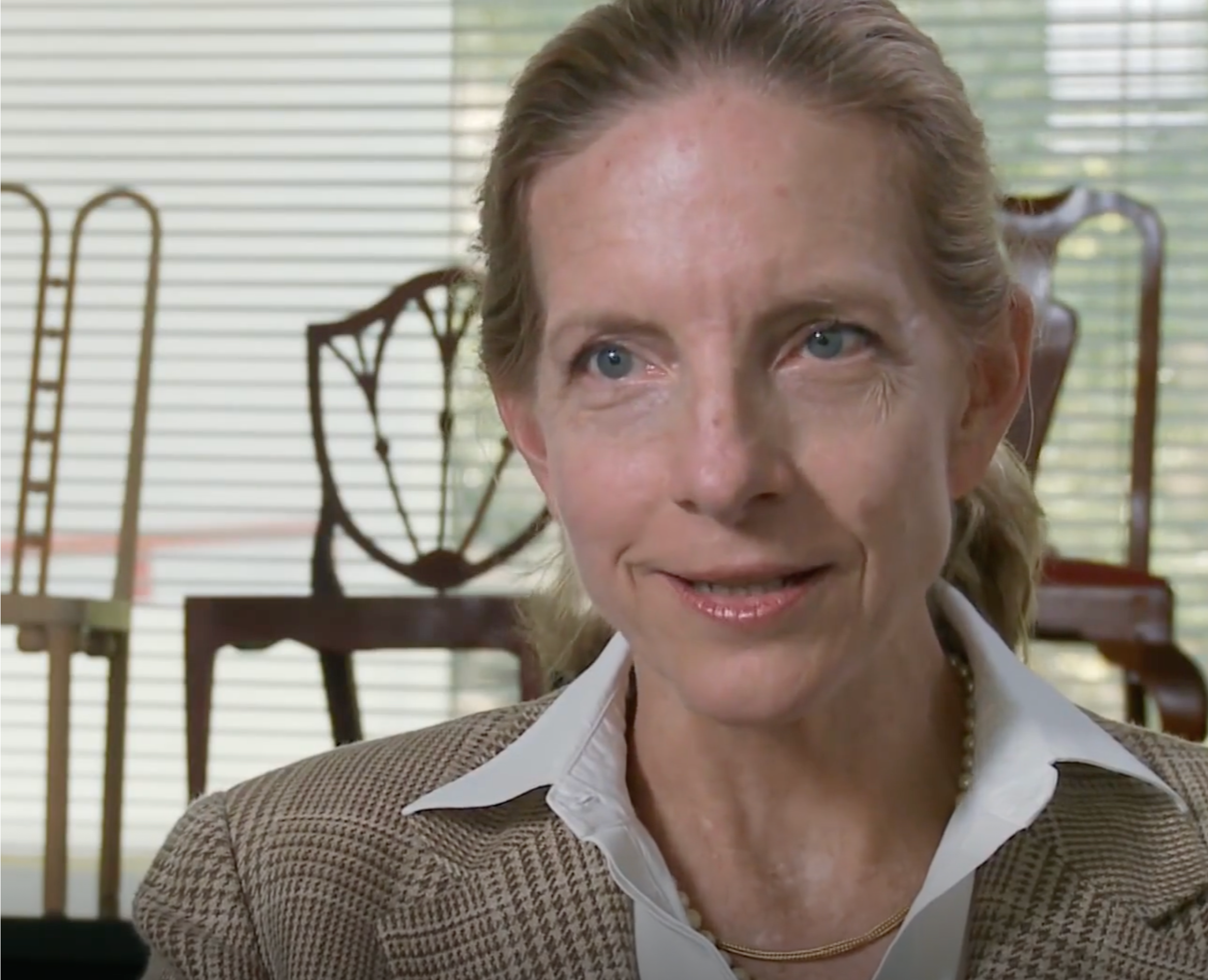
Various interview clips have been shared on social media with former students describing the impact of his teaching on their careers and the art of placemaking. Among them is DPZ’s very own Lizz Plater-Zyberk.
Watch the excerpt and read the transcript of their interviews here.
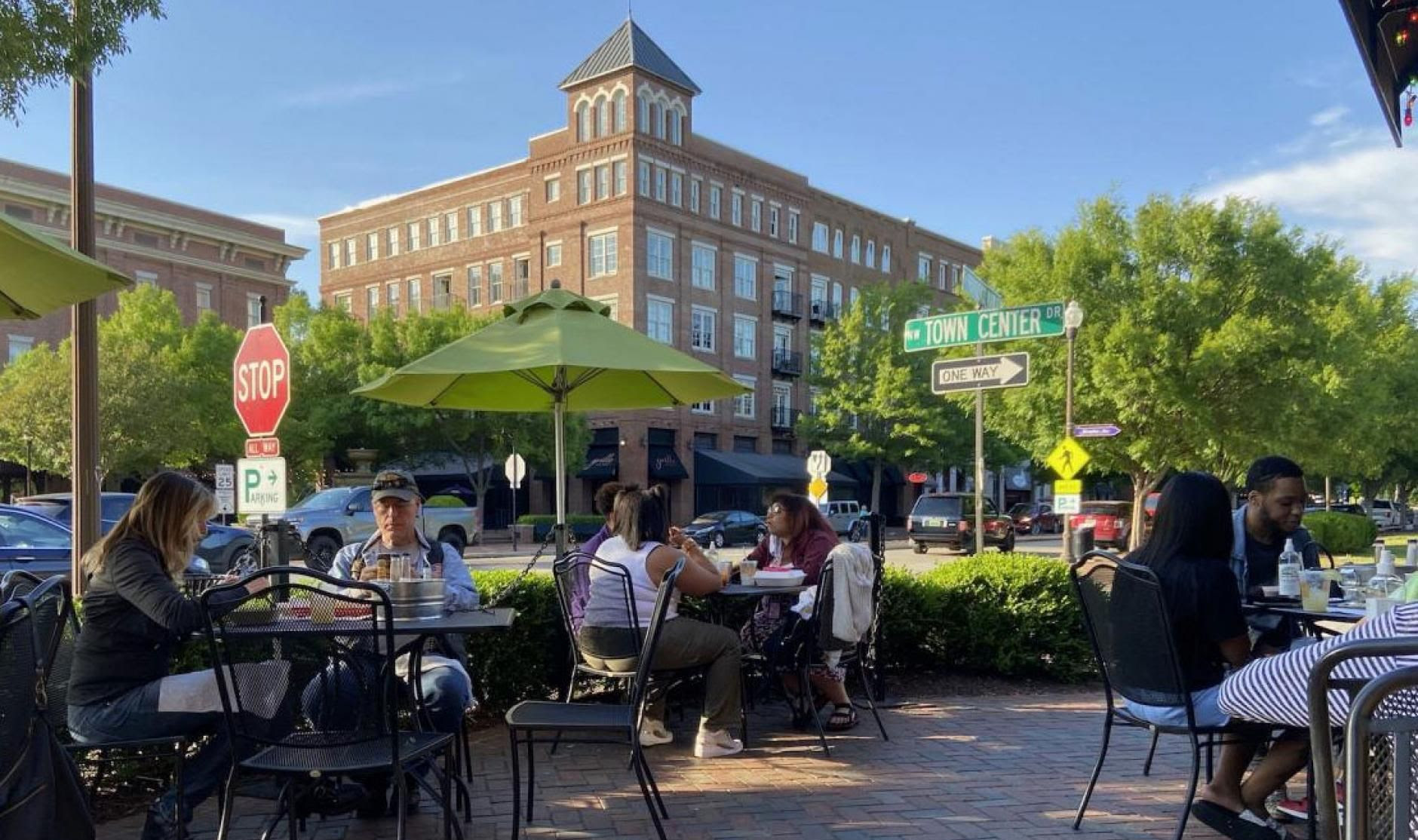
CNU Public Square: Village of Providence
CNU’s Public Square blog recently focused on the lessons learned from DPZ’s Village of Providence.
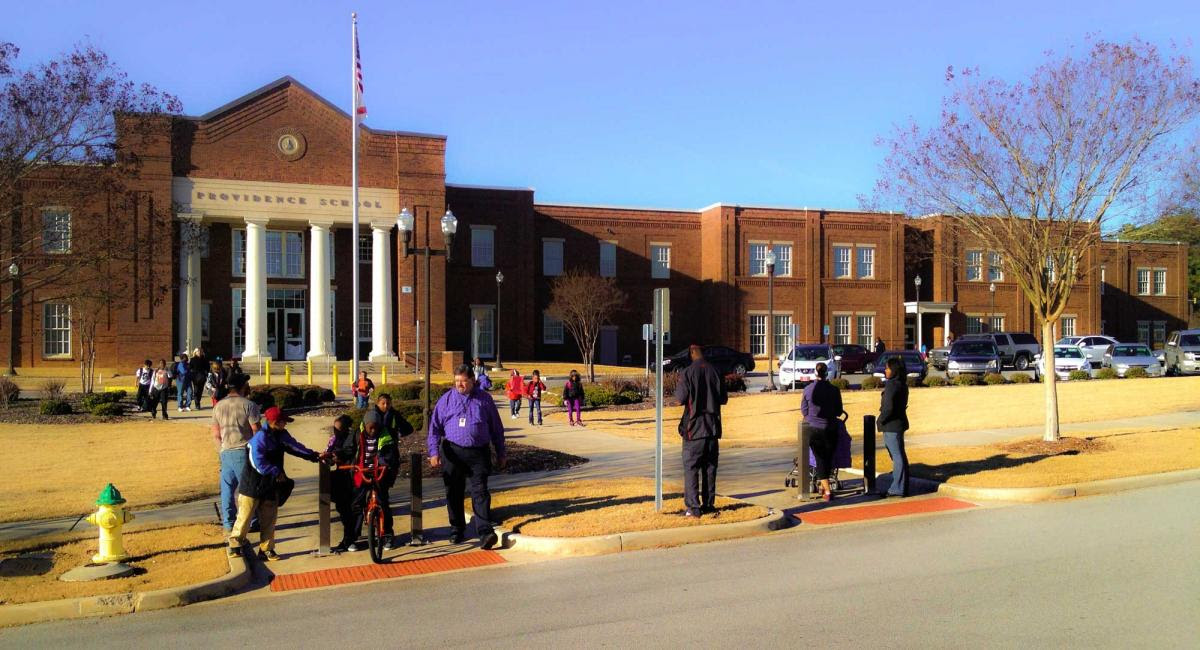
This article comes shortly after the 2024 Urban Guild Awards were hosted this fall at the Village of Providence in Huntsville, AL.
Read the full article here.

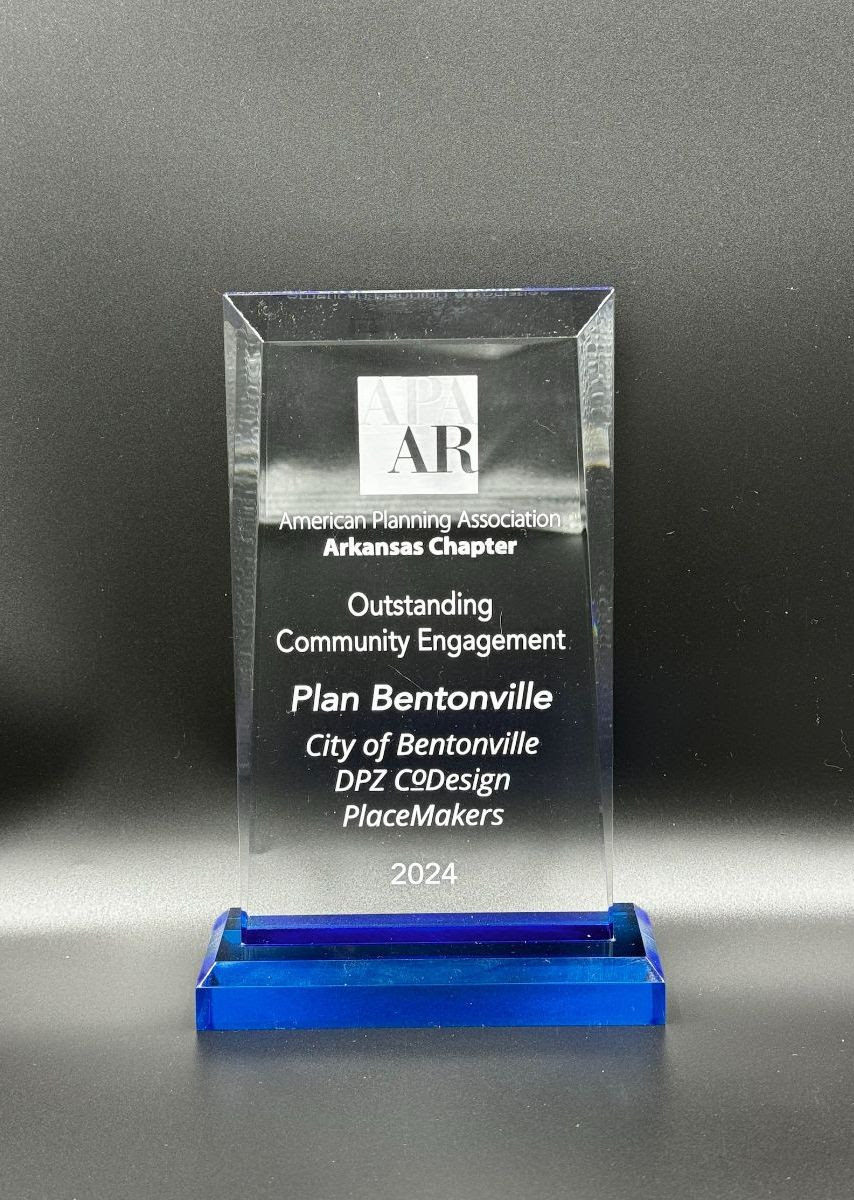
Plan Bentonville: APA Arkansas Award
In October, the Arkansas chapter of APA awarded Plan Bentonville for “Outstanding Community Engagement”. The award recognizes a planning initiative that has demonstrated exceptional outreach and citizen participation.
This project, as well as its intensive community engagement efforts, was accomplished through excellent help from our friends at PlaceMakers.
Tornagrain: Philippe Rotthier European Prize
DPZ’s Tornagrain community in Scotland has received acknowledgment from the Philippe Rotthier European Prize for Vernacular Architecture in the category of Urban Design.
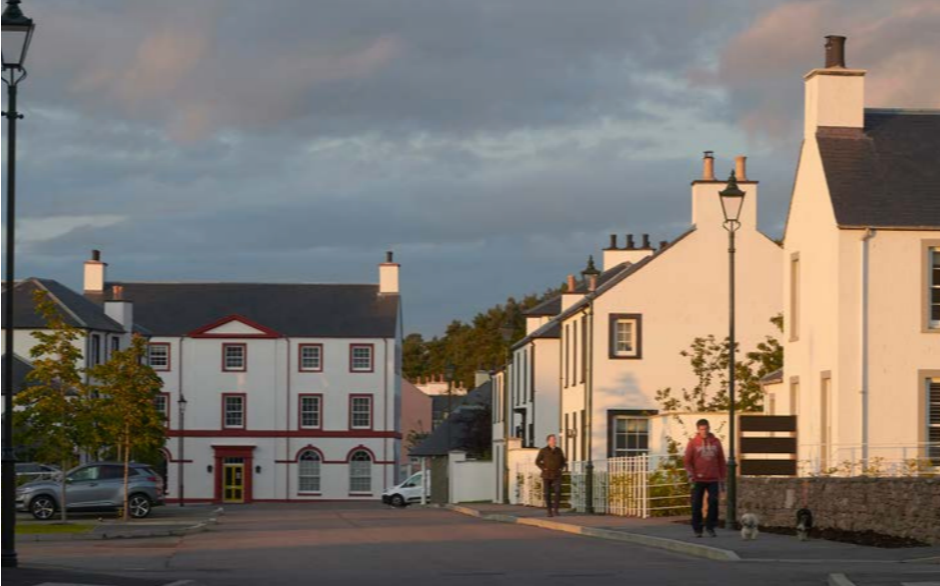
We congratulate the design and development team for commitment to authentic, traditional architecture in the Scottish highlands.
Read more about the award and other honorees here.
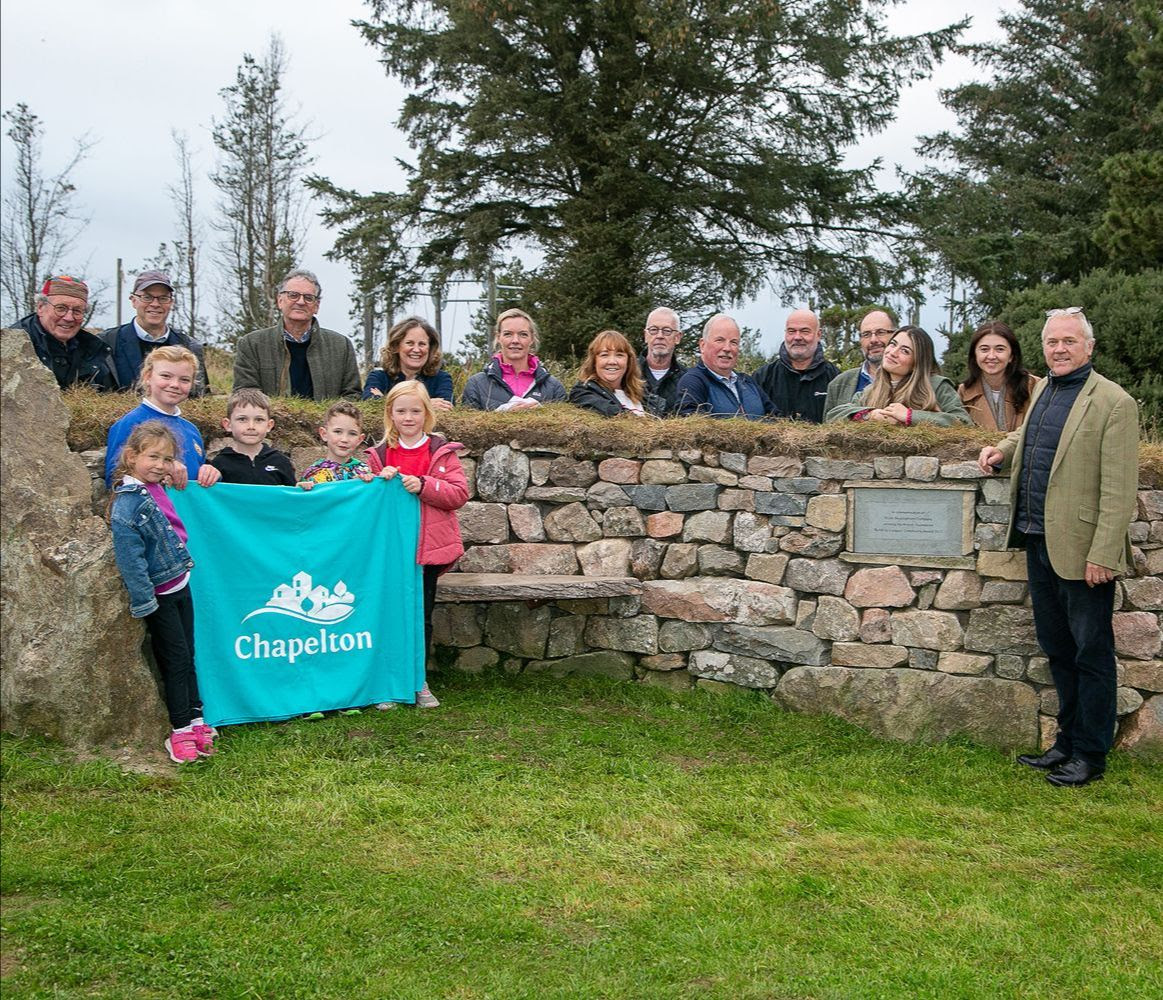
Chapelton: Kings Foundation Commmunity Award
Also in Scotland, DPZ’s Chapelton project was recognized with the prestigious and very first Community Award given by the Kings Foundation.
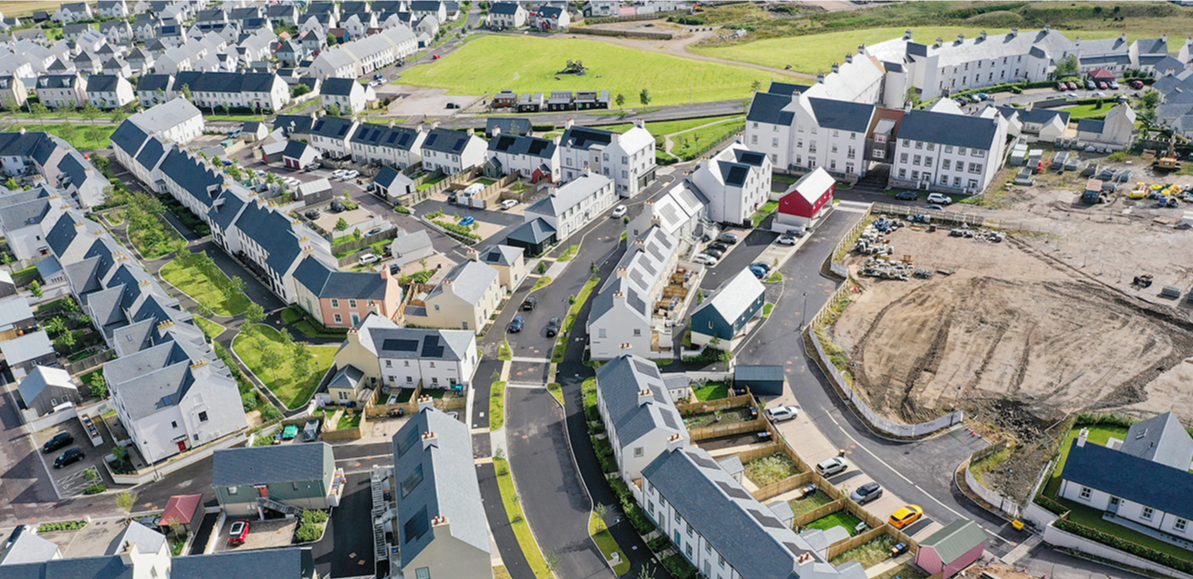
The founders have chosen to put the prize money toward a new stone bench with panoramic views of the sea and the sheltered side overlooking the play park.
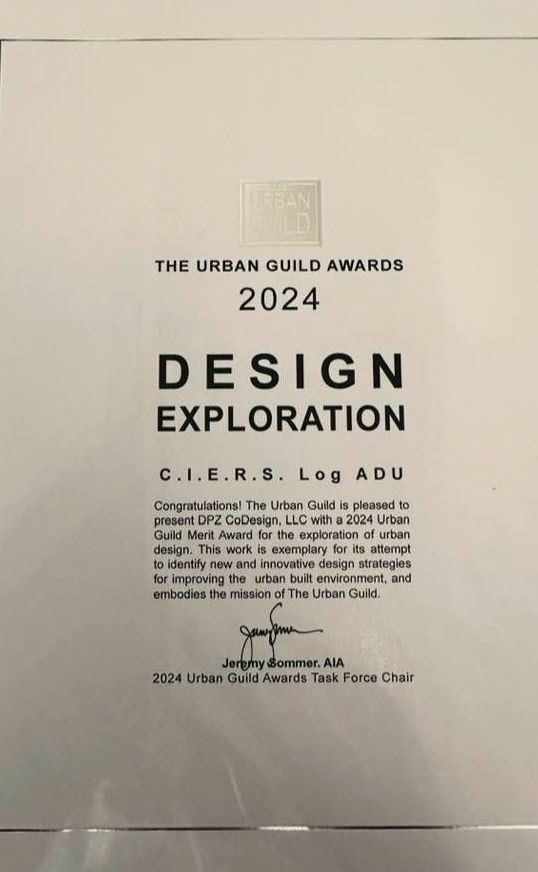
2024 Urban Guild Awards
In November, DPZ was recognized at the 2024 Urban Guild’s Annual Summit. The award was for “Design Exploration” and was granted to the affordable housing C.I.E.R.S Log ADU project. Alys Beach Town Architects, Khoury-Vogt Architects, also received 3 awards of their own.
Read more about the event and other honorees here.
See a past update about the C.I.E.R.S. house here.
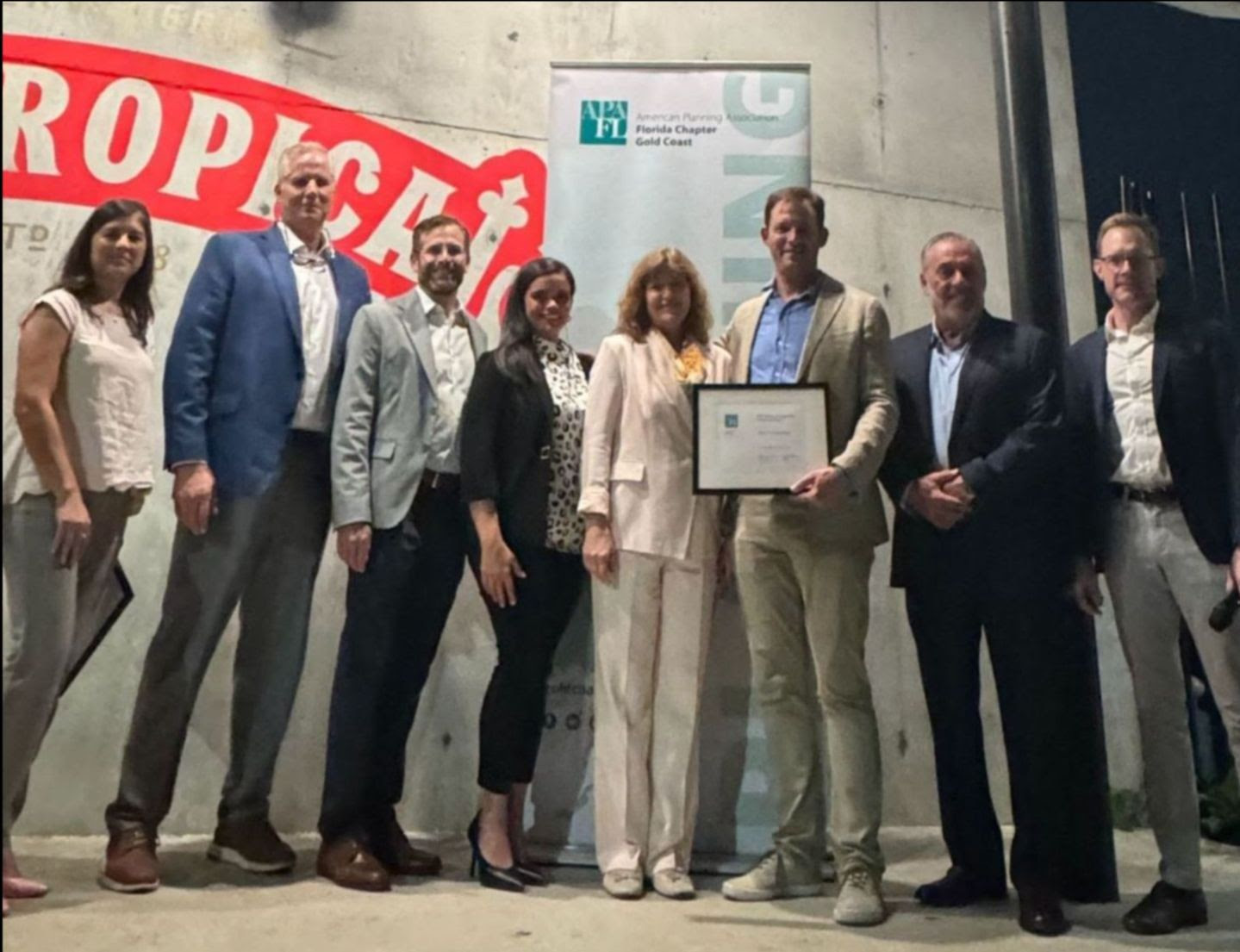
Key Biscayne Vision Plan APA Award
Also in November, the Key Biscayne Vision Plan received the FL Gold Coast Chapter of the American Planning Association award for “Innovation for Sustaining Places”.
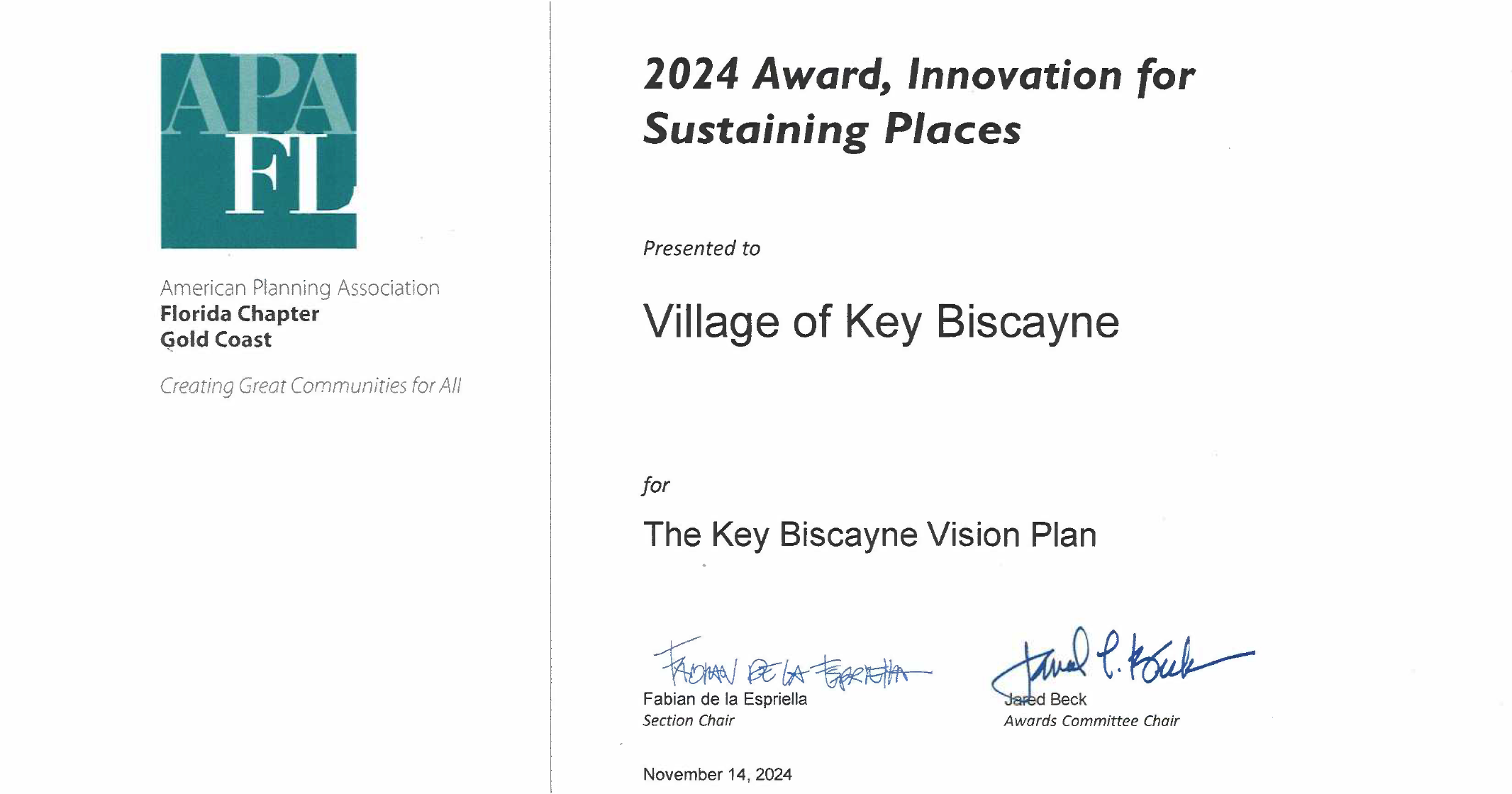
The vision plan dedicated one of its 4 chapters to discussing and making recommendations on the topic of resiliency, a major priority for this community on a barrier island.

Bakehouse Art Complex Annual Fundraiser
This fall Lizz Plater-Zyberk served on the Honorary Committee of the Bakehouse Art Complex’s annual fundraiser.
To honor her contributions to the built environment and education, Lizz was bestowed a commemorative plate that will be proudly displayed in the Miami office.
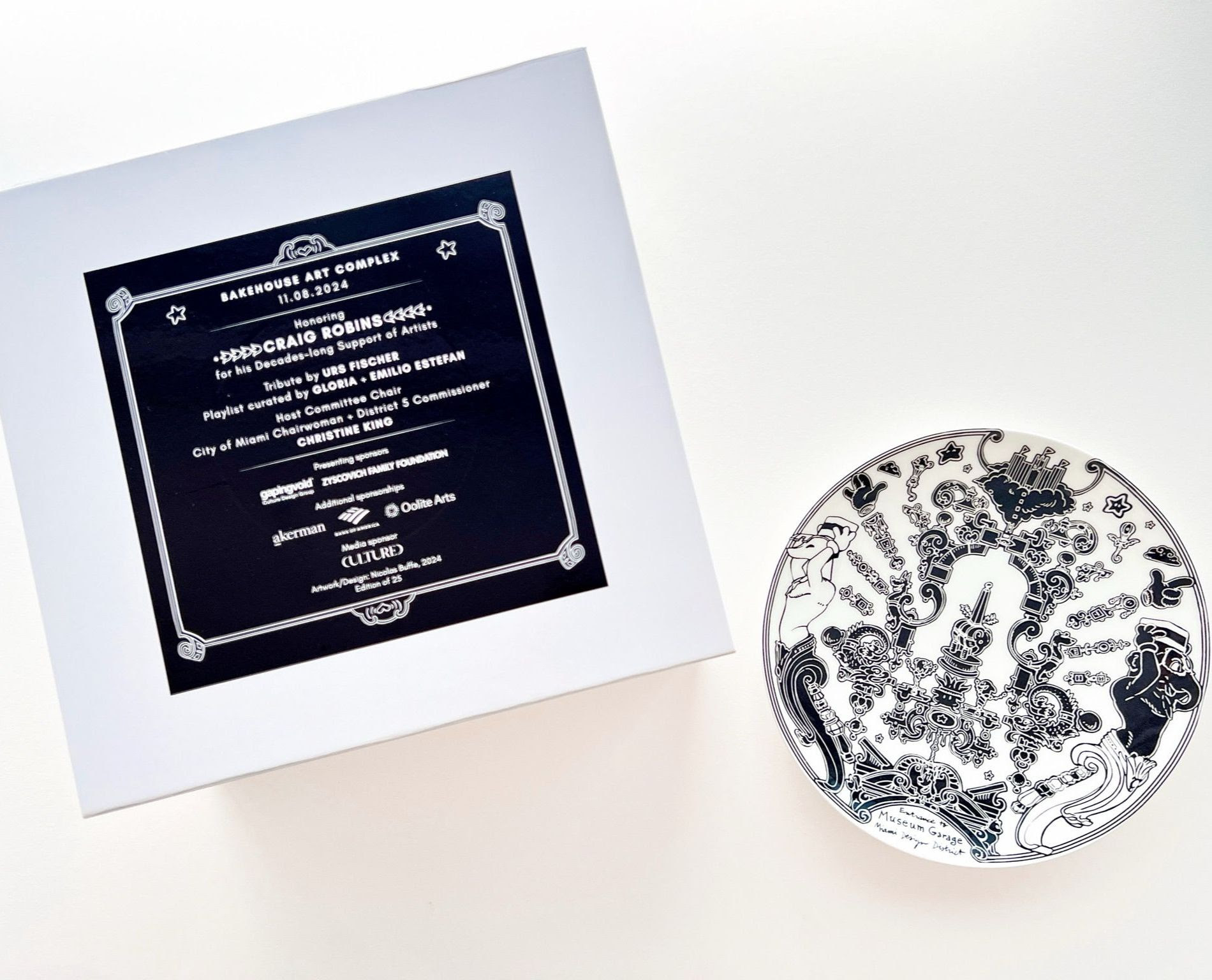
Also honored at the event, DPZ client Craig Robins was recognized for championing Miami’s art scene for the past 40 years and for his work in visionary real estate development and revitalization of older neighborhoods.
Learn more about the event here.
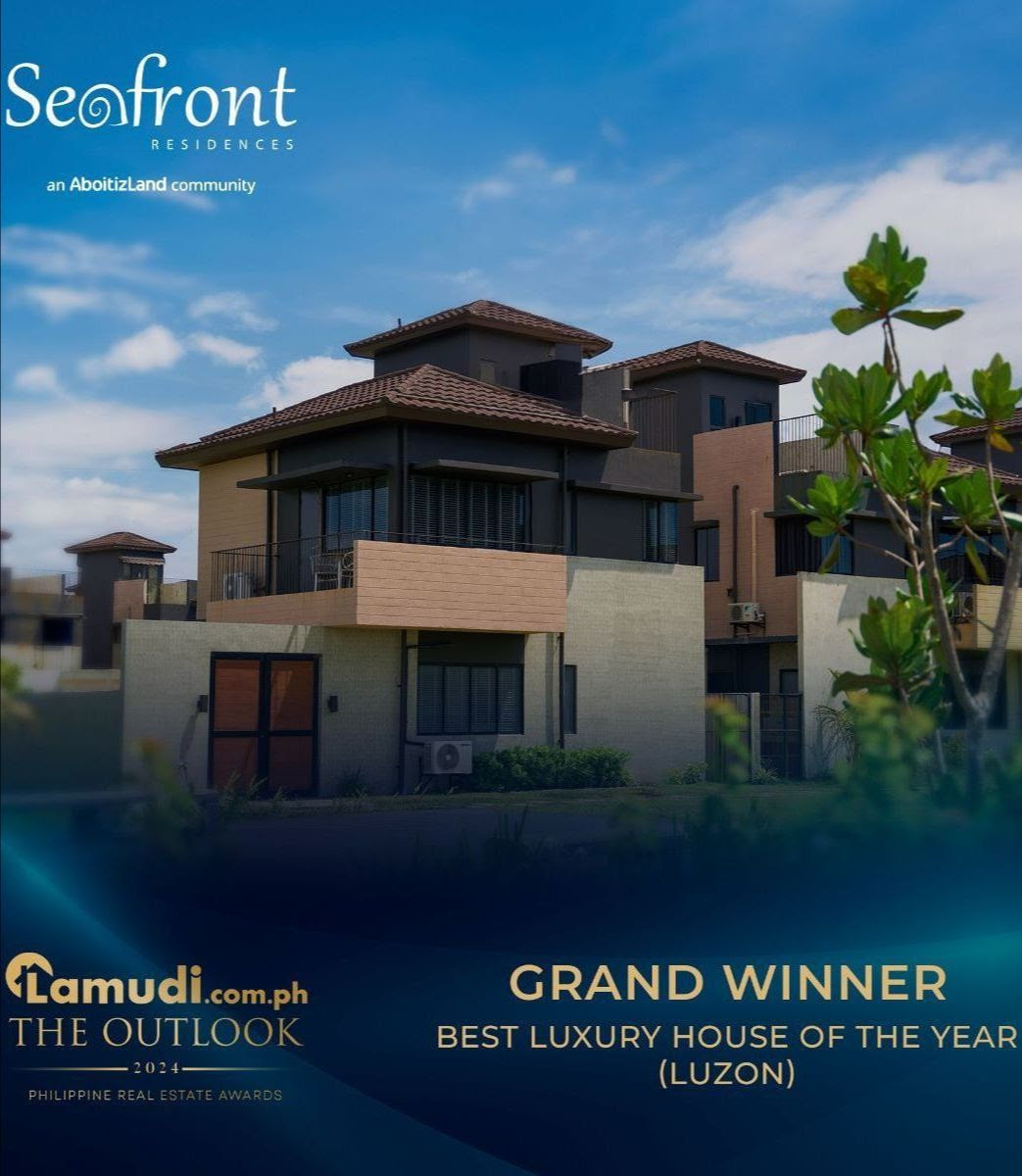
Seafront Residences: Grand Winner Philippine Real Estate Awards
Another award has been secured by DPZ and Aboitiz Land’s Seafront Residences Project in the Philippines in November: Grand Winner for Best Luxury House in Luzon at The Outlook Philippine Real Estate Awards 2024.
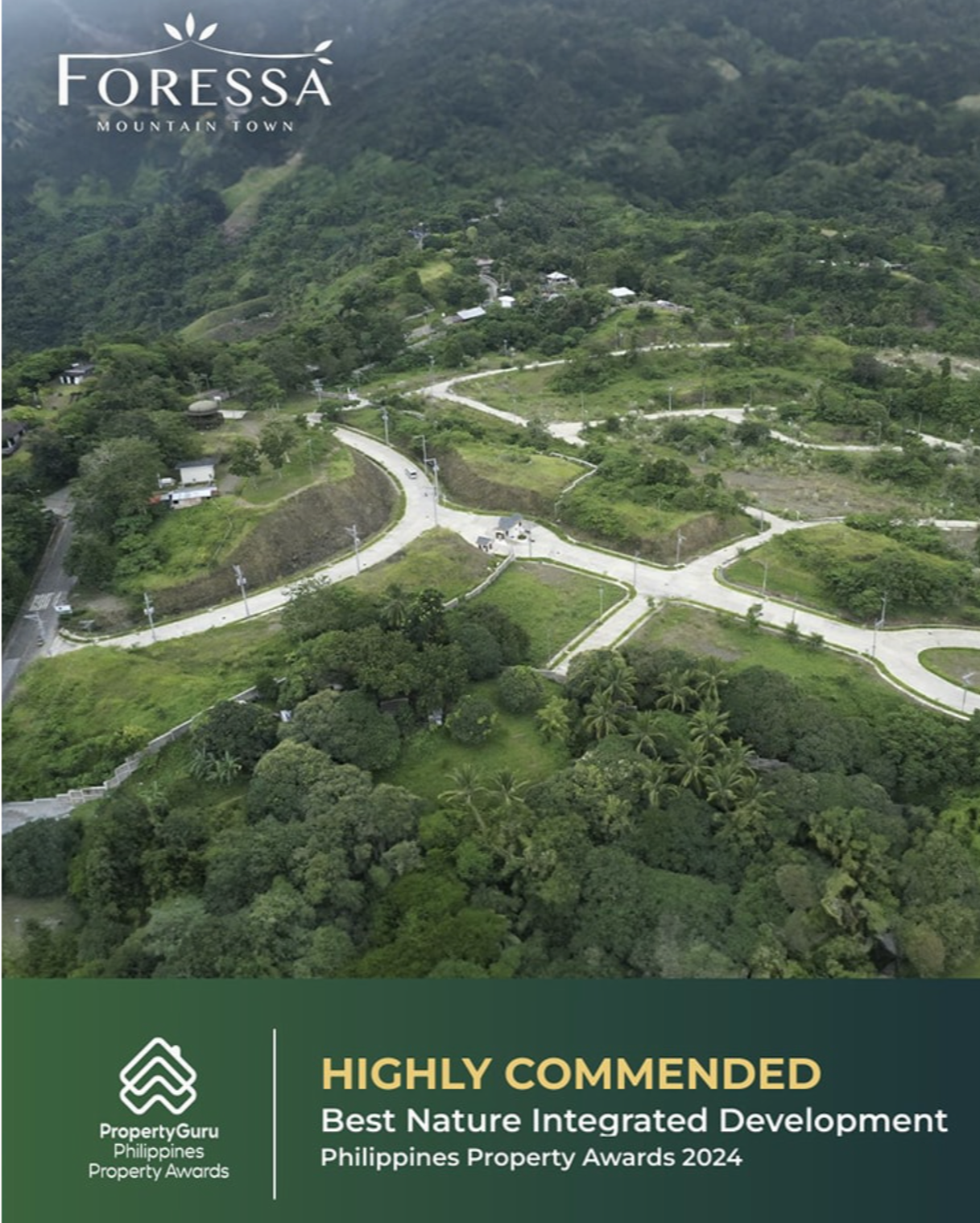
Foressa: Best Nature Integrated Development
DPZ’s Philippine project Foressa has been named Best Nature Integrated Development at the PropertyGuru Philippines Property Awards 2024.
This award was presented by Kohler to celebrate the finest projects, designs, and innovations in the real estate industry.

2025 Seaside Prize Speakers
We would like to close out this section by mentioning that DPZ is proud to honor this year’s Seaside Prize recipients, Ellen Dunham Jones and June Williamson, with the presence of DPZ partners Galina Tachieva and Marina Khoury at the prize weekend event in February.
Read about all of the scheduled speakers here.
Finally, we are happy to share “Winter Walk”, the 2024 Hallmark commercial set in Norton Commons, is here.
“The holidays are for honoring your favorite traditions. And over the years, those traditions turn into some of your most cherished memories.”
Here’s to a joyful and safe holiday season, and we will see you all again in 2025!
Recovery from 2024’s Hurricane Season
Settling into the 2024 holiday season we are very much aware of our friends in the South who are still in response mode to this year’s hurricanes. We are grateful that friends and communities in which DPZ has worked in the region survived the storms safely. But damage to individual homes and community assets have been enormous and the recovery will be prolonged.
A number of our colleagues are directly addressing the recovery and rebuilding, much as DPZ has over the years after hurricanes (and an earthquake). Joe Minicozzi, Urban3, based in Asheville, is coordinating with area professionals on rebuilding the French Broad River basin area in a manner that is more resilient and considerate of climate impacts. He can be reached at joe@urbanthree.com or 828-301-8073.
The imperative for resiliency in design is bolstered by DPZ’s early encounters and experience with natural disasters. Ever more extreme weather events encourage assessment for lessons learned in places that were designed to avoid trouble.
At Seaside, the requirement for the more expensive galvanized nails in the construction of the first houses (at the time a huge discussion), was vindicated in the new community’s direct-hit hurricane survival performance compared to its neighbors. Alys Beach, also in the Florida Panhandle, took its predecessor’s positive experience with resilient building a step further by ascribing to the Fortified Home standard. In Texas, Beachtown, with buildings raised above flood level, has withstood coastal surge and hurricane winds.
In the North Carolina mountains, days of torrential rains over the steepest terrains created large debris flows that flooded many communities. In Black Mountain, the Village of Cheshire, a DPZ design, received damaging flooding, particularly on streets close to the forest. Near the center, a system of stepped open greens received the flowing mud, channeled it, and interrupted its flow enough to maintain in place the earth and its infrastructure of stone-clad retaining walls. Working on the recovery, developer Sikes Ragan has been reflecting on the importance of safeguarding the qualities and resources that make places like Cheshire a safe haven. When the storm arrived he was about to launch the next phase of Cheshire’s commercial center, its Boutique Village, which he now says will be implemented with an emphasis on resilience.
The destructive power of North Carolina’s riverine flooding is already influencing our work, as DPZ seeks to integrate in our designs a more complete understanding of the watersheds in which our existing and new community projects are located.
PLACE Initiative: A New Approach to Climate Change
While many organizations focus on climate change, few recognize urbanism as a solution. Green building, renewable energy, and technological solutions alone will not sufficiently address climate change or the related and pressing issues of social justice, affordability, access to opportunity, and the public health crises. Rather, urban growth and development policies must be integral to technological solutions, social programs, and policies within a holistic solution space.
To address this need, Camille Annette Cortes, one of DPZ’s young designers, and DPZ Partner Matt Lambert established PLACE Initiative to focus on solutions intersecting urbanism, climate, and equity — making urbanism and social justice top-level climate priorities.
PLACE stands for Proactive Leadership Advocating for Climate and Equity, an acronym created by DPZ Associate Xavier Iglesias to represent the role that physical design and social systems play in advancing sustainability and economic and social resilience in both urban and rural places.
Clarifying these interconnected topics, PLACE has developed resources and policy recommendations to spread awareness. PLACE has also focused on the overlooked opportunities presented by climate migration. These solutions, whether in a place that is shrinking or experiencing in-migration, a place heavily impacted by climate change, or one barely impacted, require coordination among various organizations, policies, and scales of government.
To address this complexity, PLACE has focused on outcomes through key principles and detailed goals at each level of subsidiarity — from individuals to neighborhoods, communities, governments, and non-governmental entities.
A Road Map
The PLACE Principles provide a roadmap for the development of resilient, environmentally responsible and economically sustainable communities in the face of evolving challenges.
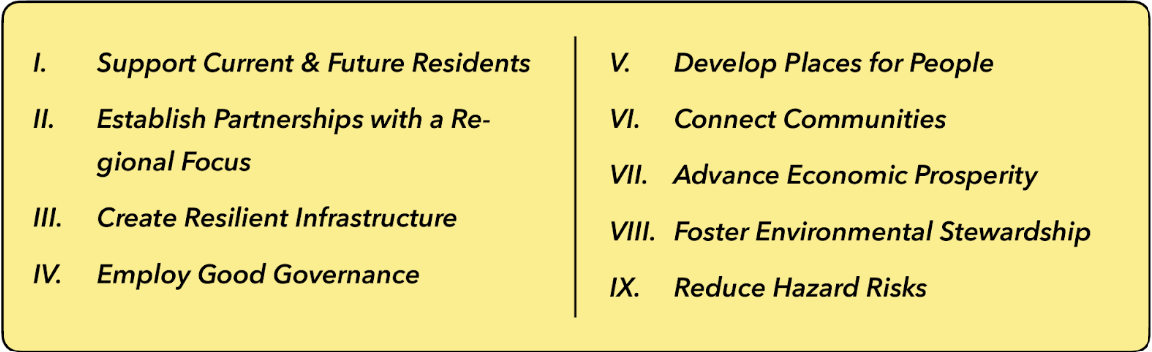
1. Support Current & Future Residents – Everyone should have access to affordable homes, transportation, economic opportunity, representation, social culture, and supportive services. As migration changes social structure, both existing communities and their new neighbors need a broad support network.
2. Establish Partnerships with a Regional Focus – Places are stronger when supported and connected across the region. Coordination among nearby places allows resources to be pooled and benefits to be multiplied, creating a more resilient regional economy overall.
3. Create Resilient Infrastructure – Infrastructure systems like water and waste systems, roadways, agriculture, and energy systems need to be efficient, coordinated, adaptable, and designed for their location and climate.
4. Employ Good Governance – Government should be transparent, agile, accessible, representative, and based on the interest of the public. Issues should be addressed at the most local level possible, be that the block, neighborhood, ward, city, or above.
5. Develop Places for People – Places should be designed and built for people — providing for their physical and social needs — based upon time-tested patterns that respect the environment, conserve land, and preserve places where people can get around without degrading the environment.
6. Connect Communities – Community cohesion is necessary for thriving and inviting places. There must be ample and culturally appropriate public spaces to gather, access to services and education, and opportunities for both current and future residents to participate in civic life.
7. Advance Economic Prosperity – For a strong local economy, it’s necessary to lower the barriers to entrepreneurship, business, and innovation. Starting and growing businesses should be encouraged and supported, allowing more goods and services to be created locally and money reinvested in the community. Places lacking growth and investment should foster new entrepreneurs and incrementally grow their local economies.
8. Foster Environmental Stewardship – Economic and social activities should pursue increasing opportunities to reduce negative and systemic environmental impacts, and in doing so better support local communities through job creation, environmental justice, and long-term economic resilience.
9. Reduce Hazard Risks – Every place has risks — environmental, social, and economic — with many exacerbated by climate change. Communities should strive to be ready for anticipated disasters and support community cohesion as a critical network for managing disasters.
Planning for Climate Migration
Climate migration has already begun and before it accelerates, we must ensure that the resulting growth does not perpetuate the status quo. Left unchecked, migration will increase suburban sprawl and all of its related impacts — physical, social, and fiscal — and their associated inequities.
Luckily, many tools exist to address these impacts. Building in ways that reduce future climate risk, improve public health, support opportunity and local economics, and increase mobility can be addressed through zoning reform, historic and innovative housing modes, green infrastructure, mobility, walkable development, downtown and main street revitalization, and the many other core tools of New Urbanism.
Migration will reshape the built environment around the world by rebalancing population centers, productive lands, and means of transporting people and goods. While early changes will consist of localized movement from one side of town to another, subsequent change will involve substantial movement across state and national borders. Simply put, the US and other countries will be reshaped as a result of climate migration, in a manner not seen in a millennium.
The tools of infill and redevelopment will be critical, alongside new development, entirely new cities, transformed rural and natural areas, and all of the related transportation, utility, and economic systems. We are on the verge of major worldwide reconstruction — now is the time to define its course.
Major population migration and growth isn’t new — nor is building new cities. Take the westward migration of Mormons for example: one of many major migrations in North America alone that established 765 new towns and cities. DPZ studied the Mormon migration and its town building principles, which reflect many aspects of New Urbanism.
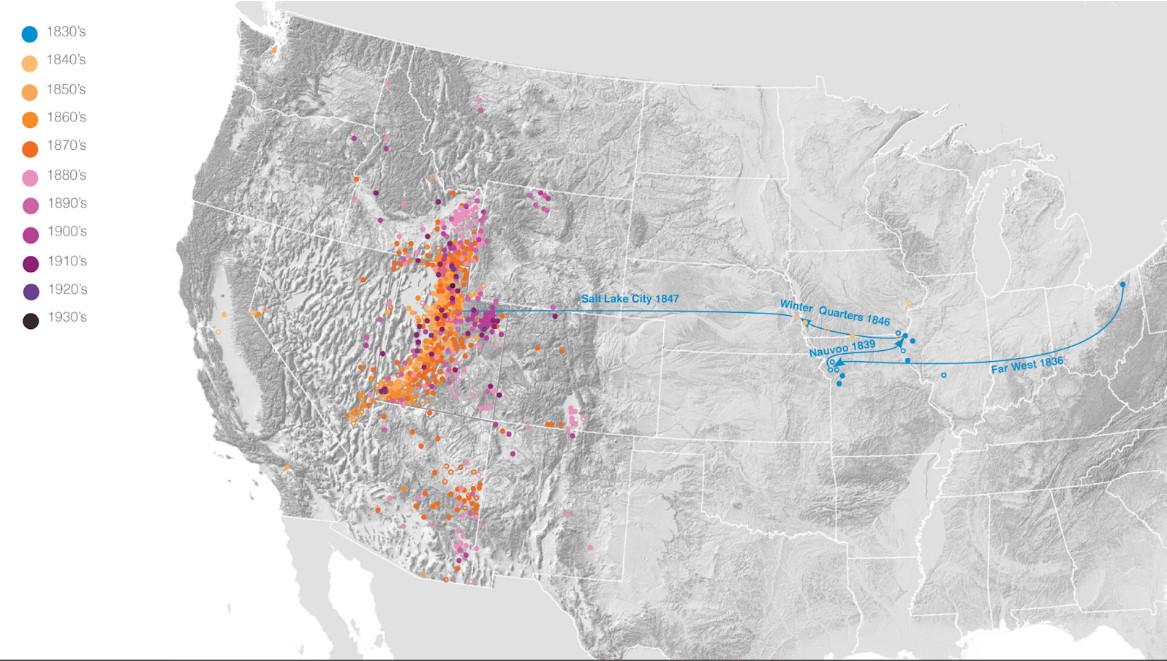
Westward migration of Mormons. Map source: DPZ CoDesign.
To further underline the scale of climate migration, consider that the average population growth in North America today is at about net 3.2 million people annually; that is a new Los Angeles or Chicago every year. Unfortunately that growth is not in new towns and cities, but in urban and rural sprawl.
Today’s policies ensure that the growth related to migration perpetuate the suburban condition, which is a serious climate risk. Even in small towns, without action the built and social environment will be eroded, greenhouse gas emissions will continue to increase, and we will lose our increasingly rare, valuable agricultural lands.
To address the opportunities, PLACE has mapped the likely result of long-term migration in the US in order to focus reform efforts. Locations with the least future risk are our future opportunity zones. Many have experienced population loss in the 20th Century and are open to growth and the work necessary to manifest positive change.
For these places, hope and opportunity offer a new and important approach to climate change. PLACE’s work ties the opportunity of growth with the necessary policy change and programs to build long-term economic and social resilience, tied directly to our work in New Urbanism.
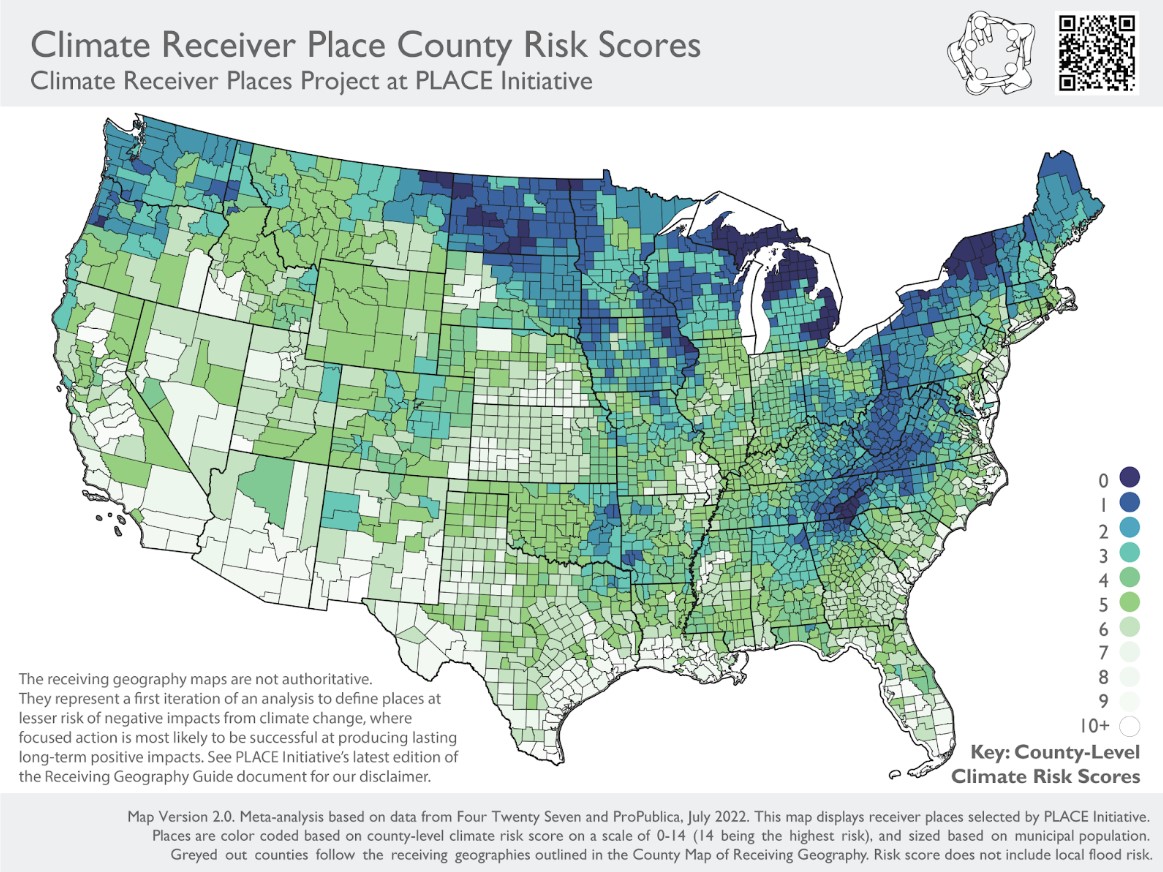
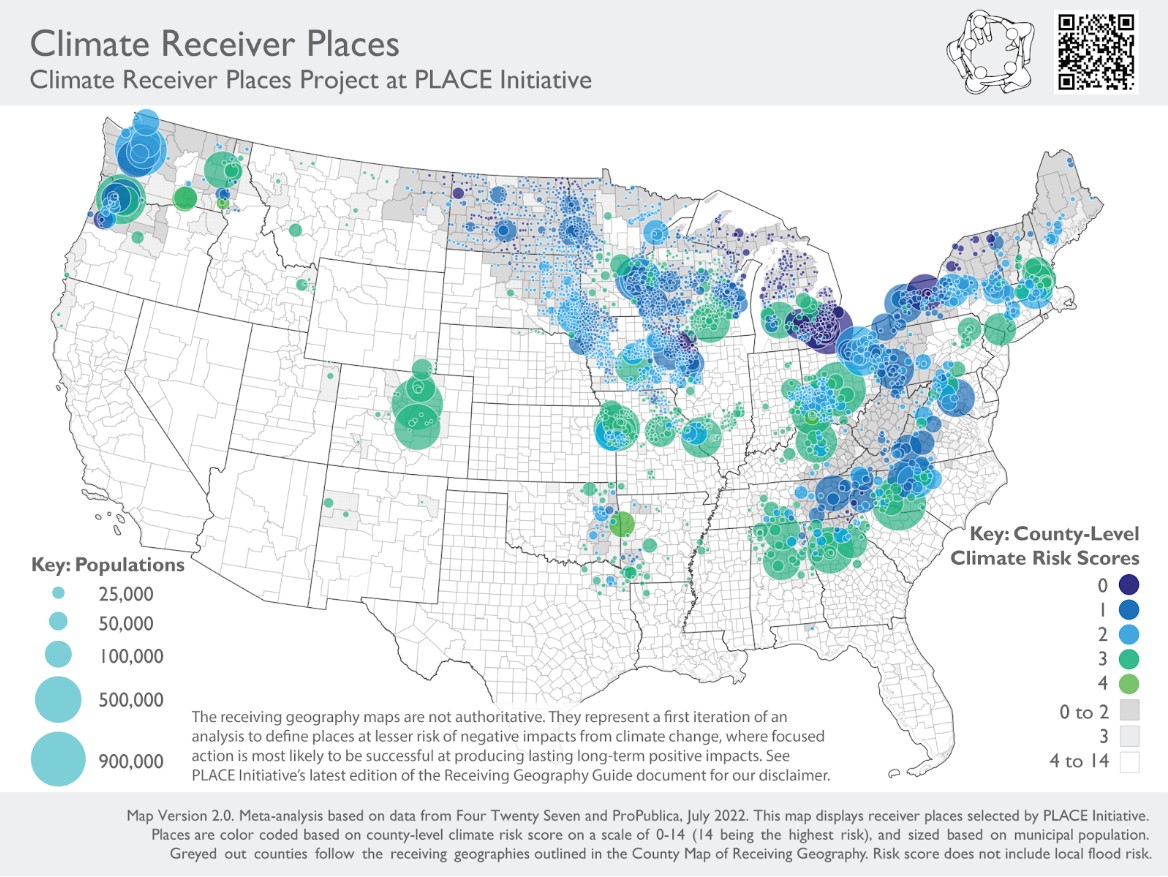
Expanding Our Movement
New Urbanism emerged through the successes and challenges experienced by its founding cohort of professionals — including DPZ founders Lizz and Andrés — newly connected by increased publishing and emerging communications technologies.
With both a reverence for long-lived community building practices and a vision for a better future, leaders crafted clear principles in the Charter of the New Urbanism. With few exceptions, this vision and its related principles remain critically important, especially with increasing climate threats. PLACE believes that many more organizations and individuals are ready to embrace New Urbanism’s principles, provided a fitting framing. Solving for climate and equity through the lens of urbanism motivates a new constituency that will carry forward a commitment to people-centric change. The Charter can coordinate efforts from a broad range of organizations to create resilient regions and equitable places and PLACE endeavors to bring the lens and tools of New Urbanism to the climate space.
These effective solutions are not inherently political. Rather, they require many parallel approaches, with PLACE ensuring that solutions for climate and equity recognize the critical role and interplay of built and natural environments
DPZ Summer Newsletter 2024
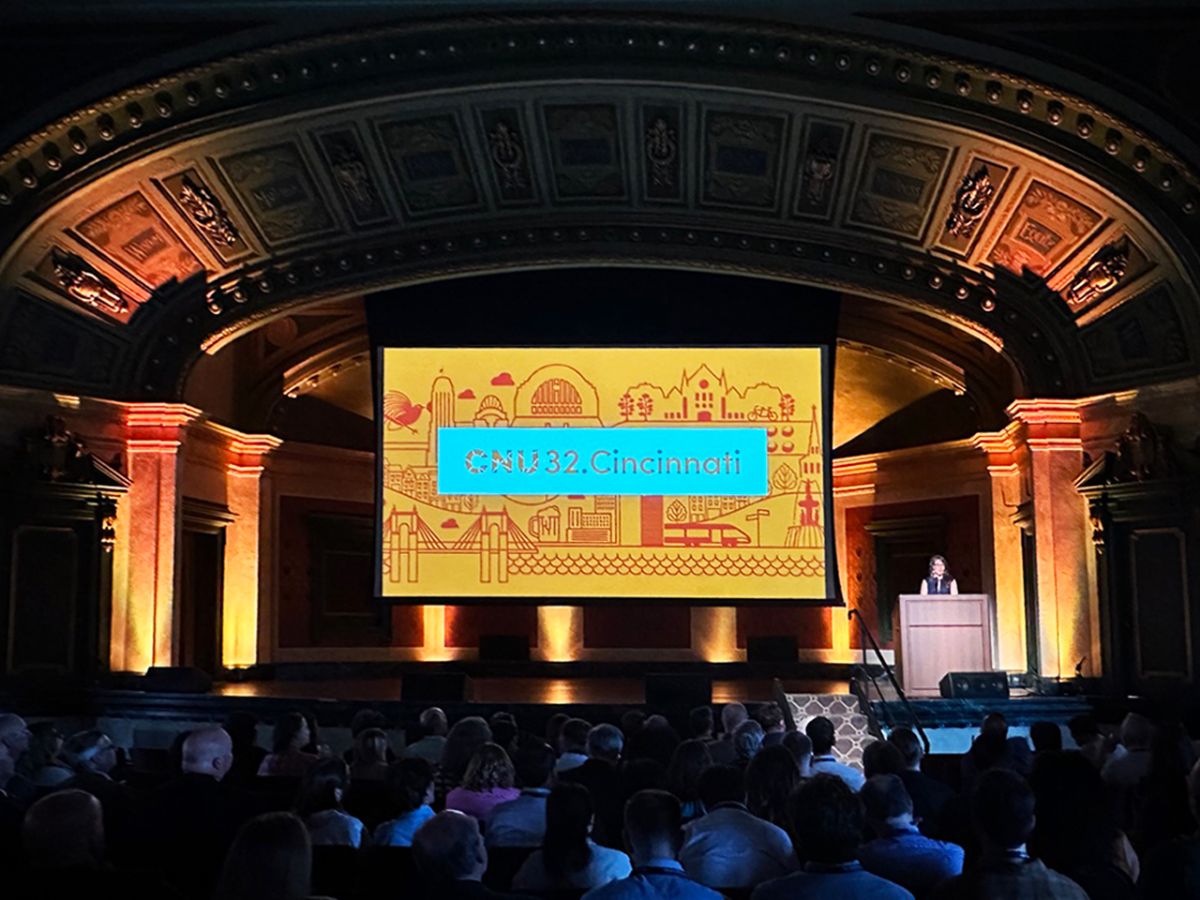
CNU32 kicked off in Cincinnati, OH in Mid-May this year.
DPZ’s busy 2024 calendar continued throughout the late spring and into the summer with public and private sector projects. CNU32 in mid-May drew over 1,000 New Urbanists to host city Cincinnati, OH. Following last year’s trend, the event saw many new attendees bringing renewed energy to the sessions.
Meanwhile, DPZ has been pleased to welcome a mix of new and familiar faces to our offices in Miami, DC, and Portland.
To read and learn more in depth about our work this past year, check out the other posts on the DPZ Pulse.
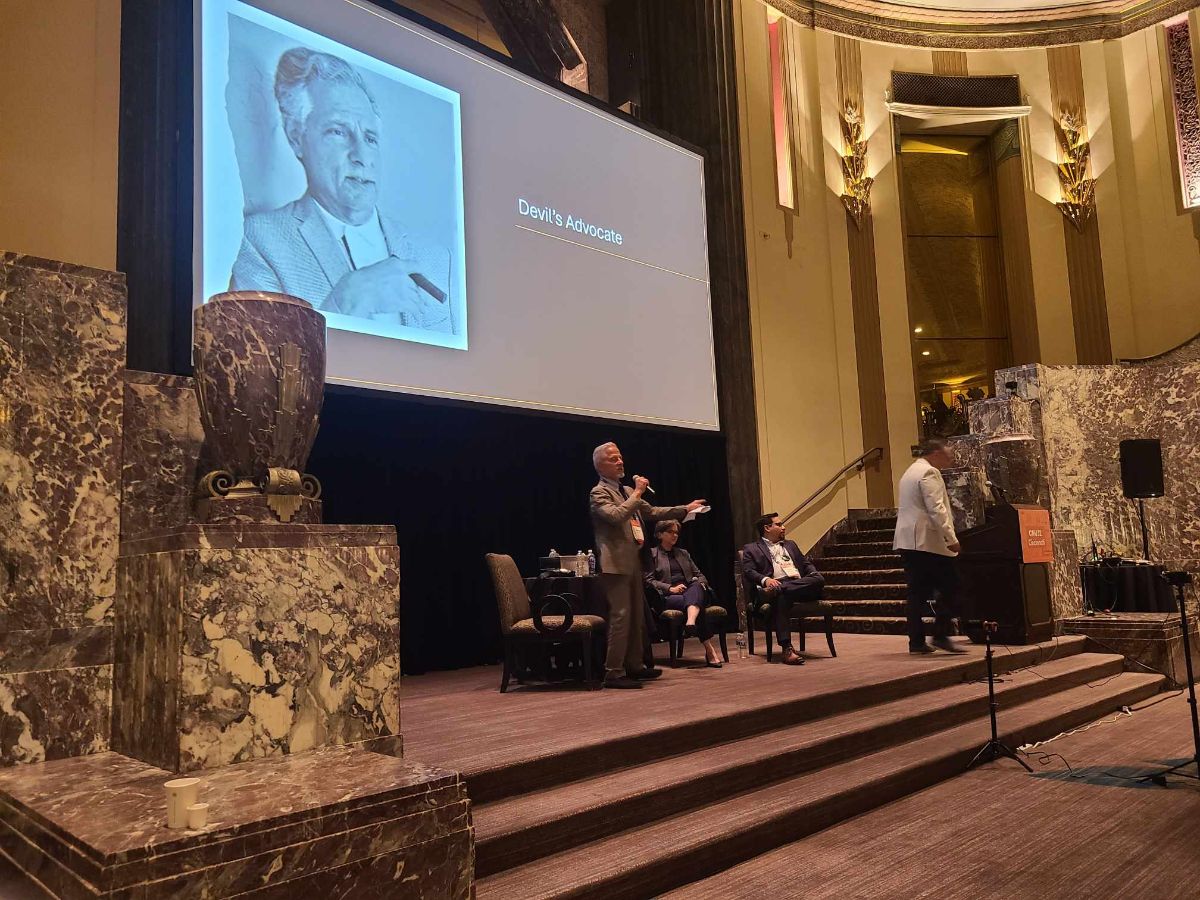
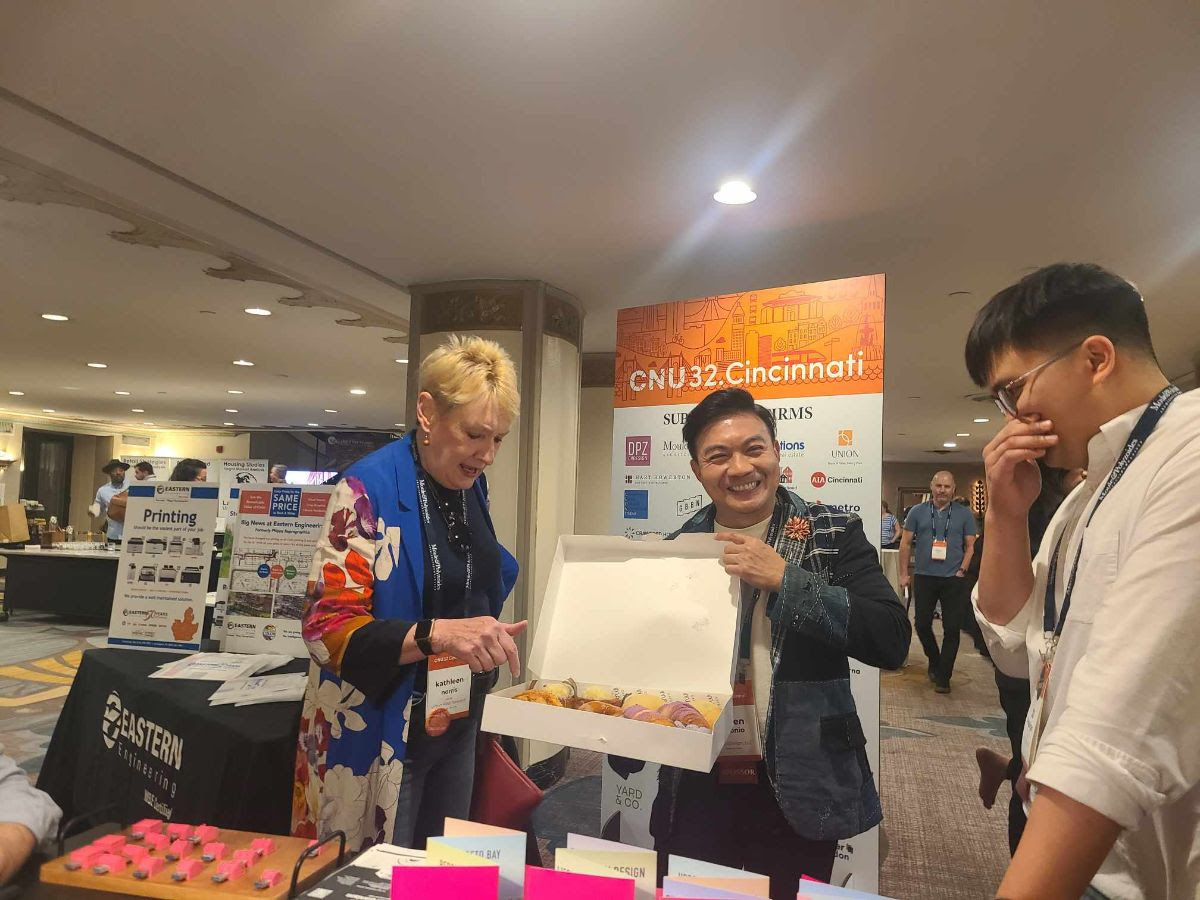
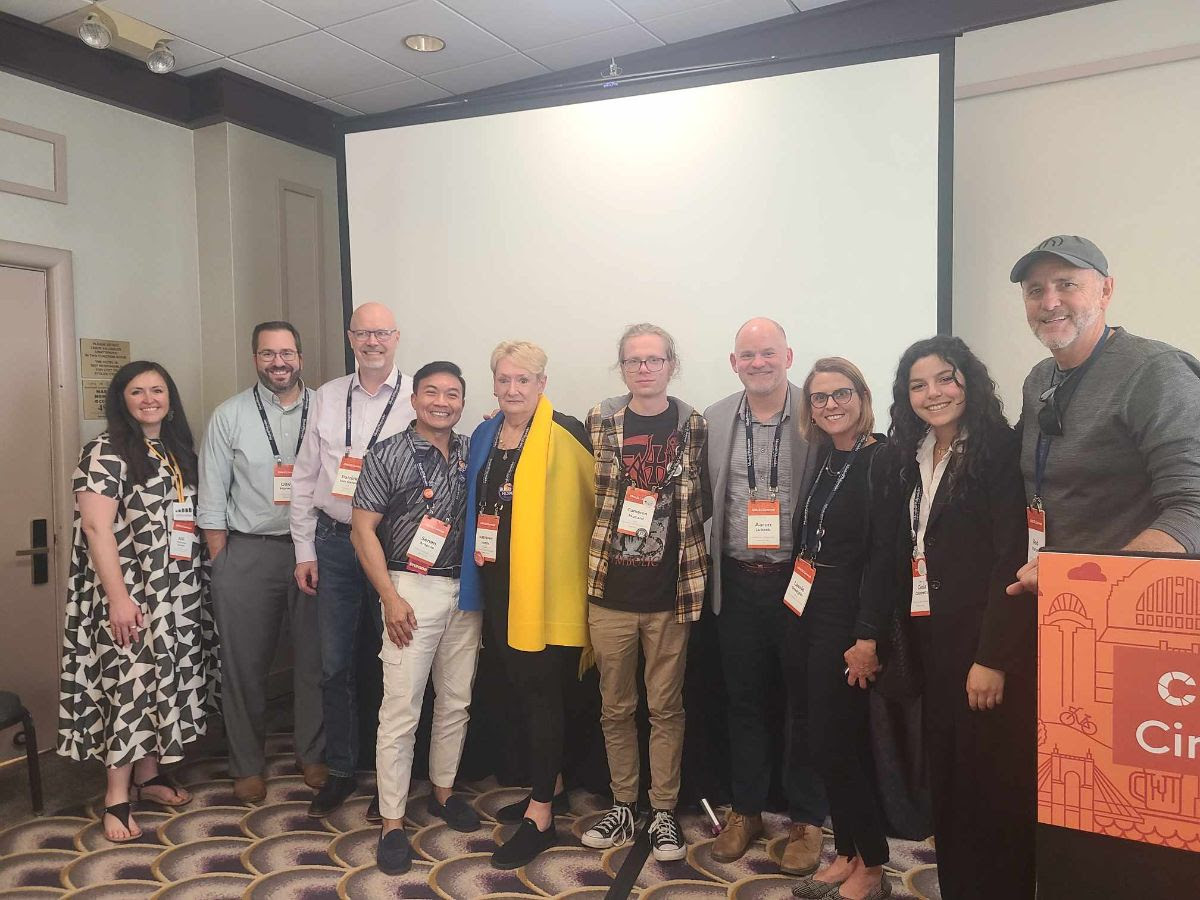
CNU32 – Cincinnati, OH
As DPZ partner Matt Lambert assumed his new role as chair of its board of directors, the 32nd Congress for the New Urbanism (CNU) annual conference took over downtown Cincinnati, OH, in mid-May.
Quite appropriately for a 19th Century city that has witnessed the rebirth of many historic neighborhoods, the theme was restorative urbanism. Many of the sessions focused on the management, design, and policy tools new urbanists are employing to bring about much-needed revitalization in our urban cores.
DPZ helped “restore and energize” the attendees once again with our #NotABooth coffee lounge. While not taking in the sights of new and old urbanism in the area, DPZers were moderating sessions, participating in panel discussions, and sharing some of DPZ’s architectural and urban know-how in special presentations.
Click here to read more about DPZ’s participation at this year’s CNU conference.

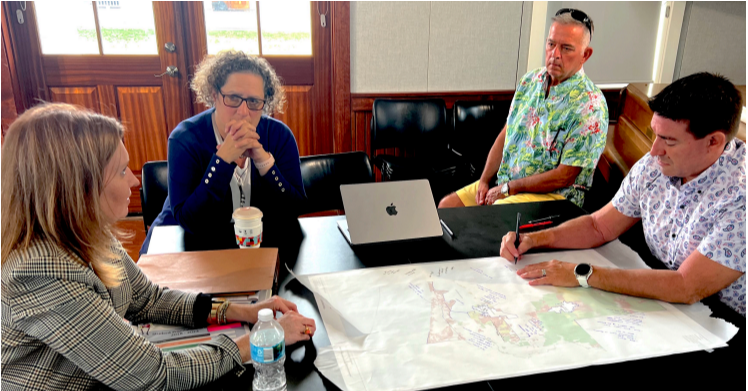
Walton County 2040 Community Engagement Charrette
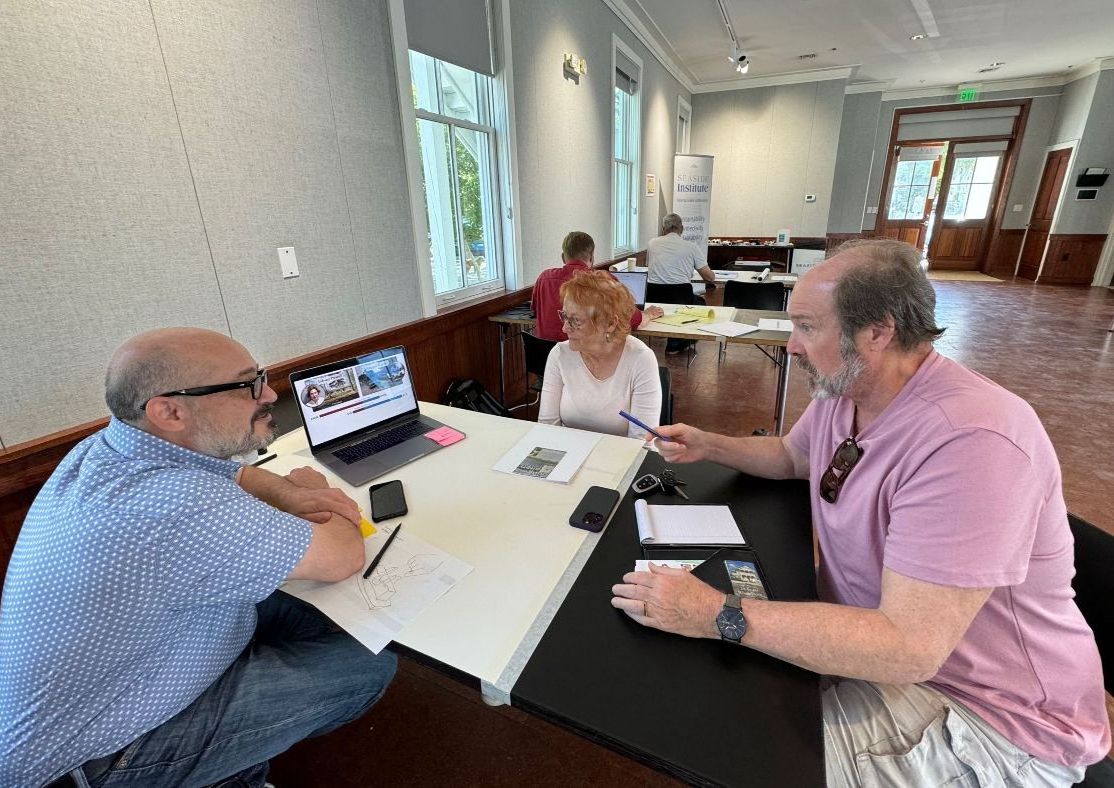
This past May, a team led by DPZ and Walton County held a community engagement charrette that welcomed opinions and insight from local community members to provide an evaluation and appraisal update to the comprehensive plan, and propose a physical vision.
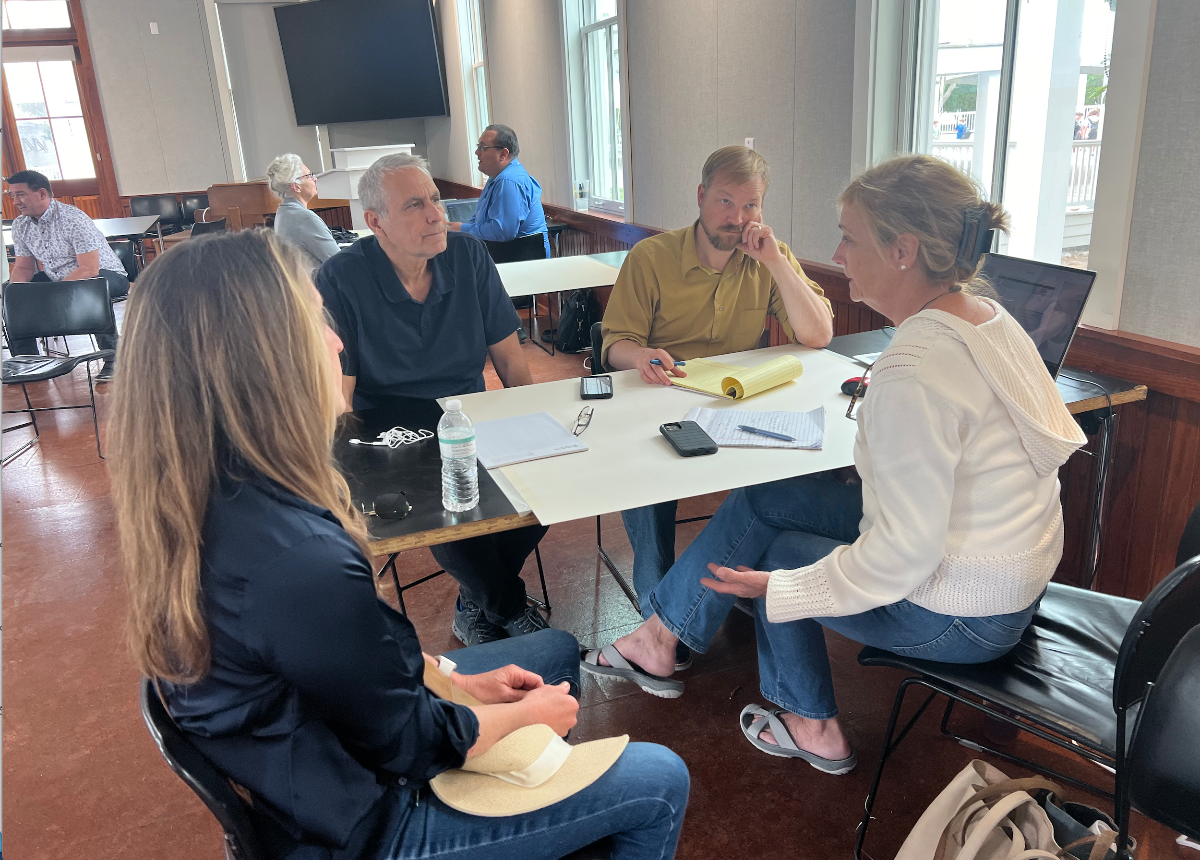
The county’s goal is to ensure the anticipated growth and development over the next few decades can be well balanced with the preservation of the environmental and natural resources. Topics included preservation, infrastructure, traffic, Smart Growth, and more.
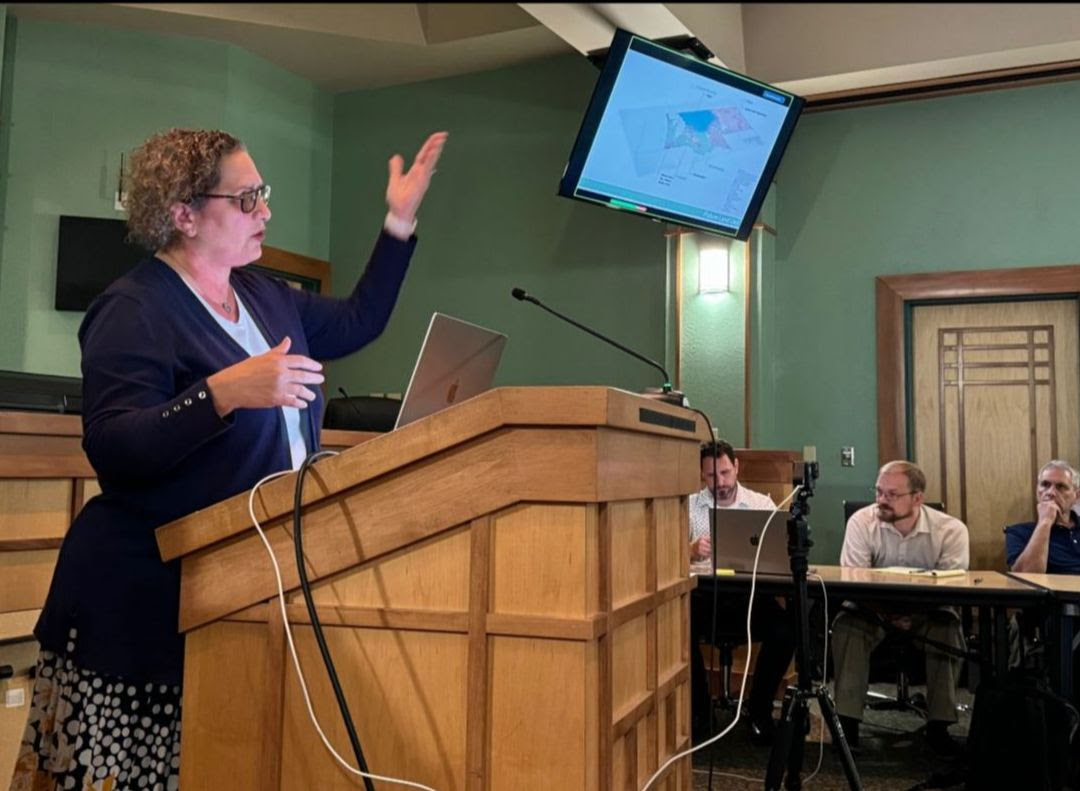
The Assessment of the Comp Plan is expected to be completed mid-2025, and will build upon the impactful Comprehensive Plan “South Walton TRUST Plan”, also completed by DPZ in 1996.
Click here to read more.
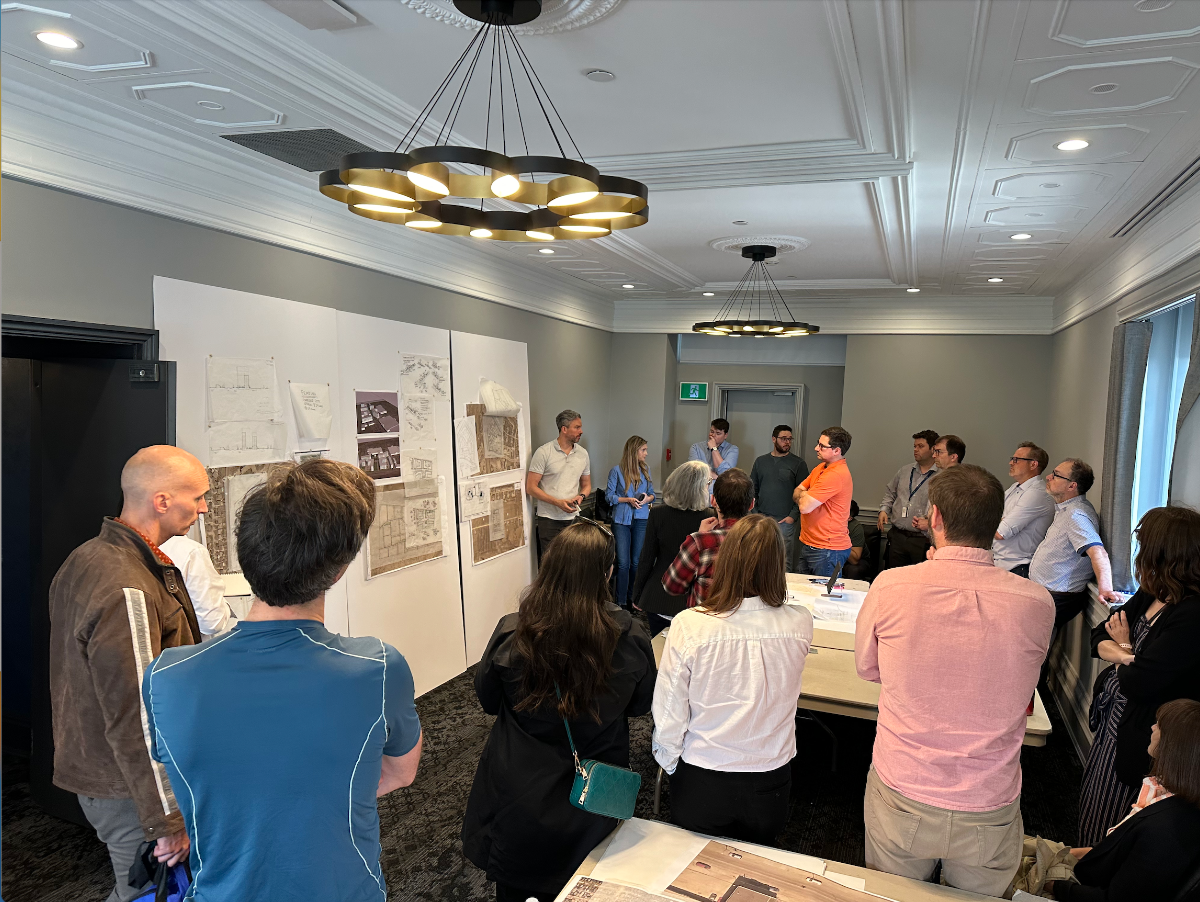
Winnipeg, Canada
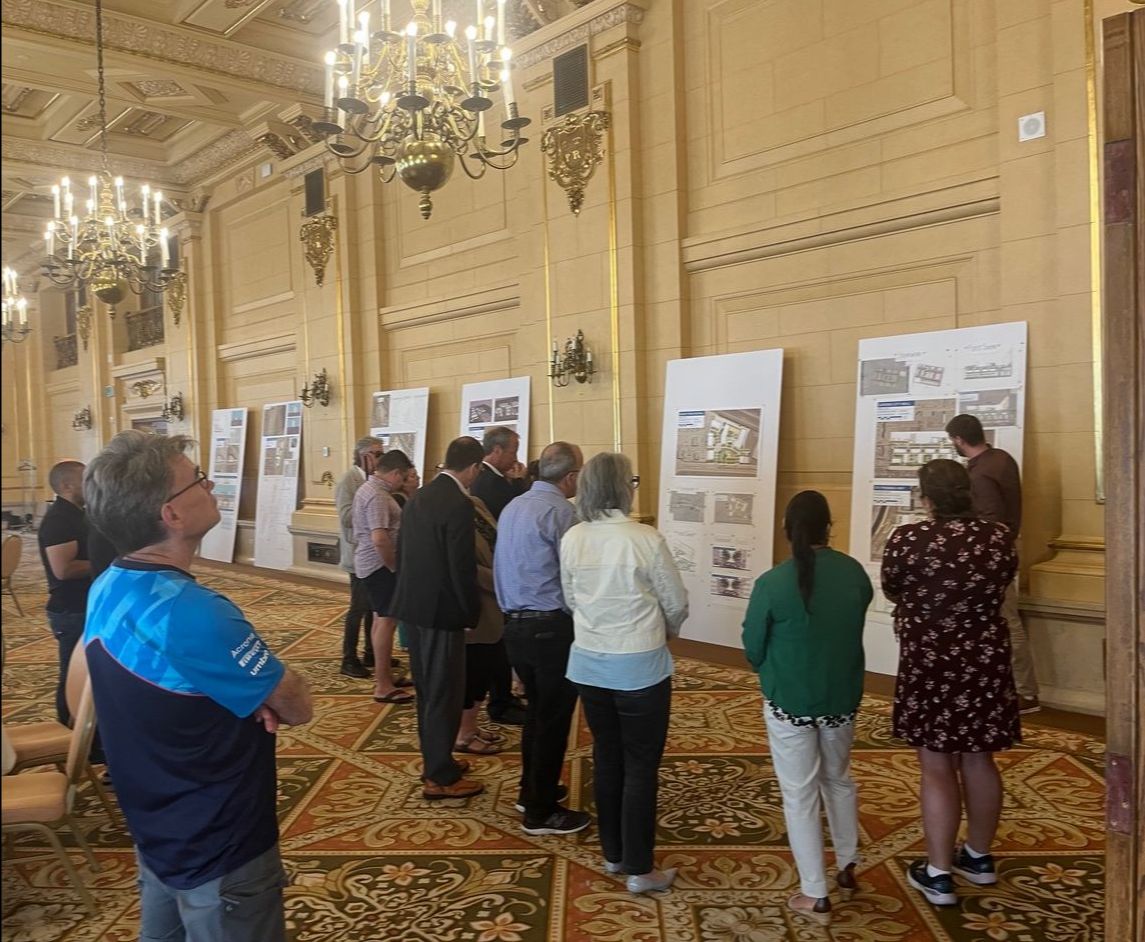
This June, DPZ led a workshop to help draft a new zoning code for the City of Winnipeg, Canada. Among the goals of the future form-based document was the enabling of by-right development along corridors and for large shopping center and mall retrofits, aimed at providing housing.
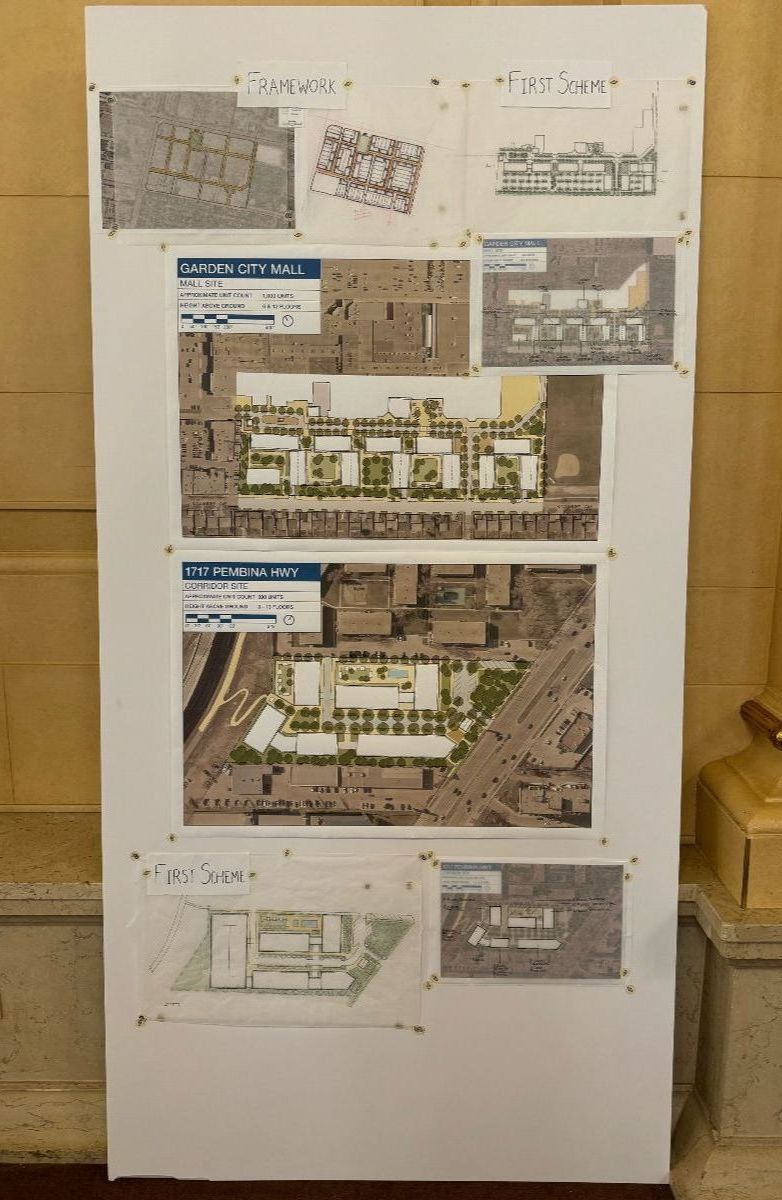
Regulations for the Malls and Corridors, along with some missing middle infill, will be adopted later this year.
For the workshop, the goal was to have 6 sample sites analyzed and designed to represent different conditions around the city. By weeks end, there were 9 studies — this was a result of multiple developers and mall operators interested in having their sites redesigned. Co-designing with DPZ and producing roughly half the site studies was the Calgary-based office of B&A Studios, led by Geoff Dyer and Laura Young.
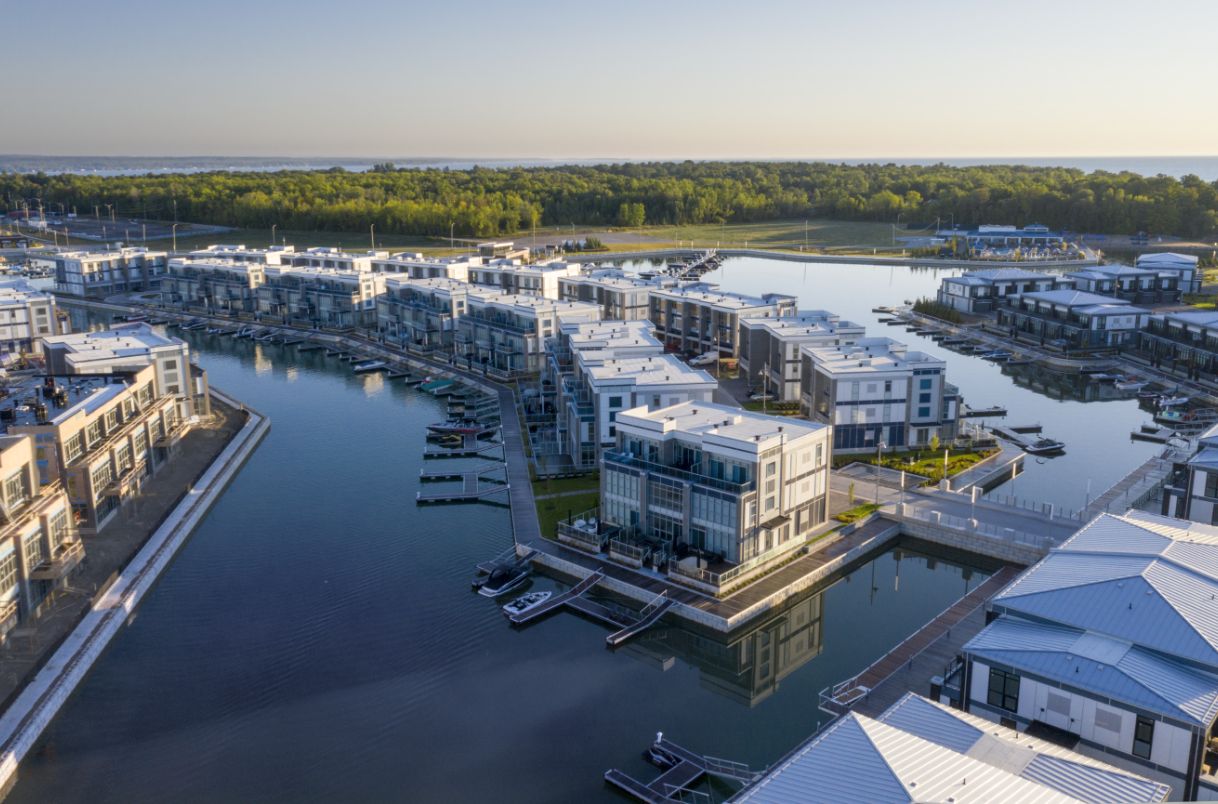
Friday Harbour, Innisfill, Canada
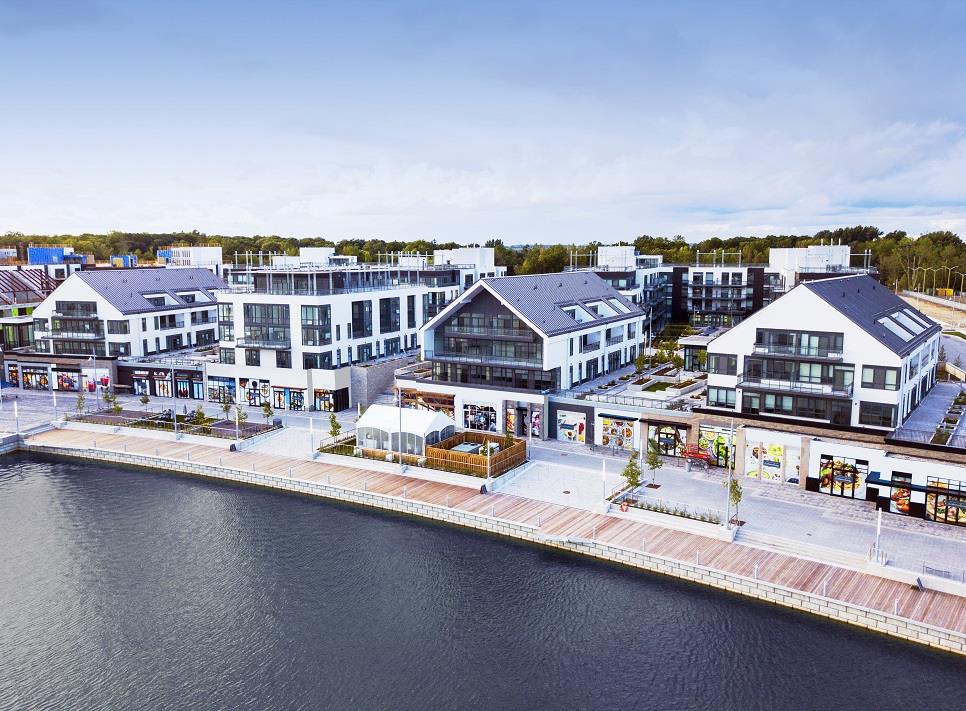
In the two decades since DPZ’s initial consultation on the project, Friday Harbour Resort has undergone various evolutions. Its latest planned development, proposing greater amenities and a higher density beach area featuring a hotel, marks a new phase.
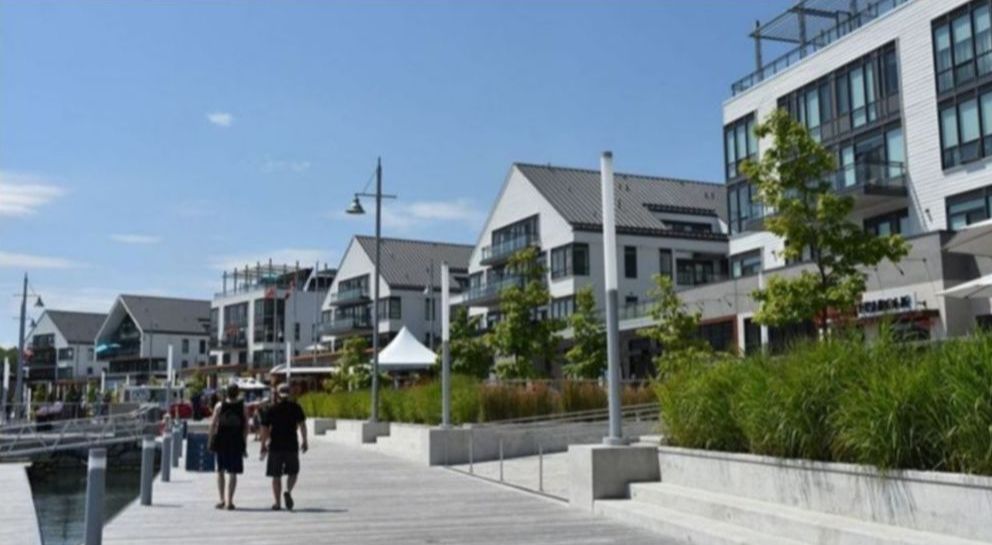
Nestled around a man-made marina off Lake Simcoe, this latest evolution embodies Friday Harbour’s commitment to developing a year-round, amenity-rich resort destination.
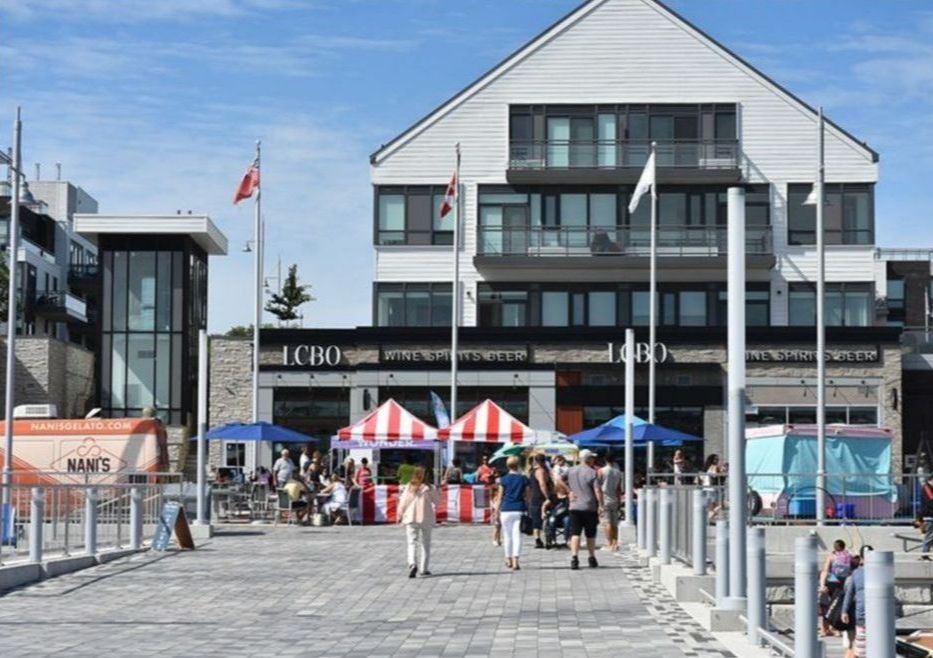
The goal is to strike a balance between well-planned density that supports retail, restaurants, and other activities and land conservation that celebrates the surrounding natural beauty.
Click here to read more.
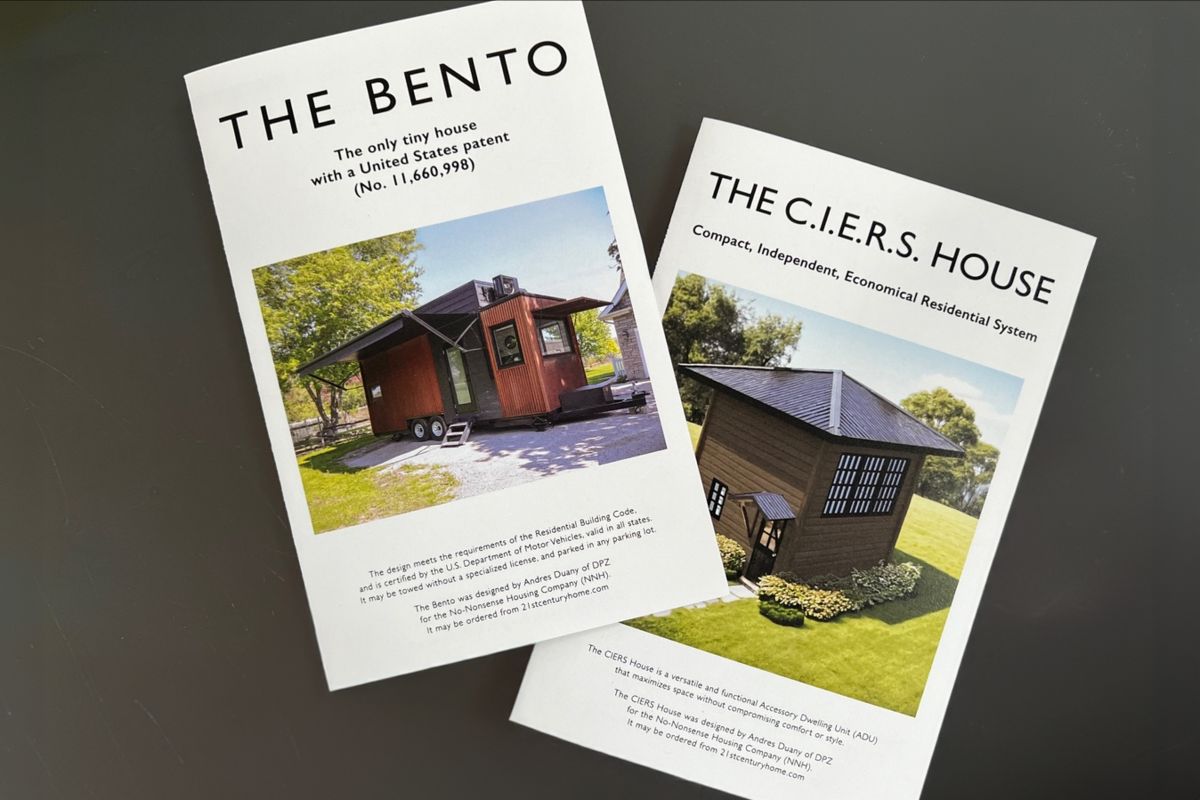
HUD Innovative Housing Showcase – Washington, DC
This June 6-7, Andres Duany and several other DPZers participated in the Innovative Housing Showcase on the National Mall, managed by the U.S. Department of Housing and Urban Development’s Office of Policy Development and Research (PD&R).
DPZ partnered with New Amherst Homes, 21st Century Home, and the No-Nonsense Housing Company to design and build model units for “The Bento” and “The C.I.E.R.S. House”.
Click here to learn more about the event.
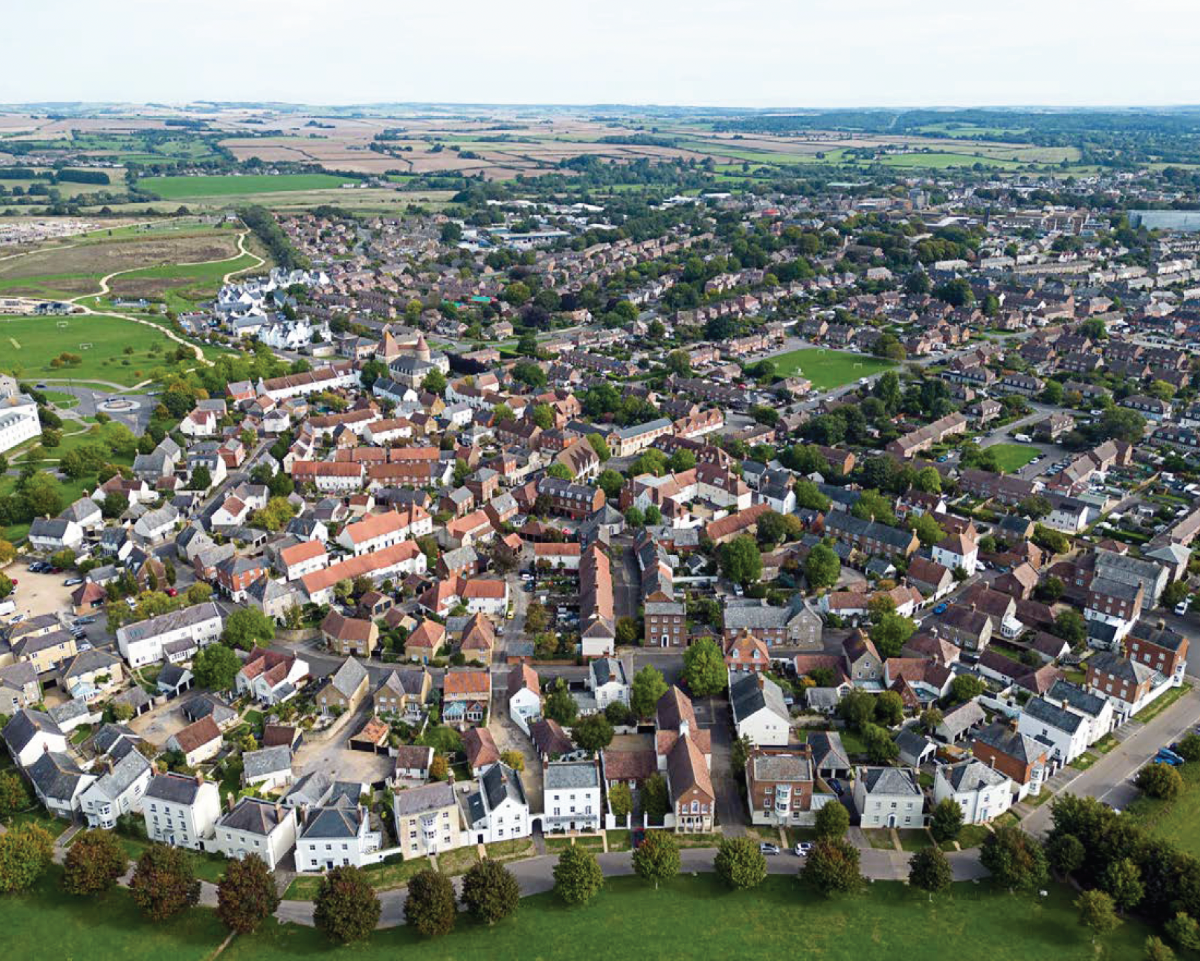
Above: Poundbury, Dorchester
NTBA UK Immersion Trip with Senen Antonio
DPZ Partner Senen Antonio embarked on an International Immersion Tour this past June with the National Town Builders Association (NTBA) in Hertfordshire and Dorchester, England, UK.
Characterized by its picturesque countryside, charming towns and cities, and close proximity to London, Hertfordshire has long been considered to be an extremely desirable place to live, work, and visit. In 2008, DPZ was invited by the University of Hertfordshire to run the Hertfordshire Planning Charrette to engage the general population in a debate about the county’s future design and growth.
The tour also included Poundbury, Dorchester, where DPZ designed a code and regulating plan in 1989, as well as an introduction to The King’s Foundation. The King’s Foundation provides holistic solutions to challenges facing the world today, and has a history of collaboration with DPZ since it was initially called The Prince’s Foundation.
Senen also hosted a Central London Walking Tour that explored a number of landmarks and hotspots.
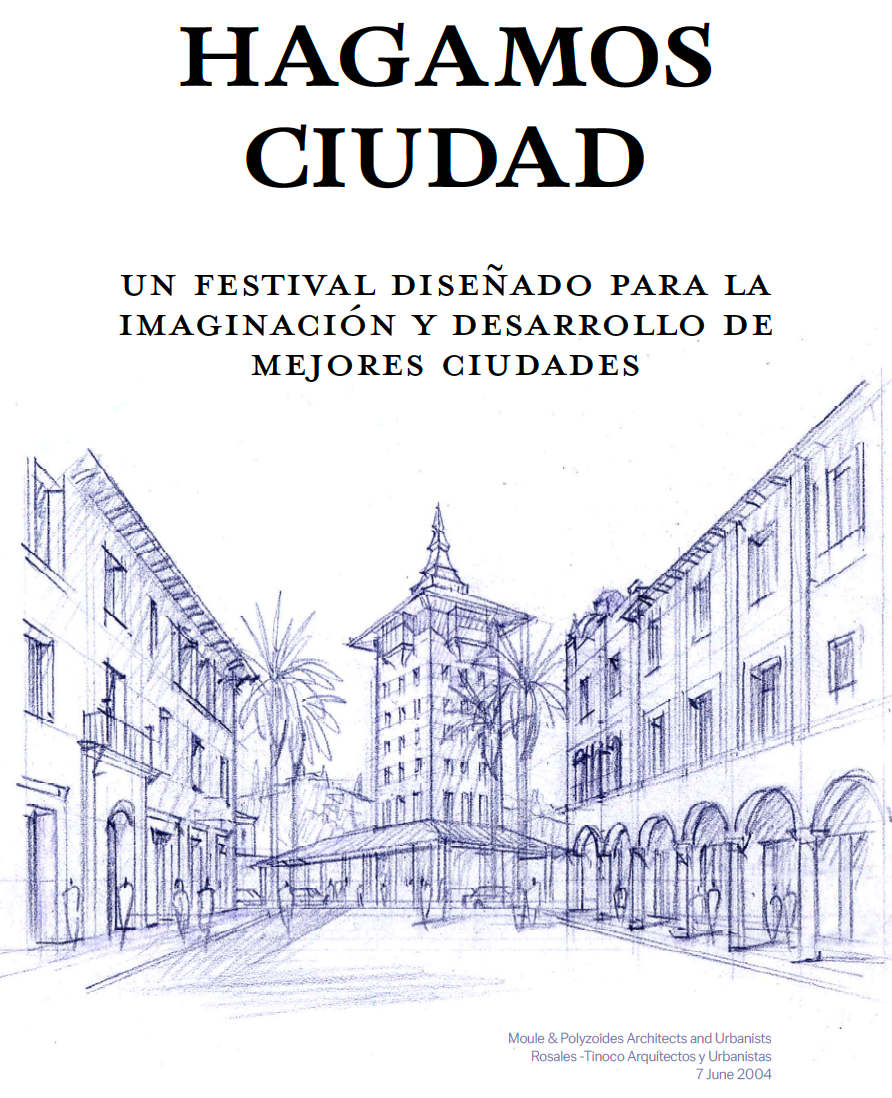
DPZ attends the Hagamos Ciudad (Let’s Make a City) Conference in Leon, Mexico
Organized by long-time DPZ clients, the Gómez family of León, Guanajuato, the Hagamos Ciudad conference took place last May in León, the second of what is becoming a biennial event to promote New Urbanism in Mexico. Over 300 local developers, financiers, and architects eagerly attended two days of presentations at the beautiful campus of the Academia Renacimiento, a music school for local underserved children operated by the Gómez family.
Opening the conference, Andrés Duany shared a history of the New Urbanism, the lessons learned, and possible applications for Mexico, including DPZ’s takes on the Latin American courtyard typology across the housing spectrum. Developer Héctor Leal presented his Leon Krier-designed new town of Cayalá, Guatemala. Frequent DPZ consultant, Joe Minicozzi of Urban3, explained his analysis of the impact of mixed-use urbanism and good design on a city’s tax base. The presentation by DPZ collaborator Fernando Pages of CNU Latino covered a number of relevant topics, including owner-built housing.
Other speakers included Alejandro Restrepo, chief architect and planner for the city of Medellin, Colombia, and DPZ’s own Milena Bingre, who presented her master’s thesis on the issue of urban security in Latin America and possible architectural solutions. Finally, Architect Miguel Gómez of Mi Ciudad discussed the importance of form-based codes in promoting good regional planning and walkable urbanism. The event concluded with a panel moderated by Miguel where conference participants addressed audience questions about New Urbanism and its solutions to local challenges.
DPZ would like to express our gratitude to Juan Carlos, Alonso, and Miguel Gómez for their hospitality, as well as our admiration for their cultural and civic leadership.
Vero Beach Adopts Downtown Master Plan
The City Council of Vero Beach adopted the DPZ Downtown Master Plan at their July 23rd meeting. The nearly unanimous approval indicated Council support for revitalizing the heart of the city by enabling more affordable housing downtown for younger residents.
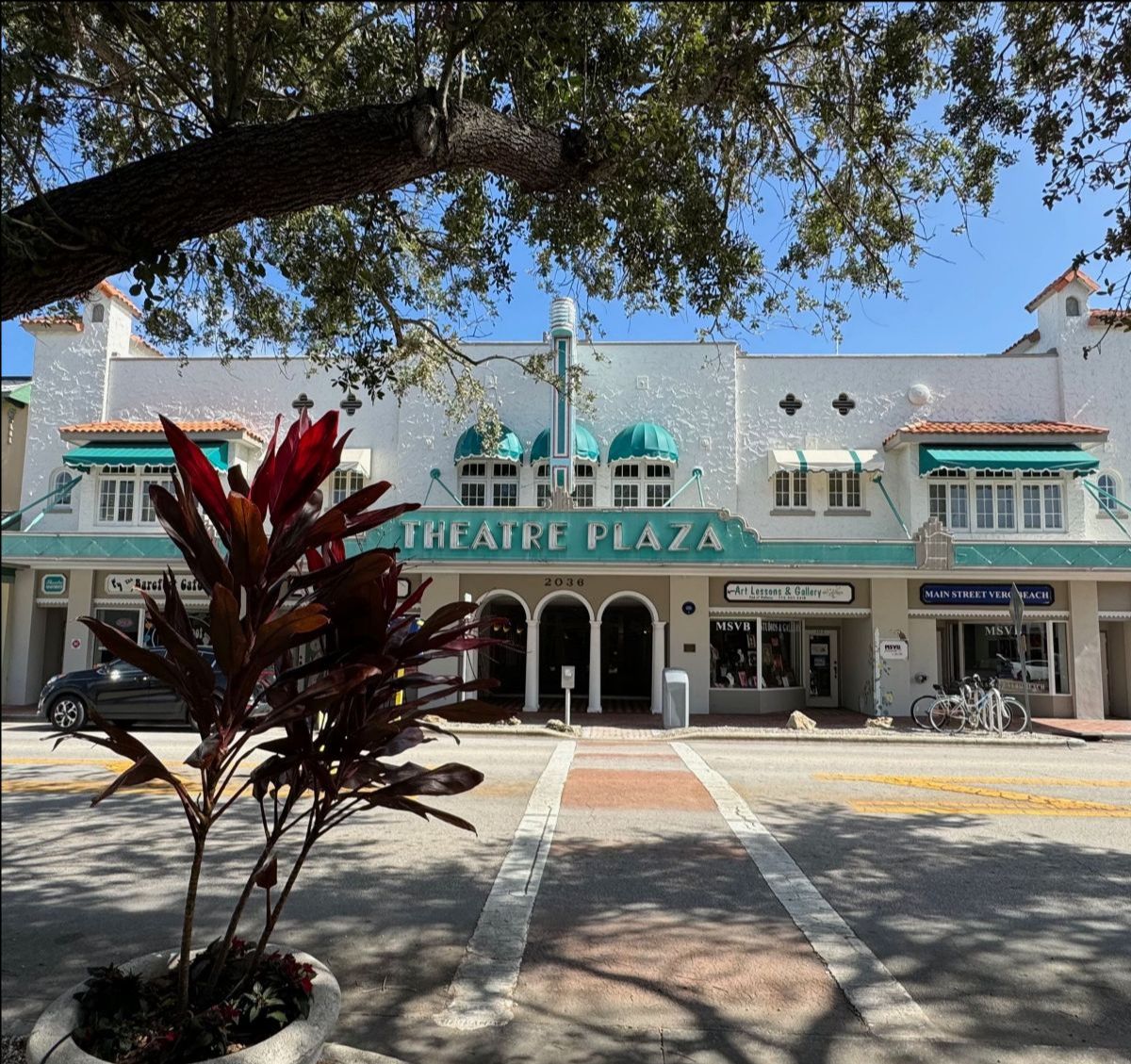
The focus now turns to crafting two referendum items for the November 5th ballot. One would raise current downtown density and another would establish a program to allow the transfer of development rights (TDR) from one property to another so it could develop at a higher density.
Developer Proposes Single Family Homes at Vista Field
DPZ client the Port of Kennewick has approved a proposal by developer BlueChart Homes to construct nearly 300 housing units at the port’s Vista Field site. The former general aviation airfield that DPZ reimagined as a town centre in 2014 should be off to a great start with a mix of single family homes in a variety of detached, attached, and townhouse types.
Read more about this next phase of Vista Field development here.
Windsor North Village Launch
The launch of the North Village — the final phase of development at our community of Windsor near Vero Beach, FL — is being promoted with a summer newsletter that is already garnering international media attention.
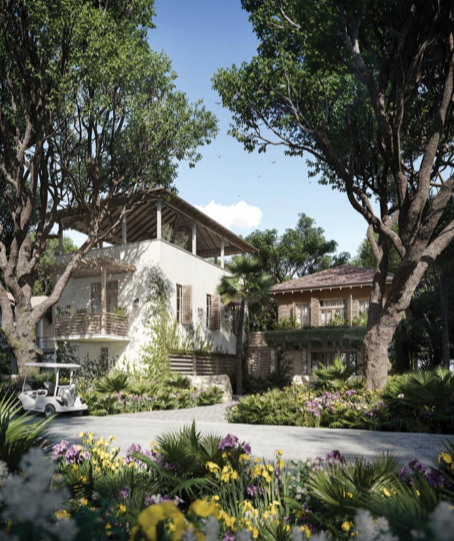
The North Village’s focus on ecological sensitivity is highlighted in the inaugural newsletter. A piece by DCN, a Canadian news outlet for the construction industry, provides a more detailed profile on the new neighborhood’s design, and particularly its emphasis on sustainable architecture best practices.
The issue can be read here. The DCN profile can be accessed here.
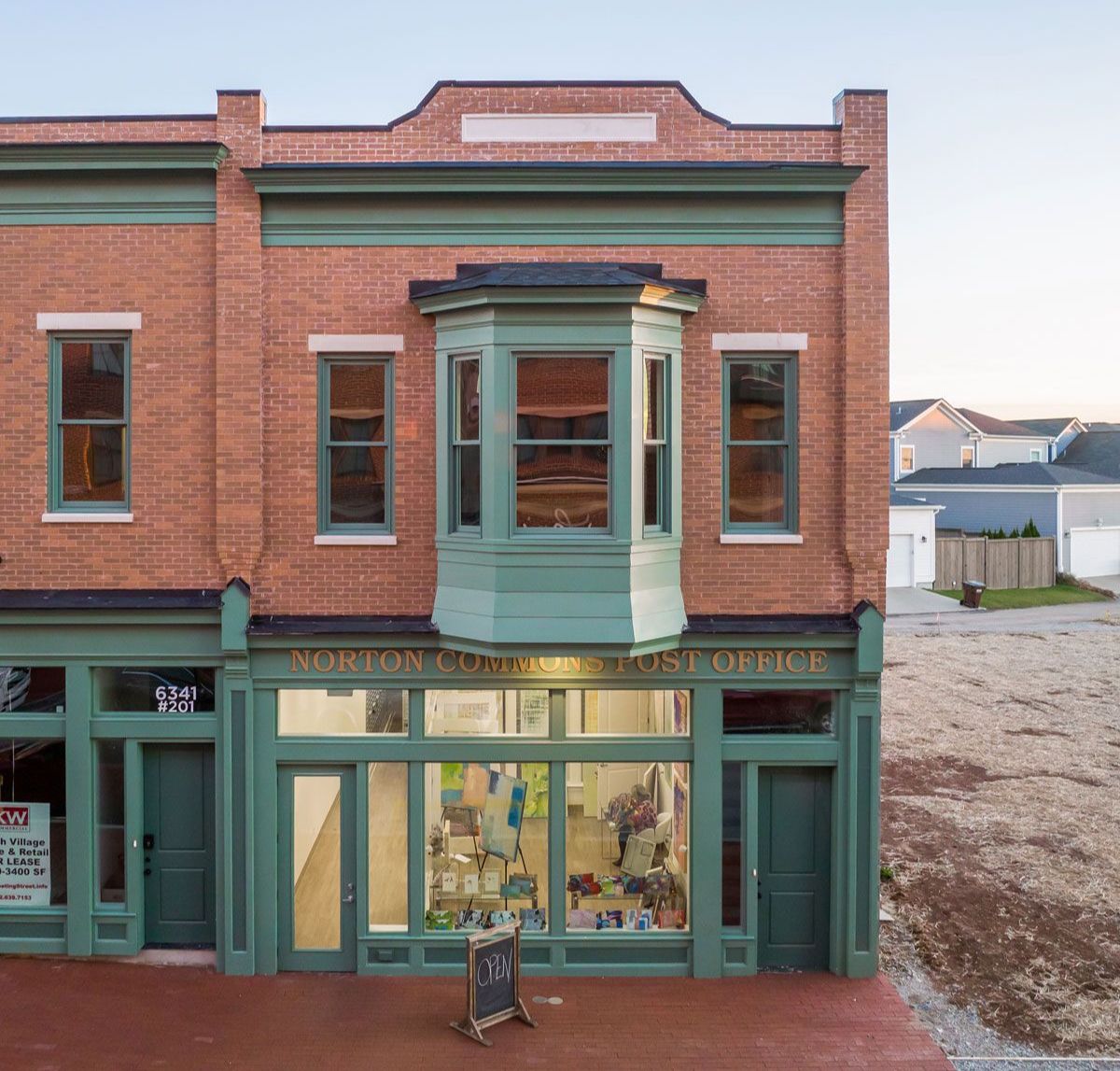
Norton Commons’ Main Street Live-Work Units
Public Square is once again showcasing our Norton Commons project in Kentucky, and its emerging North Village which is known for its small-scale mixed-use buildings.
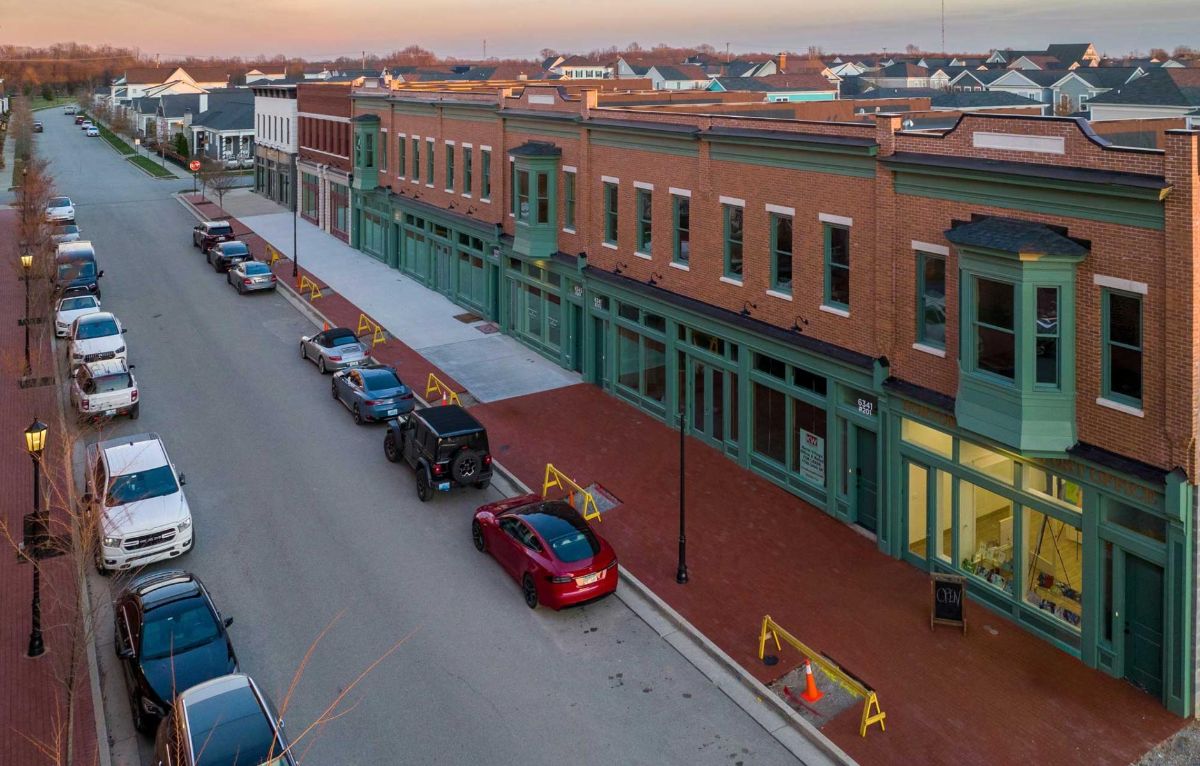
The article focuses on a new row of live-work units lining the village’s main street (Meeting Street), the latest addition in the community’s growth.
Read the full article here.
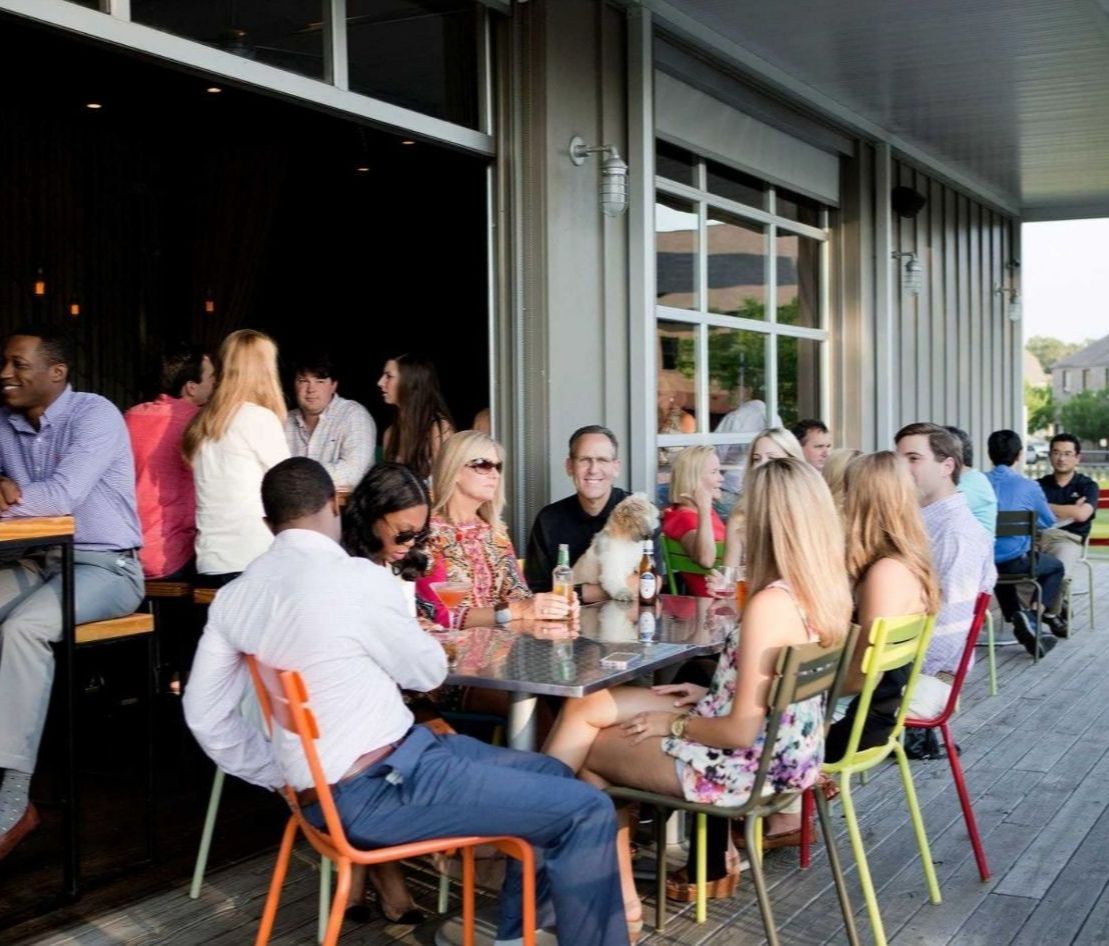
Hampstead, AL Fosters Social Atmosphere
A CNU spotlight has been placed on Hampstead for promoting community interaction and wellbeing by emphasizing uses that energize the civic realm.
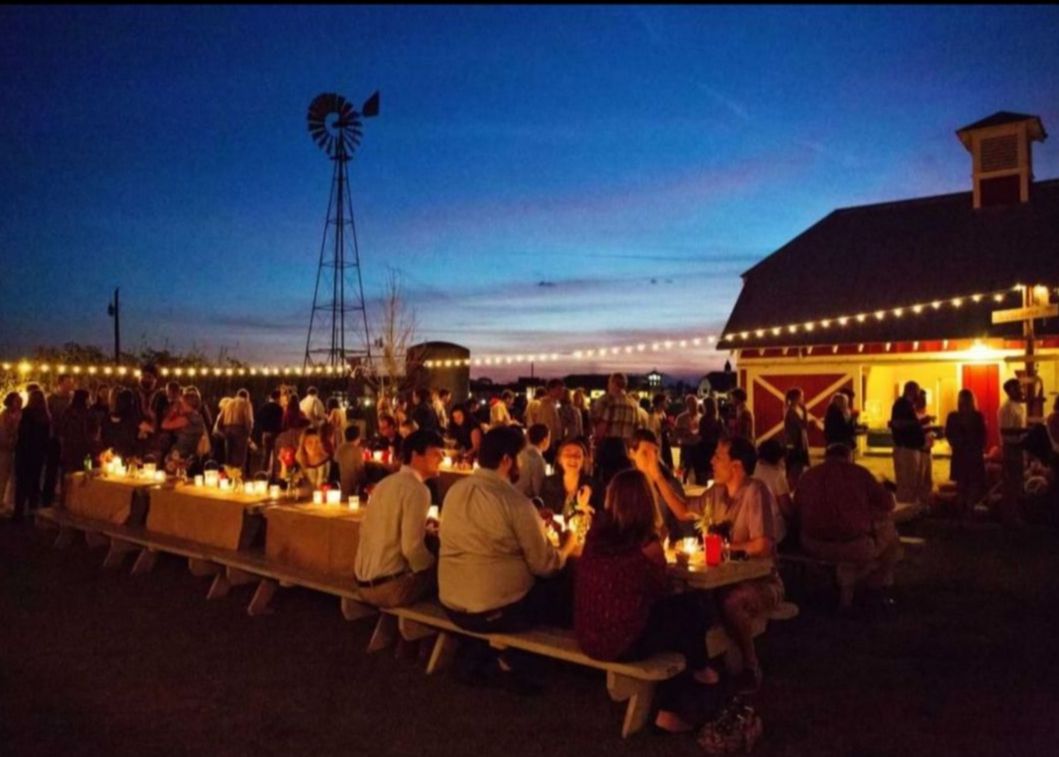
Known for its preservation of the natural environment, Hampstead is deserving of renown for activiting its social enviornment by creating “third places” of quality.
Read more from the CNU Public Square article here.

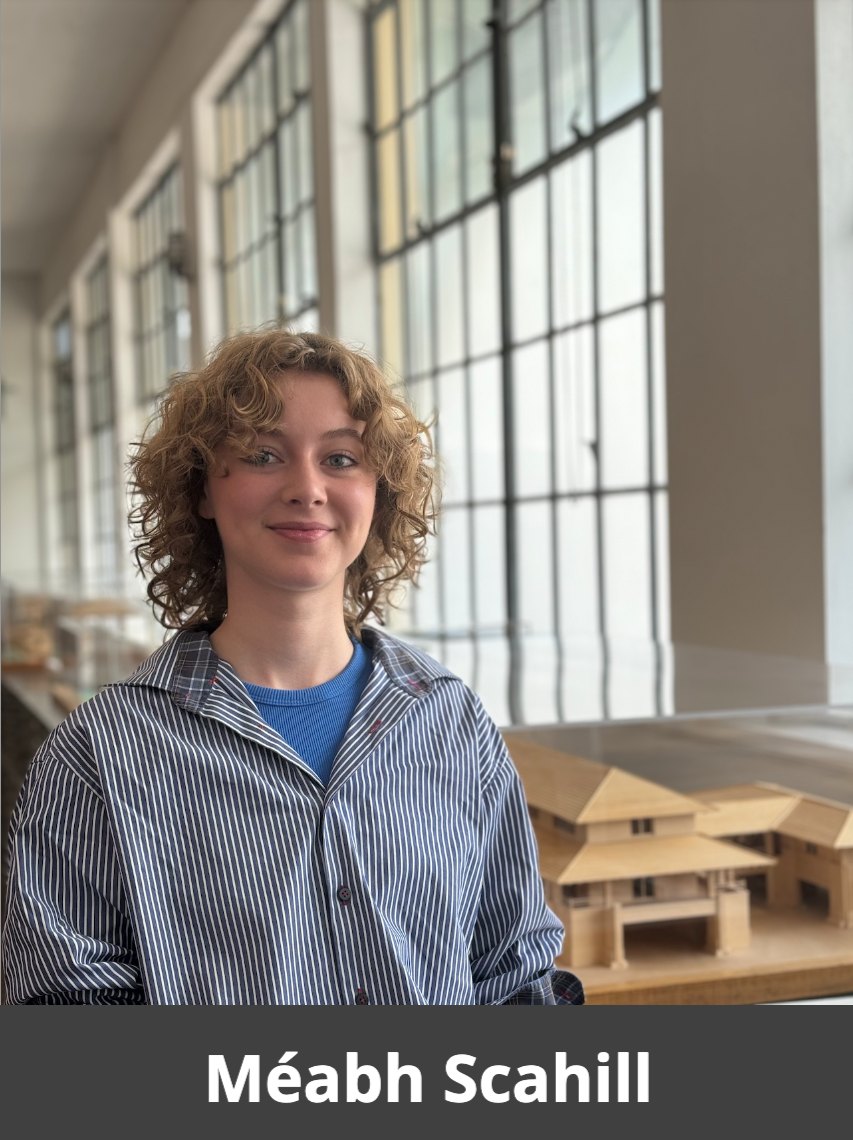
New 2024 DPZ Team Members
DPZ has welcomed some new faces to several of our offices this year, and we wanted to take the opportunity to spotlight these individuals.
Madison is a recent graduate of the University of Oregon where she received her Master of Architecture with a specialization in Urban Architecture and Urban Design. Her interest in sustainability, adaptive reuse, urban design, and historic preservation inspired her to pursue her studies. Her current career goals include becoming a licensed architect so she can work in the future of sustainable cities and learn how to build on existing infrastructures.
Carson joined DPZ as a designer in November starting in the Miami office and transitioned to the DC office this past February. He has a BS in Architecture from Kent State University and a Masters in Architecture from the University of Miami. He additionally has an MRED+U Certificate (Real estate Development + Urbanism).
This past December, Camille rejoined DPZ as an urban designer in the Portland office. She has a BS in Architecture with a minor in Ecosystem Science Policy from the University of Miami. Her experience spans across various project types, including revitalization and vision plans for downtown cores, regional structure plans, form-based codes, publications, and more.
Méabh has joined the DPZ Miami office as a Summer Intern from Dublin, Ireland, continuing the rich tradition of the internship program. She is a final year BA student of History of Art and Architecture at Trinity College Dublin, with a keen interest in the social impact of architecture and urban planning. Her internship at DPZ is part of the Laidlaw Foundation’s Undergraduate Research and Leadership Development Program.
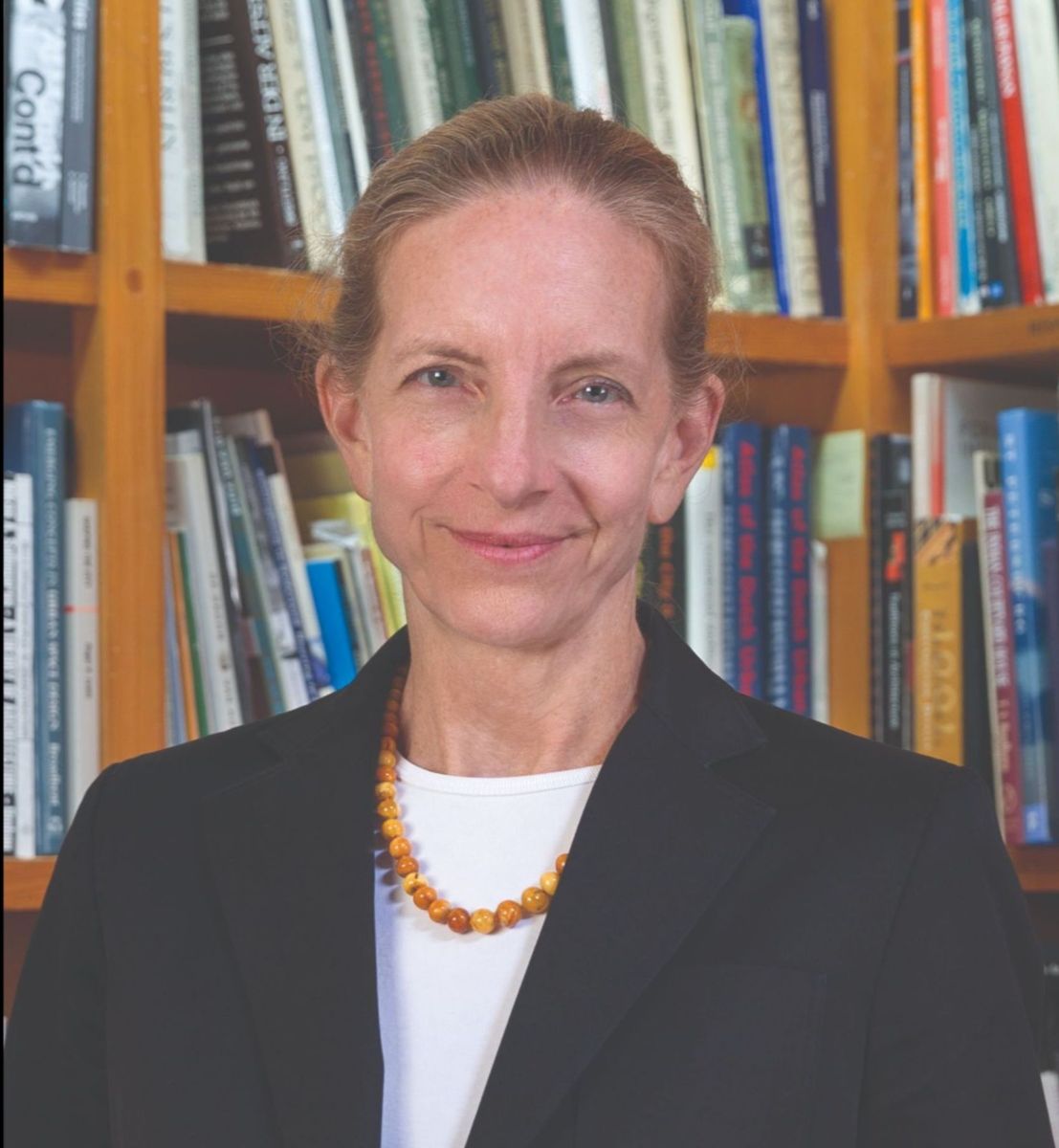
Hall of Honor Goal II Award (Intellect) at Sacred Heart Academy Bryn Mawr
Lizz Plater-Zyberk has been selected to receive an induction into the Hall of Honor for lifetime excellence and achievement in intellect at her alma mater, Sacred Heart Academy Bryn Mawr.

The nomination-based award honors an alumna who has achieved success and distinction in her professional career. She was chosen among dozens of nominations for her category.
Congratulations, Lizz!

Lizz and Andrés in France
This summer, Lizz and Andrés have retreated to their second home in Uzès, France, from where they continued to work, of course, but in a calming atmosphere with a refreshing change of pace.
Throughout their stay, they periodically sent photographs and updates to share their experiences.
Aside from work on various DPZ projects, such as the St. Thomas School master plan, Andrés and Lizz kept busy with various writing projects like the DPZ monograph.

They also played host to a number of visitors all summer. Among them were Dhiru Thadani, who is working on a book about Uzès with Andrés, and Clemente Garay, a Spanish architect and artist who worked with DPZ in the late 80s and early 90s crafting the beautiful wood models on display in the Miami office.
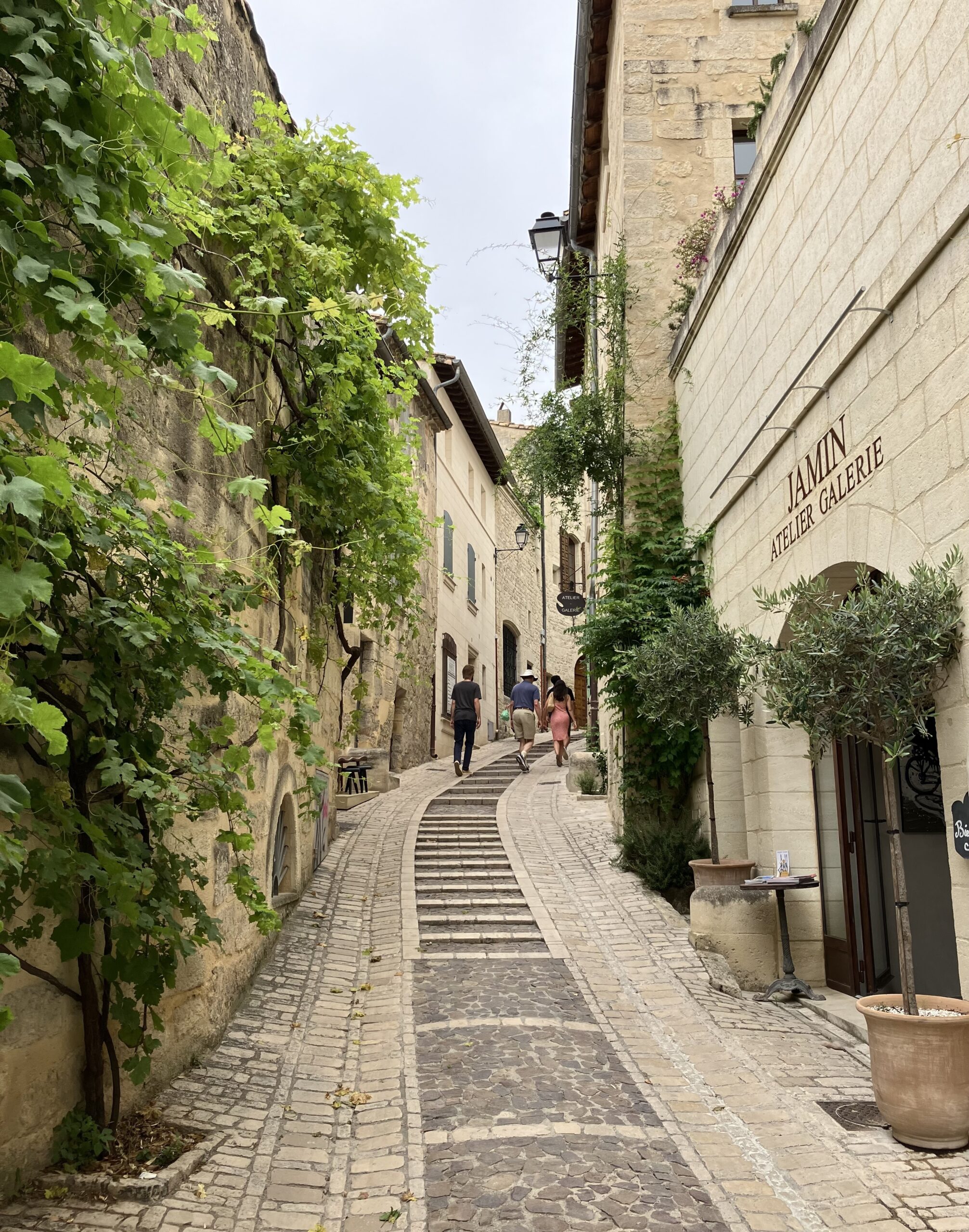
Additional guests throughout the summer have included former Dean of Architecture at the University of Maryland Steve Hurtt and his wife Carole; Buff Chace from Providence with his son Ben; Donna Murrain from London; and Hertfordshire clients Robert and Hannah Gascoyne-Cecil, Marquess and Marchioness of Salisbury with their daughter Catherine and three children from New Orleans. Robert and Hannah were accompanied by friends Jonathan and Alex Hill.
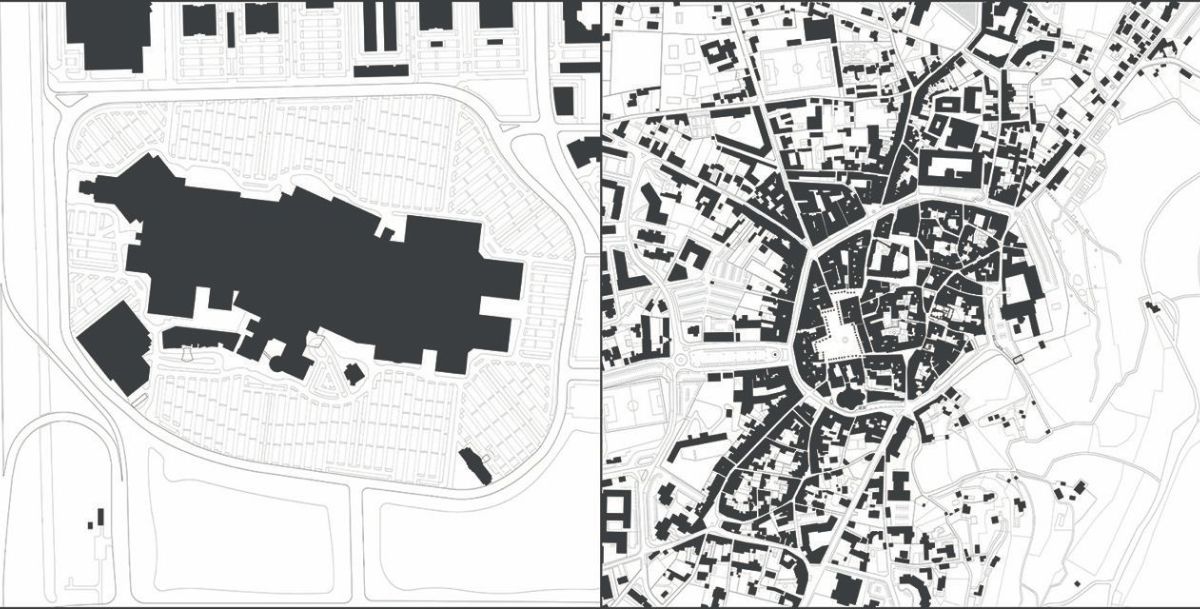
Aside from work, there has been bright, unseasonably cool weather to complement such an inspiring place. We expect many more photos and stories upon their return.
Third Photo: Clemente Garay with his painted book
Fifth Photo: Dhiru Thadani’s scale comparison between the plan of Uzes and a typical U.S. mall
Walton County Community Engagement Charrette
This past May, a team led by DPZ (Consultants included: Crabtree Group Inc, Clark Partington, GIT, Impact Campaign, Gridics, Jacobs, Urban3, and Larry Davis) and Walton County held a community engagement charrette that welcomed opinions and insight from local community members to provide an evaluation and appraisal update to the comprehensive plan, and propose a physical vision. The county’s goal is to ensure the anticipated growth and development over the next few decades can be well balanced with the preservation of their environmental and natural resources.
The main topics for the Charrette included the following:
- Environmental Preservation: Strong desire to preserve natural beauty, including beaches, wetlands, and trees. Emphasis on responsible development practices, such as tree preservation and wildlife habitat protection.
- Infrastructure & Traffic Concerns: Prioritizing infrastructure to support current and future developments, and addressing traffic congestion while ensuring pedestrian safety is a top concern.
- Smart Growth and Planning: Advocacy for long-term sustainability and quality of life through controlled density, effective zoning laws, and maintaining a balance between local and chain businesses.Community Engagement and Governance: Desire for greater transparency and local government engagement, communication, and adherence to existing regulations.
- Economic Diversification: Recognized need to diversify the economy beyond tourism to include white-collar, creative class, and small business job growth.
- Maintaining Quality of Life: Maintain and improve quality of life by enhancing access to amenities, addressing affordability concerns, and promoting social cohesion within communities.
As part of possible recommendations for evolving the Comp Plan, the team is proposing to create a more predictable framework for development by further assigning Place Types across the county into 4 broad categories: centers, corridors, settlements and special areas.
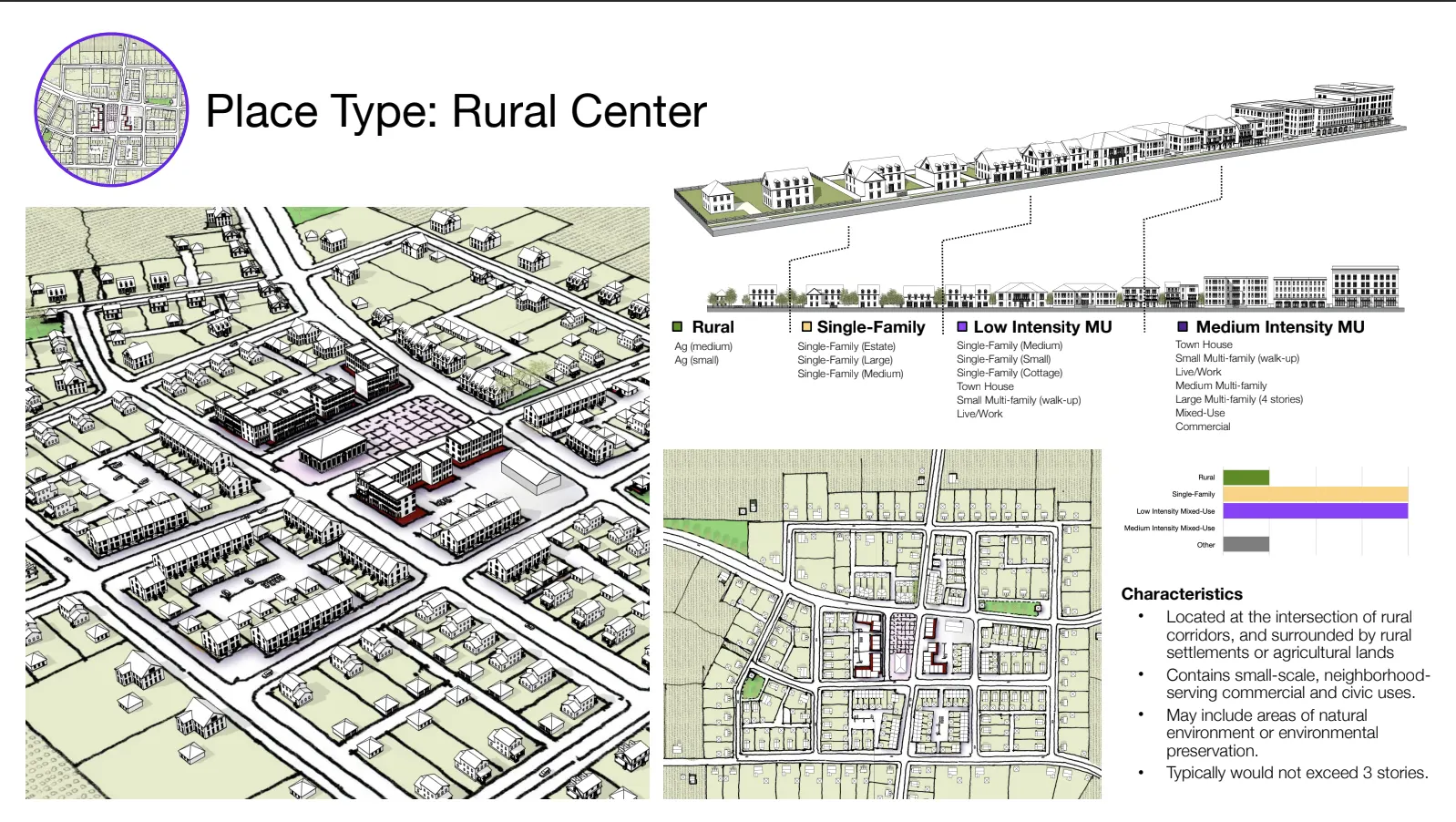
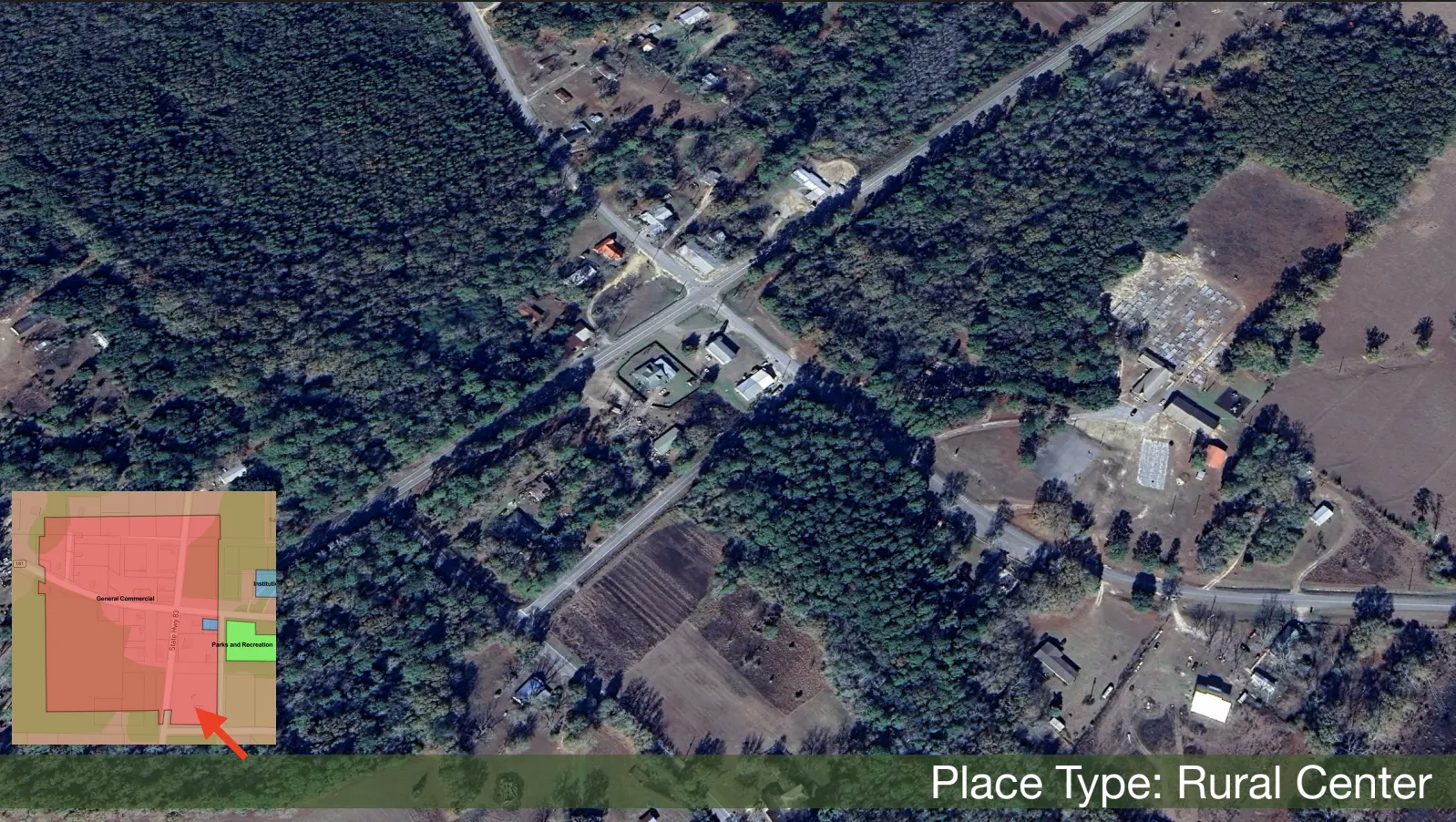
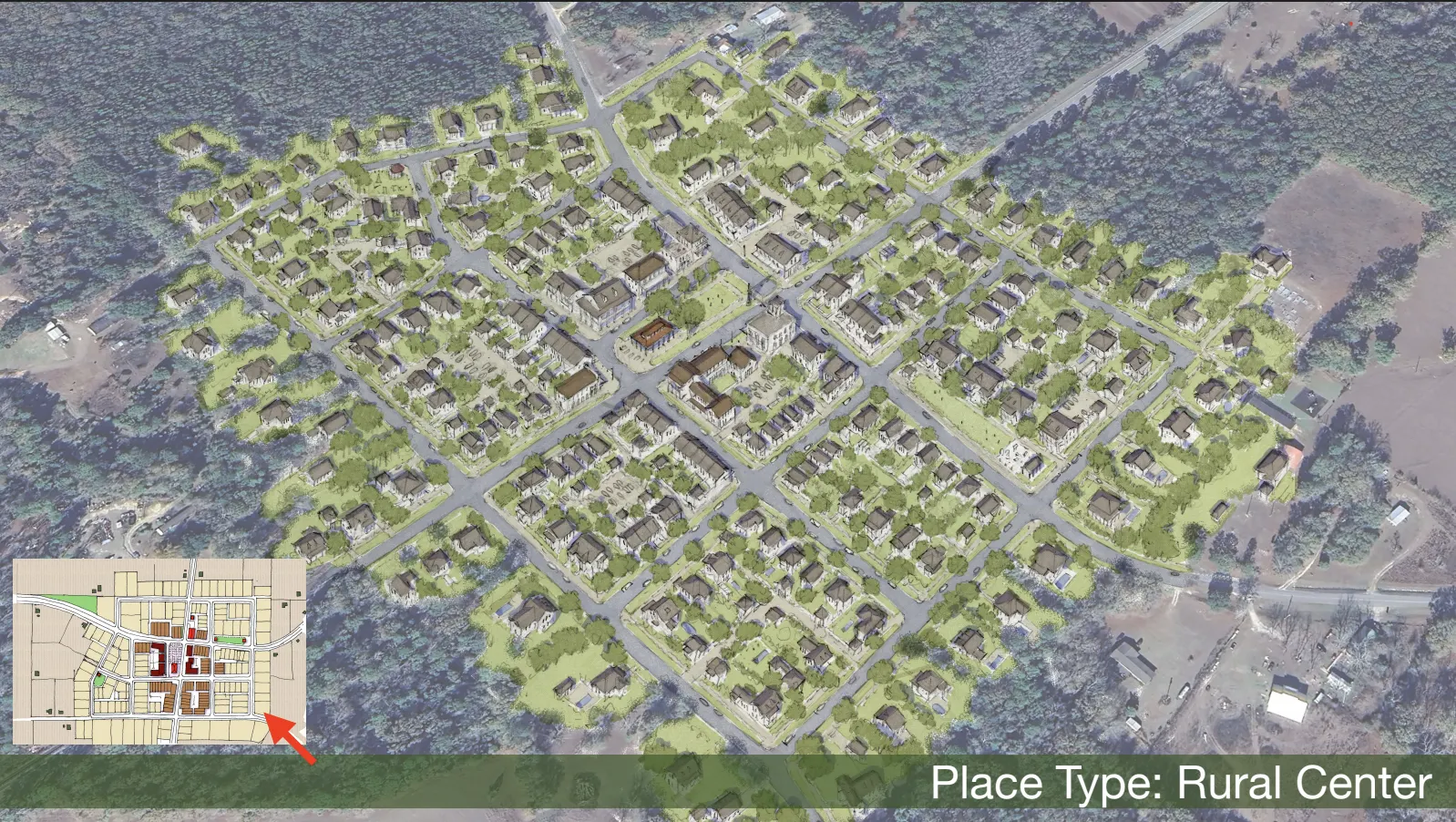
The Assessment of the Comp Plan is expected to be completed mid 2025, and will build upon the impactful Comprehensive Plan “South Walton TRUST Plan”, also completed by DPZ in 1996.
Learn more about the project here.
DPZ Master Plan and Codes continue to guide development at Friday Harbour resort, Innisfil, Ontario
Over two decades since DPZ first designed what would become Friday Harbour Resort at Big Bay Point, Innisfil, the master plan and adopted SmartCode continue to guide development.
Since its initial residents arrived in 2017, Friday Harbour has emerged as a contemporary, four-seasons resort. Situated on Lake Simcoe, just 60 kilometers north of Toronto, the resort boasts a unique, walkable urban experience in Canada’s ‘cottage-country.’ Development saw the site’s historic marina reconstructed to accommodate 1,000 boat slips, the introduction of a crescent-shaped, mixed-use boardwalk with restaurants, shops, and a grocery. It also includes civic amenities such as: an 18-hole golf course designed by Doug Carrick; a beach club along the marina and a modest beach; a lake club with a pool, gym, and restaurant; and an amphitheater space at the end of the main marina pier. The resort’s residences vary in type, from luxury homes sculpting island fingers in the marina to townhomes and condominiums, with the goal of promoting natural and sustainable development.
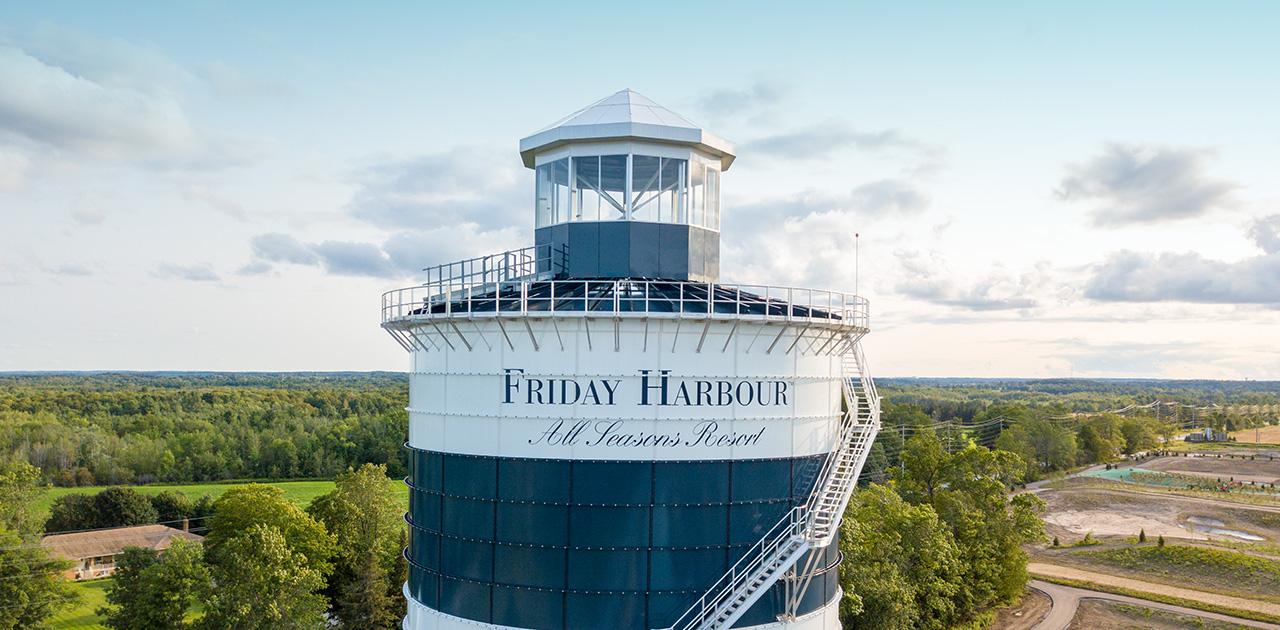
Photograph of Friday Harbour’s water tower courtesy of Friday Harbour
The resort is surrounded by environmental lands that have been significantly preserved and enhanced with a tree reforestation program, the creation of new wetlands, a snake hibernaculum, amphibian crossings beneath streets and a butternut replantation program at a compensation of 20:1. The marina and canals are kept clean despite the busy boating activities with innovative stormwater management practices, such as phosphorus loading reductions to Lake Simcoe.
Since a successful petition in 2020 abolished restrictions on occupancy, many residents of Friday Harbour now live at the resort year-round.
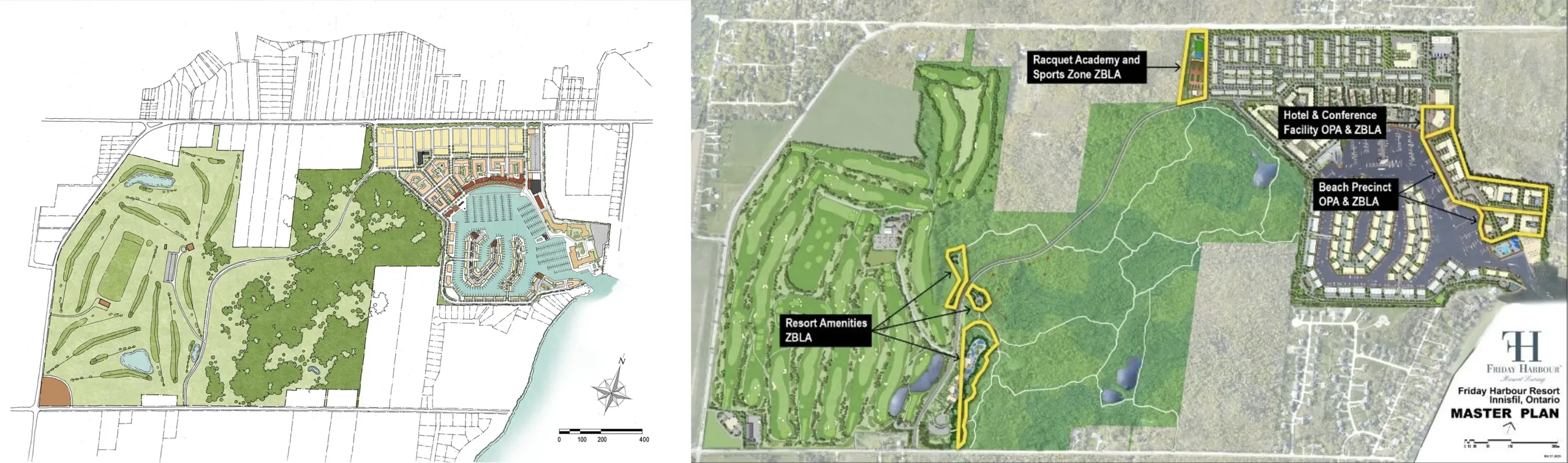
Approved 2007 DPZ masterplan plan for the resort ( left) and updated plan of the resort presented last month to local council with proposed changes to amenities, Beach precinct and Hotel and conference area highlighted (right)
Friday Harbour has undergone various evolutions since DPZ’s initial master plan which was first designed in 2002 — from a name-change, to the relocation of its golf course and to the designation of nearly a third of the property as an Environmental Protection Zone. Each of these evolutions have been guided by DPZ’s master plan, finalized and approved in 2007. Intrinsic to this plan was the establishment of a robust Code, consisting of a regulating plan and urban, architectural, thoroughfare and landscape standards. The Code continues to guide Friday Harbour’s development. Any proposed changes require amendment via public consultation, providing opportunity for the local community to enter dialogue with the developer, in addition to ensuring cohesion of design and adherence to the original vision.
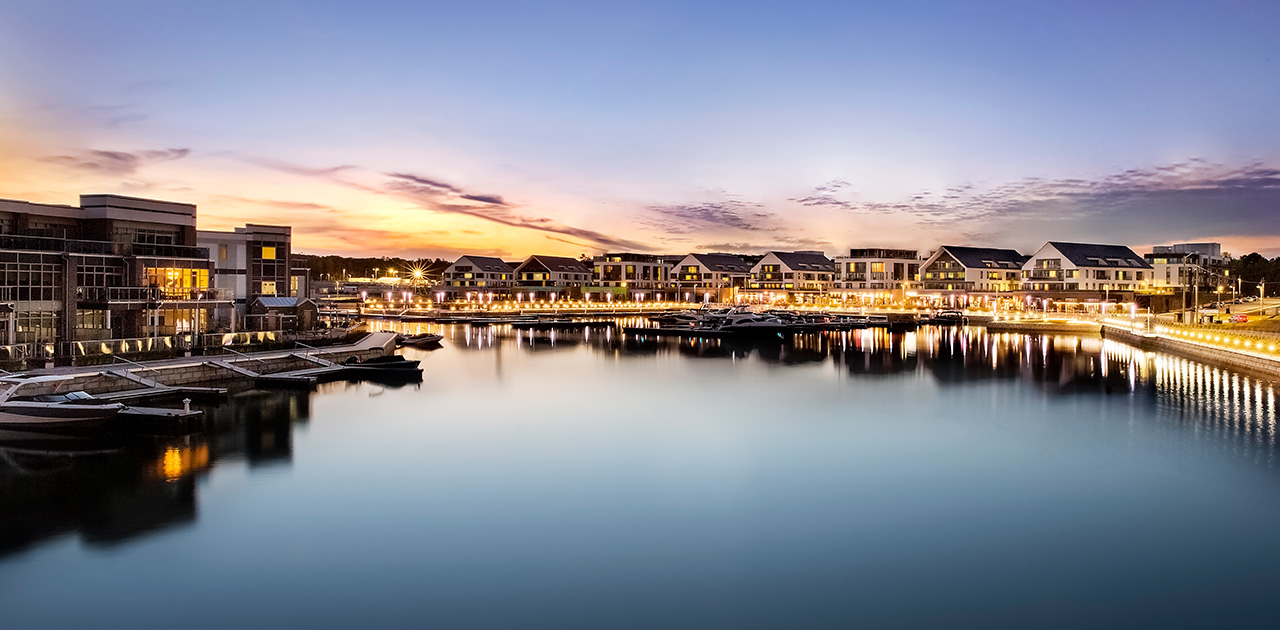
Photograph of Friday Harbour’s marina courtesy of Friday Harbour
The latest phase of Friday Harbour’s development reflects the success of the Plan. The proposed update was presented for public consultation at a local council meeting last month. The changes deviate from existing density and heights, with an amendment to the master code’s restrictions to enable the construction of a 15-story hotel, a convention center, and an adjacent high-density beach precinct area, adding over 1,000 new units. The proposal received lengthy debate, with many Friday Harbour residents objecting to the increased density and calling for increased amenities for residents and visitors. DPZ partner Marina Khoury, who attended the public meeting on June 19th, stressed that the proposed level of density would help support the growing retail and restaurant facilities at Friday Harbour. She further noted that ensuring that the added density was commensurate to fostering the character of the resort and its amenities had remained paramount.
The proposed plans await decision at a future town council meeting.
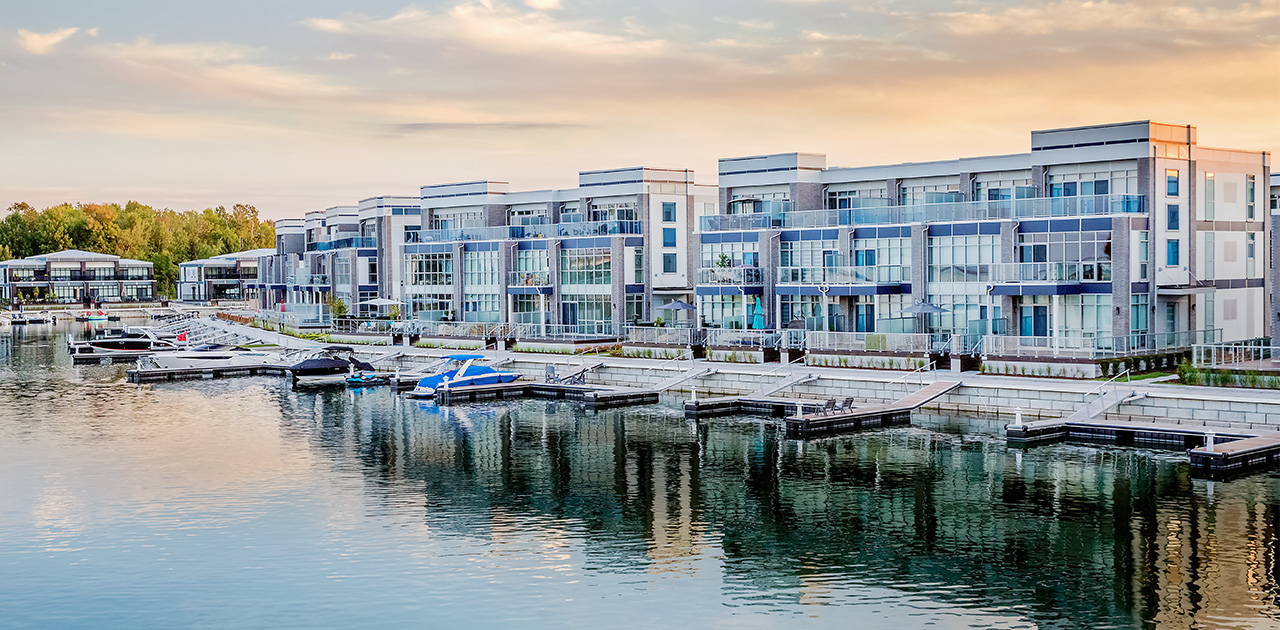
Photograph of Friday Harbour’s promenade courtesy of Friday Harbour
It has taken a village to make this project a reality. Other consultants include: SCS Consulting Group Ltd; Schollen & Company Inc; Malone Given Parsons; Davies Howe Partners; Beacon Environmental; UrbanMetrics; BA Group; Hutchinson Environmental Sciences LTD; GEMTEC; Jade Acoustics; MQ Energy / Moon-Matz; TYLin; Forrec; Shoreplan and many architects.